
How to Choose a Mobile Phone Plan in Japan: SIM, eSIM, MNP & Costs
A practical 2026 guide to choosing a Japanese mobile plan, comparing SIM and eSIM, data, MNP, coverage, English support, documents, and total cost.

For most long-term residents, the safest starting point is a voice-and-data plan with a real Japanese 070, 080, or 090 number, enough data for an ordinary month, reliable coverage at home and work, and a support channel you can actually use. Before comparing monthly prices, confirm your phone is compatible, decide whether you must keep an existing number by MNP, and calculate the normal bill after campaigns, call charges, options, and device payments. Foreign-resident-focused services such as Mobal and Sakura Mobile can be easier when English support matters, while major carriers and online brands may suit residents who prioritize stores, bundled discounts, or self-service pricing.
Start with the five decisions that matter
A good mobile plan is the one that fits your ordinary life after the signup campaign ends. Before opening comparison pages, decide what the line must do, how much data you really use, where you need coverage, how much support you need, and whether you are keeping an existing Japanese number.
For a primary resident line, a real Japanese mobile number is usually more useful than a data-only product. Employers, banks, landlords, schools, clinics, delivery companies, government offices, and online accounts may contact you by voice or SMS. A data-only SIM or travel eSIM can be useful as a secondary line, but it should not automatically be treated as a replacement for a resident voice line.
Use two or three ordinary months of phone data rather than a travel month or moving month. Then compare the plan against your home Wi-Fi situation, commute, work location, tethering habits, video use, and how often you call ordinary telephone numbers.
- Do you need a real Japanese phone number, voice calls, SMS, and data?
- How many gigabytes do you normally use away from Wi-Fi?
- Which network works reliably inside your home, workplace, school, and regular commute?
- Do you need English support, a physical shop, or are you comfortable with online self-service?
- Will you keep your current number with MNP or accept a new number?
Understand the plan types you will see in Japan
Japan's mobile market includes the four major network operators, online brands, MVNOs, and services designed around foreign residents. The cheapest-looking option is not automatically the cheapest for you because call charges, support, device financing, discounts, and extra-data rules differ.
Major carriers such as DOCOMO, au, SoftBank, and Rakuten Mobile can be attractive when you want broad network information, device sales, shops, family or home-internet discounts, or established support channels. Online brands such as ahamo, povo, and LINEMO can reduce the amount of store-based support in exchange for a more self-service model.
MVNO and foreign-resident-focused providers can be strong choices for people who want smaller data tiers, English-language help, simpler onboarding, or fewer bundled services. Always check whether the product is full voice-and-data, voice-light, or data-only; those categories are not interchangeable.
- Major carrier: best when shops, device financing, bundles, and broad support matter.
- Online brand: best when you are comfortable applying and troubleshooting online.
- MVNO/low-cost SIM: best when you want smaller or more flexible data tiers and can accept a different support model.
- Foreign-resident-focused service: useful when English onboarding and support reduce friction.
- Data-only SIM/eSIM: useful for a secondary line, tablet, router, or backup connection, not automatically as your only resident phone line.
Compare Mobal and Sakura Mobile by use case, not by brand name
Mobal and Sakura Mobile are both relevant to foreign residents because they emphasize English-language service and long-term products, but their current product structures are different. Treat them as options to compare alongside mainstream carriers rather than assuming either one is universally best.
As of August 2026, Mobal advertises long-term Voice Lite and Voice+Data products with real Japanese numbers and English support. Its current MNP rules are product-specific: the latest Voice+Data 5G eSIM can accept a port-in of an existing Japanese number, while Voice Lite and the latest physical Voice+Data 5G SIM do not currently support port-in. This detail matters if keeping your number is non-negotiable.
Sakura Mobile currently offers monthly Voice+Data and Data Only SIM/eSIM options for residents, with multiple data tiers on the docomo network and English support. It supports MNP into its Voice+Data service; its current eSIM MNP process begins with a physical SIM and then conversion to eSIM, so residents who need an immediate direct eSIM port should check the latest procedure before applying.
Do not choose between these services by one promotional number. Compare the activation fee, normal monthly fee, call and SMS charges, available data tiers, MNP procedure, physical SIM versus eSIM workflow, device compatibility, payment methods, and the exact English support channel.
- Choose Mobal when its current product type, English support, activation method, and MNP rules match your situation.
- Choose Sakura Mobile when its resident-focused monthly tiers, docomo-network service, English support, and application workflow fit better.
- If keeping your number is essential, verify the exact product's MNP rules before ordering.
- If you need eSIM, verify both device compatibility and the provider's current issue/reissue process.
- For either provider, check the official page again immediately before purchase because plan details can change.
Match data allowance and coverage to your real life
Coverage at your actual locations matters more than a nationwide slogan. Check the provider's official coverage map for your home, workplace, school, regular train route, and any rural area you visit often. Indoor reception can vary by building materials, floor, basement location, and the frequencies supported by your phone.
For data, start with your recent mobile-data history. Commuting video, cloud photo backup, tethering, mobile gaming, and video calls can increase usage quickly. If you have reliable home internet, a smaller mobile plan plus Wi-Fi can be more economical than paying for mobile data you rarely use.
Also check what happens after you use the monthly allowance. Some plans slow the line, some sell extra data, and some use tiered or usage-based pricing. The reduced-speed rule can matter more than the headline allowance if your usage varies month to month.
- Measure two or three normal months of cellular data.
- Check indoor coverage at home and work, not only the city-level map.
- Confirm tethering is allowed if you use a laptop or tablet.
- Check the reduced-speed policy after the allowance is used.
- Compare extra-data cost with moving to the next regular tier.
Check your phone before you switch
An unlocked phone can still be a poor match for a network. Confirm the exact model against the provider's compatibility information and check the required LTE/5G bands, VoLTE support, eSIM capability, and carrier settings. Imported devices deserve extra care because hardware variants can differ even when the model name looks similar.
For lawful long-term radio use in Japan, also confirm the device meets Japan's technical-conformity requirements. Major-carrier guidance warns that a device without the required technical conformity may not be permitted on the network.
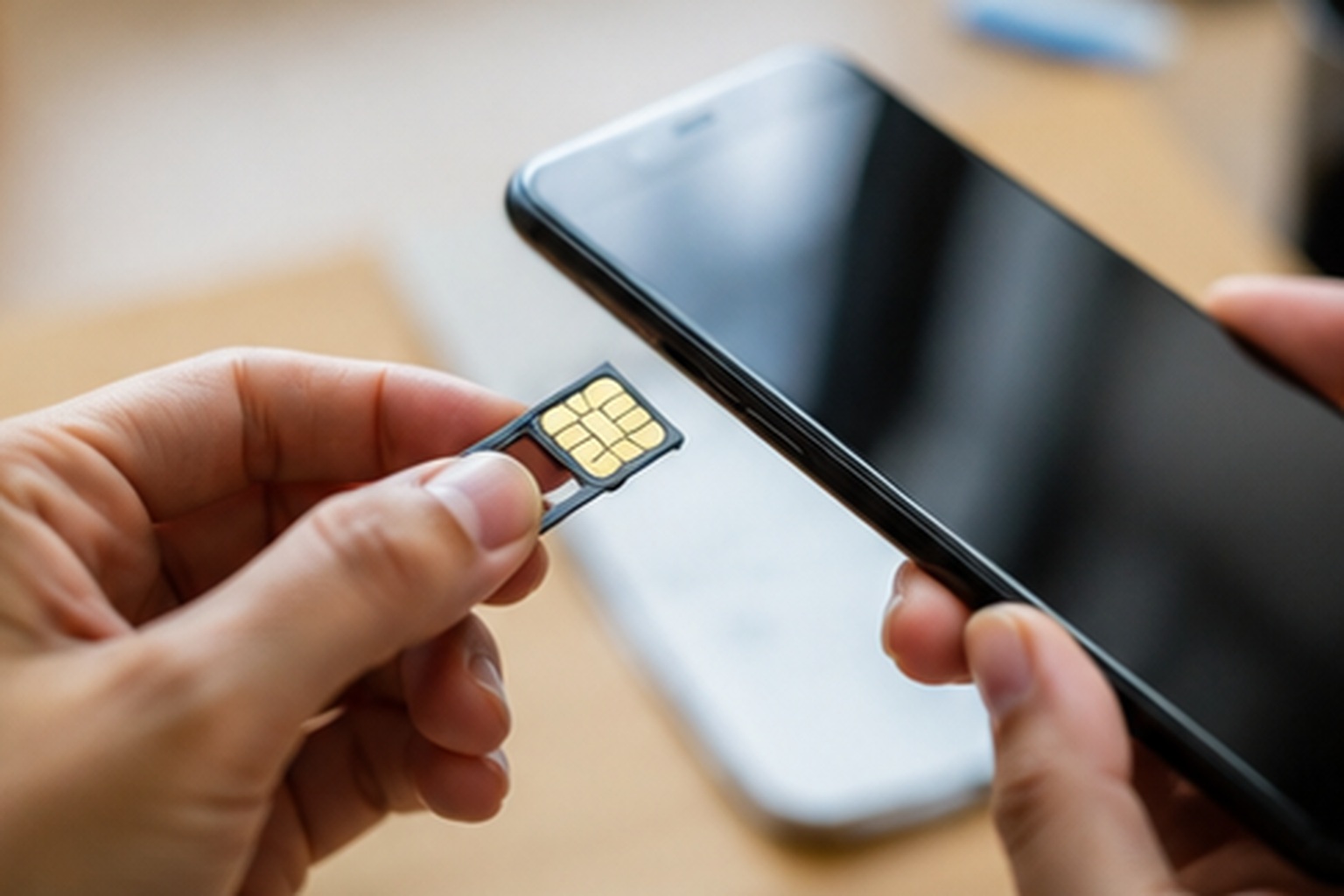
eSIM can be convenient for fast activation and dual-SIM use, but reissue and recovery rules matter. If the phone is lost, reset, replaced, or repaired, you may need a new eSIM profile. A physical SIM is easier to move between compatible phones, but requires delivery or pickup and can be lost or damaged.
- SIM-unlocked status
- Exact device-model compatibility
- Required LTE/5G bands and VoLTE
- Physical SIM or eSIM support
- Japanese technical-conformity status
- eSIM reissue procedure after loss, reset, or device replacement
Prepare identity, address, and payment requirements
Voice-line contracts require identity verification, and the exact documents depend on the provider and application channel. For foreign residents, a current residence card and passport are common requirements at major carriers, while foreign-resident-focused providers publish their own accepted-document rules.
Make sure your registered address is current before applying. A mismatch between your application and identification document can delay verification. Sakura Mobile, for example, requires the name, address, and birthdate on the submitted document to match the application for its monthly voice service.
Payment options also differ. Some online applications accept only credit cards, while physical shops may support additional bank-account procedures. Device installment financing is a separate approval from the mobile line itself; au and SoftBank both state that the remaining period of stay can affect installment eligibility.
- Valid residence card and current address
- Passport when required
- Accepted credit/debit card or Japanese bank account — if you do not have a Japanese bank account yet, compare SIM and eSIM options that work without one.
- MNP information if keeping a number
- Separate preparation for device-installment screening
- A matching name, birthdate, and address across the application and ID
Keep your number safely with MNP
Mobile Number Portability lets you move an eligible Japanese phone number to another provider. If the number is already connected to banks, employers, friends, medical services, or account recovery, keeping it can save significant work.
Do not cancel the old line before the port completes. Follow the receiving provider's current procedure and confirm whether it uses an MNP reservation number, a one-stop process, or a provider-specific workflow. The old mobile line normally closes when the number transfer is completed, but device installments and some separate services may continue.
Provider details can change quickly. Sakura Mobile currently requires sufficient remaining validity on the MNP reservation information when applying. Mobal's port-in availability differs by product, so verify the exact SIM/eSIM version before ordering.
- Confirm the exact product accepts port-in before you buy it.
- Keep the old line active until the transfer is complete.
- Make sure the contract-holder name and birthdate match.
- Check the MNP reservation expiry and the receiving provider's minimum remaining-validity rule.
- After porting, review the final bill and any remaining device balance from the old provider.
Compare the full cost, not the headline price
The correct comparison is the normal monthly cost after temporary promotions, plus the predictable costs created by your own usage. A low base fee can become expensive if you regularly add data, make many ordinary calls, finance a phone, or keep several paid options.
Write two totals before signing: the first-month cost and the normal post-campaign month. If you are buying a device, keep the device installment separate from the service cost so you can see what remains payable if you later change carrier.
Discounts tied to a family group, credit card, home internet, points program, or another service are useful only if you would keep the linked service anyway. A discount should not lock you into a more expensive household setup.
- Base monthly plan
- Voice-call option and ordinary call charges
- Outgoing SMS charges
- Activation, SIM/eSIM, or contract fees
- Device installment and warranty
- Extra data or top-ups
- Voicemail, security, filtering, and support options
- International calling and roaming
- Price after every campaign or bundle discount ends
Choose the support and travel features you will actually use
Support is part of the product. A slightly higher monthly price may be worthwhile if you need English help with identity verification, eSIM recovery, billing, MNP, or a lost phone. Conversely, paying for store support has little value if you are comfortable solving everything online.
If you travel outside Japan, check roaming separately for voice, SMS, and data. Do not assume that a plan offering international calling also offers international data roaming. Provider rules can differ by product generation as well as by plan.
Emergency calling is another reason to understand the service type. A full Japanese voice line is safer as a primary resident line than a data-only product whose ordinary voice, SMS, or emergency-call functions may be limited.
- English phone, chat, email, or shop support
- Lost-phone and eSIM recovery process
- Voice and SMS roaming
- International data roaming
- Emergency-call capability
- Account access and support if you no longer have the original SIM
Use this practical signup checklist
Once you have narrowed the choice to two or three plans, compare them with the same checklist instead of reading each provider's marketing page in isolation. The best plan should survive the comparison without depending on a temporary reward.
After activation, test the line before you cancel any backup service you still need. Confirm data, incoming and outgoing calls, SMS, tethering, voicemail if used, account login, and the support route. Save the application, important-information document, campaign terms, and final written estimate.
Review the first bill in detail. If it is higher than expected, separate one-time activation charges, partial-month billing, device payments, call usage, data additions, and optional services before contacting support.
- Confirm voice/SMS/data requirements and Japanese-number need.
- Measure real monthly data use.
- Check official coverage at home and work.
- Verify the exact phone model and SIM/eSIM compatibility.
- Decide new number or MNP before ordering.
- Prepare current ID, address, and accepted payment.
- Compare first-month and normal monthly totals.
- Read cancellation, reissue, roaming, and device-payment terms.
- Apply through the official provider channel.
- Test calls, SMS, data, tethering, and account access immediately after activation.
FAQ
Which mobile phone plan is best for foreigners in Japan?
There is no single best plan. For a long-term resident, compare coverage at your real locations, need for a Japanese number and SMS, data usage, English support, device compatibility, application requirements, MNP support, and the normal monthly cost after campaigns.
Do I need a Japanese phone number if I already have data?
For many long-term residents, yes. Employers, banks, clinics, delivery companies, schools, landlords, government offices, and account-verification systems may use ordinary calls or SMS. A data-only line can be useful as a secondary service but may not replace a resident voice line.
Can I keep my existing Japanese phone number?
Usually, if the receiving product supports MNP and your contract information matches. Do not cancel the old line before the transfer completes. Check the exact receiving product because MNP availability can differ by SIM, eSIM, or plan version.
Is eSIM better than a physical SIM in Japan?
eSIM is convenient for fast activation and dual-SIM use, while a physical SIM can be easier to move between compatible phones. The better choice depends on device support, identity-verification workflow, MNP procedure, and how the provider handles reissue after loss, reset, or replacement.
Can my period of stay affect a phone contract?
It can affect device installment financing even when a SIM-only line is otherwise possible. Major-carrier guidance states that the remaining period of stay may be considered when the installment term extends beyond it.
Should I choose Mobal or Sakura Mobile?
Compare the exact current product, not only the brand. Mobal may suit residents who value its English support and current Voice Lite or Voice+Data options; Sakura Mobile may suit residents who prefer its monthly data tiers, docomo-network service, and English resident support. If MNP or eSIM is important, verify the current product-specific procedure before ordering.
Official References
- Mobal: Long-Term Japan SIM Cards
- Mobal Support: Mobile Number Porting (MNP) Requests
- Sakura Mobile: Monthly SIM/eSIM Pricing
- Sakura Mobile: Monthly Voice SIM/eSIM Application Procedure
- Sakura Mobile: MNP to Sakura Mobile
- au: Items to Prepare for a New Contract
- SoftBank: Identification Documents
- NTT DOCOMO: About eSIM
- Rakuten Mobile: Rakuten SAIKYO Plan
- LINEMO: Price Plans

Final Thoughts
Choose a mobile plan for the month you will live through repeatedly, not for the signup day. A resident-friendly plan should give you the number, coverage, data, support, and device compatibility you need at a total cost you understand. If English support is a priority, compare Mobal and Sakura Mobile alongside the major carriers and online brands, paying particular attention to current MNP and eSIM procedures. Save the contract information, test the line immediately after activation, and review the first bill so that small optional charges do not become permanent expenses.