
How to Apply for Japanese Naturalization: Requirements, Documents & Process
A practical 2026 guide to Japanese naturalization: legal conditions, Japanese ability, Legal Affairs Bureau consultation, documents, tax records, translations, submission and post-approval steps.
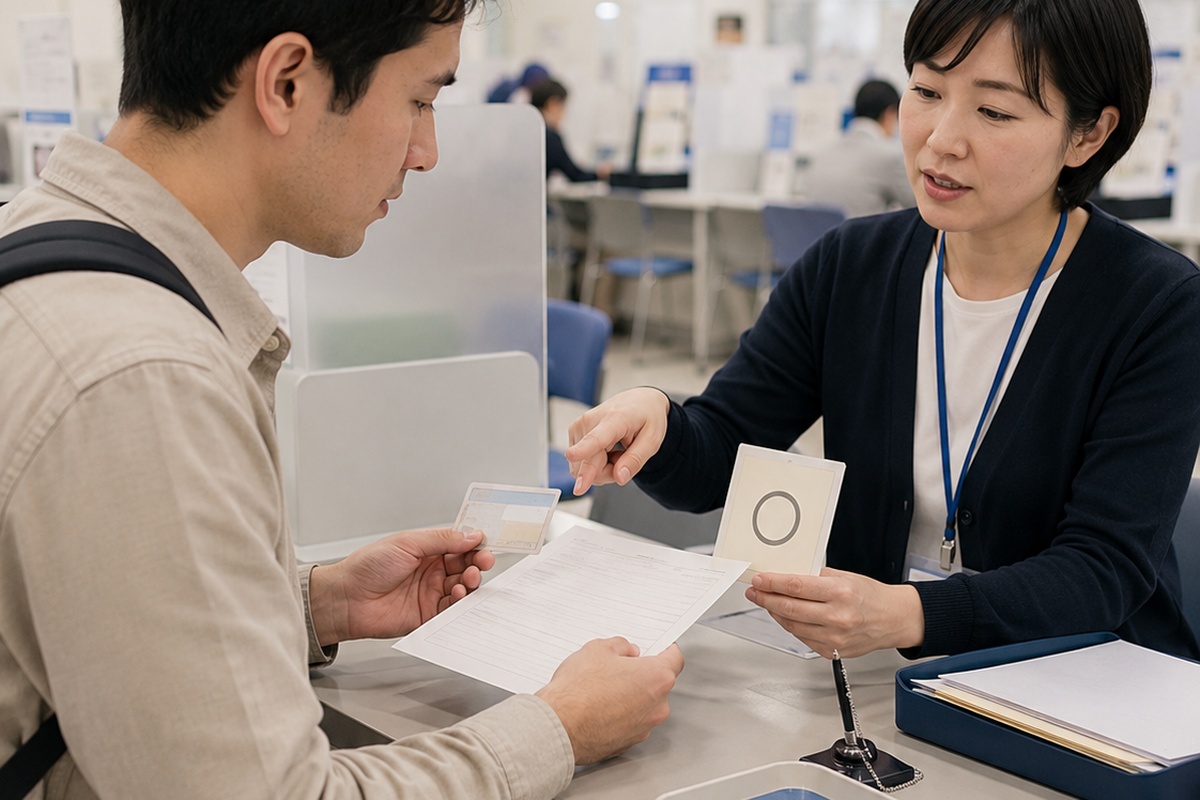
Japanese naturalization (帰化, kika) is the procedure by which a foreign national receives permission from the Minister of Justice and acquires Japanese nationality. The general statutory conditions include at least five consecutive years of lawful domicile in Japan, being at least 18 and legally capable under the law of your current nationality, good conduct, a stable household livelihood, the loss of your previous nationality in principle, and the constitutional-order condition. Official guidance also states that applicants need enough Japanese ability for daily life, including speaking, reading and writing, and that meeting the minimum conditions does not guarantee permission. The practical starting point is the nationality section of the Legal Affairs Bureau that handles your address: book the required consultation, bring the documents requested for that consultation, then collect the personalized application set. The national procedure has no application fee and no published standard processing period.
Naturalization Is Different From Permanent Residency
Permanent residency lets you remain in Japan as a foreign national under a residence status. Naturalization changes your nationality: if permission takes effect, you become a Japanese national rather than a foreign resident using a Japanese residence status.
That difference can affect nationality, passports, voting rights, family registration, consular protection, inheritance or property treatment in another country, and your ability to enter or live in your former country. Before applying, check both Japanese rules and the law of your present country of nationality.
- Permanent residency preserves foreign nationality; naturalization changes nationality.
- You do not need permanent residency before applying for naturalization.
- Do not assume your current nationality will automatically disappear in the same way for every country.
The General Legal Conditions
Article 5 of the Nationality Act sets the general minimum conditions. The Ministry of Justice stresses that satisfying these conditions does not create an automatic right to approval.
The general rule is at least five consecutive years of lawful domicile in Japan with a valid status of residence. The applicant must normally be at least 18 and have legal capacity under the law of the country of nationality. Conduct is assessed broadly, including criminal history, tax payment and social behavior. Livelihood is judged at household level, so the applicant does not necessarily need to be the sole earner.
- Domicile: generally five consecutive lawful years in Japan.
- Capacity: generally age 18 or older and legally capable under home-country law.
- Conduct: good conduct, including compliance with law and tax obligations.
- Livelihood: ability to maintain life in Japan, assessed on a household basis.
- Nationality: in principle, no nationality or loss of the former nationality through naturalization.
- Constitutional order: no involvement in violent anti-government activity covered by the Act.
Japanese Ability and Social Integration Matter
The Ministry of Justice and Tokyo Legal Affairs Bureau state that applicants need Japanese ability sufficient for daily life, including conversation and reading and writing. This is separate from the six statutory conditions listed in Article 5 but is part of the practical naturalization assessment.
There is no universal rule that every applicant must pass one named external exam. Tokyo's 2026 document guidance says that if you have taken an external Japanese test such as JLPT or J.TEST, you should bring the result. Your bureau can also assess practical communication and literacy during consultation and examination.
- Expect to communicate directly with Legal Affairs Bureau staff.
- Be prepared to read and write ordinary Japanese used in daily life and forms.
- Bring external Japanese-test results if you have them, when your bureau asks for them.
Some Applicants Can Use Relaxed Conditions
Articles 6 to 8 of the Nationality Act relax some general conditions for certain people with close connections to Japan, such as some people born in Japan, spouses of Japanese nationals, children of Japanese nationals, and former Japanese nationals.
Do not decide from a checklist alone that an exception applies. Your Legal Affairs Bureau must determine which statutory route fits your family history, nationality and residence record.
- Japanese spouse or close Japanese family relationship.
- Birth in Japan or qualifying family history.
- Former Japanese nationality or other circumstances covered by Articles 6 to 8.
Step 1: Find the Legal Affairs Bureau for Your Address
Naturalization is handled by the Legal Affairs Bureau or District Legal Affairs Bureau, not by the Immigration Services Agency. The competent office depends on your address and whether that office handles nationality matters.
Tokyo Legal Affairs Bureau currently requires naturalization consultations to be booked in advance by telephone. Its nationality guidance also says telephone, email and fax are not substitutes for the consultation itself. Other regions may have different local booking procedures, so confirm with your competent bureau.
- Confirm the nationality office that covers your address.
- Check the office's current reservation method and consultation hours.
- Do not submit a naturalization application to an immigration bureau.
Step 2: Prepare for the Initial Consultation
The first consultation is used to confirm your circumstances and identify the documents you will need. Requirements vary substantially by nationality, occupation, family structure, residence history and household finances.
Tokyo's 2026 initial-consultation page tells applicants to prepare the stated preliminary documents before booking and attending. It is usually inefficient to order every foreign certificate before receiving instructions, because some documents have validity periods and country-specific requirements.
- Passport and residence information.
- Family and marital history.
- Employment or business information.
- Income, tax and household information.
- Travel and residence history.
- Documents or questionnaire specified by your local bureau.
Step 3: Collect the Personalized Document Set
The final document set is not identical for every applicant. Tokyo's April 2026 guidance for applicants from many nationalities lists nationality evidence, passports including expired passports, birth and family-status records, marriage or divorce records where relevant, residence records, residence-card copies, driving records, employment and income evidence, tax materials and other records depending on the case.
The bureau can require additional evidence when the standard list does not fully establish nationality, identity, family relationships, residence continuity, livelihood or conduct.
- Nationality and identity certificates from your country.
- Birth, marriage, divorce and family-relationship documents where applicable.
- All relevant passport pages, including older passports when required.
- Jūminhyō and residence history records.
- Residence card copies.
- Employment, income, tax, pension, insurance and business records as applicable.
- Driving record certificate and licence copies if applicable.
- Other documents specifically requested by the bureau.

2026 Tax and Income Records: Check the Correct Years
Tax-document periods can change depending on when the application is accepted, so do not reuse an old checklist. Tokyo Legal Affairs Bureau's April 2026 guidance gives a specific example for salaried applicants whose applications are accepted from June through December 2026.
For that 2026 June–December window, the Tokyo guidance lists taxation certificates for fiscal years Reiwa 4 through Reiwa 8, tax-payment certificates for Reiwa 3 through Reiwa 7, and the Reiwa 7 withholding slip. It also asks for evidence that resident tax was paid properly for the most recent five years unless it was collected through special withholding. Self-employed applicants and company officers have additional tax and business-document requirements.
- Do not assume the certificate years are the same every calendar year.
- Match your income figures across taxation certificates and withholding slips.
- Keep proof of resident-tax payment when required.
- If you filed tax returns, additional national tax certificates and returns may be required.
- Use your own bureau's latest checklist, not only Tokyo's example.

Copies, Originals and Translations Must Follow the Bureau's Format
Tokyo's 2026 guidance says documents submitted for acceptance generally need an original plus a duplicate copy, while items that cannot be surrendered, such as passports and driving licences, require copies and presentation of the original. The same guidance instructs applicants to prepare two sets including photographs.
Foreign-language documents require a full Japanese translation. Tokyo requires the translation to state the translator's address, name and translation date, and says a qualified professional translator is not mandatory if the person can translate accurately. Partial translations are not accepted under that guidance.
- Follow the copy count and paper-size instructions from your bureau.
- Do not shrink or enlarge copies when the bureau prohibits it.
- Translate the entire foreign-language document.
- Identify the translator exactly as instructed.
- Keep spelling of names and places consistent across every form and translation.
Step 4: Complete the Naturalization Forms Carefully
Tokyo Legal Affairs Bureau's 2026 form set includes the naturalization application, family overview, two résumé/history forms, an entry-and-exit history continuation sheet, statement of motivation, household-livelihood forms and a business overview where applicable.
Dates, addresses, names, family relationships, travel history, work history, income and tax records must agree across the application and attachments. If a record is uncertain, confirm it rather than guessing.
- Naturalization application form.
- Family overview.
- Personal history / résumé forms.
- Entry and exit history continuation where needed.
- Statement of motivation.
- Household livelihood forms.
- Business overview for relevant applicants.
Step 5: Submit the Application in Person
The Ministry of Justice states that an applicant aged 15 or older must personally appear at the competent Legal Affairs Bureau or District Legal Affairs Bureau and submit the application in writing. For an applicant under 15, a parent, guardian or other legal representative applies.
There is no government application fee for the naturalization application. However, you may still incur costs for foreign certificates, translations, certified copies, travel, photographs and other supporting records.
- Application is submitted to the bureau responsible for your address.
- Applicants age 15 or older apply in person.
- The national naturalization application fee is ¥0.
- Complete documents do not guarantee permission.
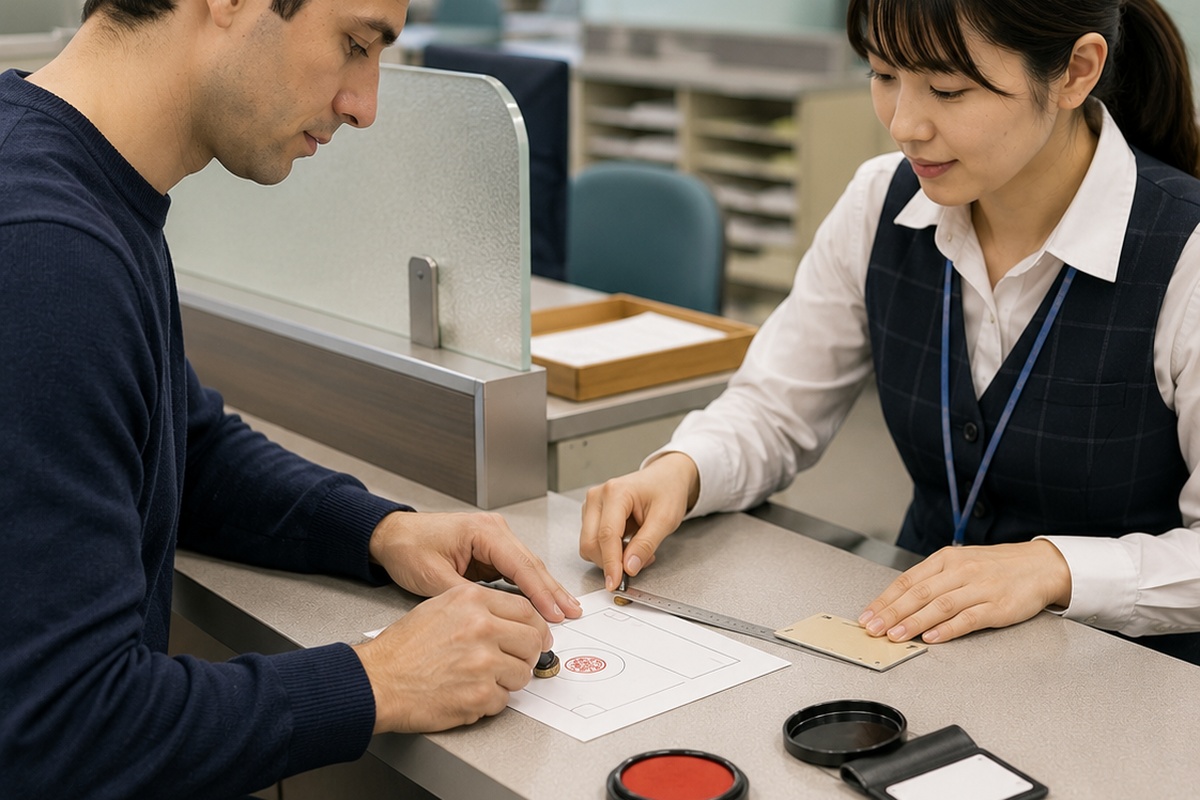
Step 6: Cooperate With the Examination and Report Changes
After acceptance, the bureau examines the application and may request additional records or explanations. Your personal circumstances can also change during the examination, including employment, address, family status, travel, income or tax records.
Keep copies of what you submitted and tell the responsible office promptly about significant changes instead of waiting for the final decision. The Ministry of Justice publishes no standard processing period for naturalization, so avoid treating a private estimate as an official deadline.
- Respond to additional-document requests by the stated deadline.
- Keep tax, employment and residence obligations current during examination.
- Report material changes in address, job, family status or other facts.
- Do not make travel or nationality plans based on an unofficial completion date.
Step 7: Permission, Gazette Notice and Post-Approval Procedures
When the Minister of Justice permits naturalization, the permission is announced in the Official Gazette. The Nationality Act provides that naturalization takes effect from the date of that public notice.
After permission, follow the Legal Affairs Bureau's instructions for the documents and notifications required to establish your Japanese family register and complete related nationality procedures. Passport and former-nationality steps depend on the applicable authorities and your previous country's law, so confirm them directly rather than relying on a generic checklist.
- Permission is published in the Official Gazette.
- Naturalization takes effect on the date of the Gazette notice.
- Complete the instructed family-register and related post-approval procedures.
- Confirm former-nationality and passport procedures with the relevant authorities.
FAQ
Do I need permanent residency before applying for Japanese naturalization?
No. Permanent residency is not a statutory prerequisite for naturalization. The two procedures have different legal purposes and requirements.
Is the normal residence requirement five years or ten years?
The general statutory domicile condition for naturalization is five consecutive lawful years. The Ministry of Justice also refers to broader social integration, including circumstances such as a longer period of residence, and some applicants can use relaxed conditions under Articles 6 to 8.
Does five years in Japan guarantee approval?
No. The five-year rule is only one general minimum condition. Conduct, livelihood, nationality, Japanese ability and the complete circumstances of the case are also examined.
Is there a government fee for a naturalization application?
No. The Ministry of Justice states that the application itself has no fee, although obtaining certificates, translations, photos and other supporting documents can cost money.
Can someone submit my naturalization application for me?
If you are 15 or older, the national procedure requires you to appear and apply in person. Applicants under 15 apply through a legal representative.
Do I need to pass JLPT for naturalization?
There is no single national rule that every applicant must pass a named external test. Official guidance requires practical Japanese ability for daily life, including speaking, reading and writing. Tokyo also asks applicants who have taken tests such as JLPT or J.TEST to bring their results.
Can I keep my current nationality after Japanese naturalization?
The general rule requires the applicant to be stateless or, in principle, to lose the former nationality through acquiring Japanese nationality. Exceptions can apply in limited circumstances, and the effect under your current country's law must be checked separately.
How long does Japanese naturalization take?
The Ministry of Justice does not publish a standard processing period for naturalization. Your timeline depends on consultation, document preparation, acceptance, examination and any additional-document requests.
Official References
- Ministry of Justice — Nationality Q&A: General Naturalization Conditions
- Ministry of Justice — Naturalization Permission Application Procedure
- Ministry of Justice — Nationality Act
- Tokyo Legal Affairs Bureau — Naturalization Overview (Updated April 1, 2026)
- Tokyo Legal Affairs Bureau — Initial Naturalization Consultation (Updated January 26, 2026)
- Tokyo Legal Affairs Bureau — Supporting Documents for Other Nationalities/Regions (Updated April 1, 2026)
- Tokyo Legal Affairs Bureau — Naturalization Application Forms (Word, Updated January 26, 2026)
Final Thoughts
Naturalization is a nationality decision, not a visa upgrade. Start with the competent Legal Affairs Bureau, use its current checklist for your nationality and household, and keep every date, name, address, tax record and family fact consistent across the application. In 2026, the safest workflow is consultation first, personalized document collection second, careful submission third, and prompt cooperation with any additional requests. Verify the consequences for your former nationality before the application reaches its final stage.