
How to Register a Personal Seal in Japan: Inkan Registration Guide
A practical 2026 guide to registering a personal seal in Japan: eligibility, foreign-resident name rules, seal size and design, same-day and proxy registration, registration cards, certificates, convenience-store issuance, loss and moving.
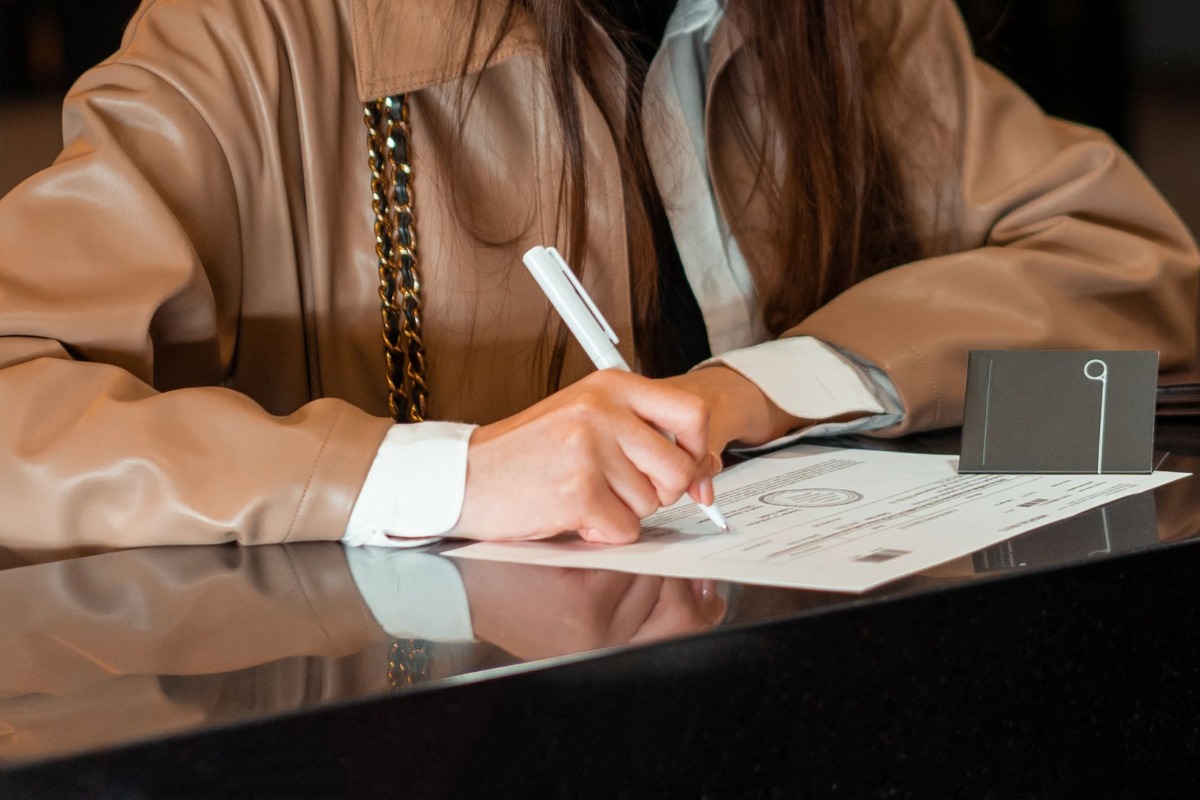
A registered personal seal is called a jitsuin (実印), but a seal only becomes a jitsuin after your municipality accepts and records its impression. Registration rules are set locally, so always check your city or ward before ordering an expensive seal. In major municipalities such as Shinjuku, Edogawa and Yokohama, applicants generally must be at least 15 years old and have resident registration there, and seals that are too small, too large, deformable, unclear or unrelated to the name in the resident record are rejected. Foreign residents should confirm exactly which version of their name is recorded on the resident record before making the seal; a registered common name, kanji name or katakana reading may be usable only when the municipality's rules and resident record support it. After registration, protect the inkan registration card separately from the registered seal. When you need proof, request an 印鑑登録証明書 (inkan registration certificate) at the municipal counter or, where supported, with a My Number Card through convenience-store or online services.
Know the difference between a hanko, jitsuin, registration card and certificate
A hanko or inkan is simply a seal. Buying one does not make it legally registered. A seal becomes your jitsuin only after the municipality where you are registered as a resident accepts and records its impression.
When registration is completed, the municipality issues an 印鑑登録証 (inkan registration card) or equivalent registration credential. This card is not the same thing as the seal.
An 印鑑登録証明書 (inkan registration certificate) is the official certificate showing the registered seal impression and the registered person's information. It is the document that may be requested for transactions where proof of the registered seal is required.
- 印鑑 / はんこ — physical seal
- 実印 — seal after municipal registration
- 印鑑登録証 — registration card or credential
- 印鑑登録証明書 — certificate proving the registered impression
Registration rules are municipal, so check your city or ward first
Japan does not use one single municipal registration checklist for every address. The basic system is similar nationwide, but eligibility, identity-verification methods, accepted name forms, fees and service channels are governed by the municipality's own rules and procedures.
For example, Shinjuku, Edogawa and Yokohama all state that residents must be at least 15 years old and registered as residents in the municipality, but the exact application route and accepted identification can differ.
Before ordering a seal, open the official 印鑑登録 page for your municipality and confirm the current requirements. This is especially important for foreign residents with Roman-letter, kanji, katakana or registered common-name variations.
- Confirm local eligibility
- Confirm accepted identity documents
- Confirm accepted seal size and name form
- Check whether same-day registration is possible
- Check certificate fees and digital service options
Foreign residents should check the resident-record name before ordering the seal
The most common avoidable problem is making a seal first and discovering at the counter that its characters do not match a name form the municipality can register.
Municipal rules generally tie the seal to the name information recorded in the Basic Resident Register. Edogawa states that foreign residents can also register a seal representing a registered common name or an additional registered name. Yokohama states that a kanji name or common name must appear on the resident record, and non-kanji-name foreign residents who want to use a katakana reading must have that katakana reading recorded in the remarks field of the resident record.
Do not assume that a nickname, preferred spelling or self-chosen katakana rendering is automatically acceptable. Ask the municipal counter which exact character string can be used before having a custom seal made.
- Check the exact resident-record name
- Ask whether a registered common name can be used
- Ask whether a kanji name is recorded
- If using katakana, confirm the local recording requirement first
- Do not order an expensive seal until the name form is confirmed
Use a seal that meets the local size and design rules
Representative municipalities including Shinjuku, Edogawa and Yokohama reject impressions that fit entirely inside an 8 mm square or that do not fit inside a 25 mm square. In practice, this creates a commonly used registration size range, but you should still verify your own municipality's rule.
Deformable rubber stamps, severely worn or unclear impressions, seals with unrelated occupations, qualifications, symbols or designs, and seals that do not represent an accepted registered name are commonly rejected.
Mass-produced inexpensive seals can be technically registrable in some cases but may be discouraged because another person can easily obtain an identical impression. For a jitsuin used in important transactions, a distinct durable seal is the safer choice.
- Check the municipality's minimum and maximum impression size
- Avoid rubber or easily deformable material
- Avoid damaged or unreadable impressions
- Avoid unrelated symbols, titles or decorative elements
- Prefer a distinct seal rather than an easily duplicated mass-produced one

Prepare the seal and accepted identity documents
For an in-person application, bring the seal you want to register and the identity document required by your municipality. Foreign-resident guidance from Shinjuku and Yokohama lists a valid residence card or special permanent resident certificate among the relevant identity documents.
The exact document that permits same-day registration can differ. Some municipalities use a strict category of government-issued photo identification for immediate identity confirmation.
If your identification is not sufficient for immediate registration, the municipality may use a postal inquiry-and-reply process or another verification method, which means registration will not finish the same day.
- Seal to be registered
- Current accepted photo identification
- Residence card or special permanent resident certificate where applicable
- Any additional document requested by your municipality
- Time for a second visit if postal verification is required
Same-day registration depends on how your identity is verified
Do not assume every personal application finishes immediately. Municipalities use specific identity-verification methods before creating the registration.
Shinjuku states that same-day completion requires the applicant to appear personally and verify identity with an accepted document from its one-document category. Yokohama also provides same-day routes based on accepted official identification or a guarantor method.
If the municipality sends an inquiry letter to your registered address, you will normally have to return the completed response within the stated period before registration is finalized. Plan ahead if you need the certificate for a scheduled contract.
- Ask whether your ID qualifies for same-day registration
- Do not schedule a major contract assuming the first visit is enough
- If postal verification is used, monitor your registered address
- Return the response before the local deadline
A proxy can sometimes apply, but it is usually slower and requires authorization
Municipalities can allow a proxy application, but the proxy route is not equivalent to the applicant appearing personally with strong photo identification.
Yokohama states that a proxy can apply but requires a handwritten power of attorney from the applicant and the proxy's identity document, in addition to the application and seal. The municipality may still need to verify the applicant's intent through its prescribed method.
Because proxy procedures vary, download the municipality's current power-of-attorney form or sample and follow it exactly. Do not reuse a generic authorization letter from another city.
- Check whether proxy registration is allowed locally
- Use the municipality's current power-of-attorney format
- Prepare the proxy's identity document
- Expect additional identity-confirmation steps
- Allow extra time
Protect the inkan registration card separately from the registered seal
Once registration is complete, the municipality issues the inkan registration card or an equivalent credential. Treat it as a high-value identity-related item.
Do not store the card together with the registered seal. A person who obtains both may have a much easier path to misuse them in a transaction or certificate request.
When you only need an inkan registration certificate, the registered seal itself may not be required at the counter. Shinjuku, for example, requires the inkan registration card for ordinary counter issuance and states that the registered seal itself is unnecessary.
- Store the card and seal separately
- Do not lend either item casually
- Know the municipal loss-report procedure
- Do not carry the registered seal every day
Request an inkan registration certificate only when you actually need one
The inkan registration certificate proves that the seal impression is the one registered for the named resident. It may be requested for important legal or financial transactions, but you do not need to obtain certificates routinely.
At a municipal counter, the registration card is commonly required. Some municipalities permit a proxy to obtain the certificate by presenting the registrant's registration card and correctly providing the registrant's identifying details; Shinjuku and Yokohama both provide such routes.
Certificate fees vary by municipality and by channel. Check the current official fee before visiting rather than relying on an old nationwide estimate.
- Confirm how recent the receiving organization requires the certificate to be
- Bring the registration card for counter issuance when required
- Check proxy rules before sending someone else
- Check the local fee and accepted payment method
My Number Card can make certificate issuance easier where the municipality supports it
Many municipalities participate in convenience-store certificate issuance, but service availability and fees are local. The My Number Card general site explicitly notes that the certificates available differ by municipality.
Shinjuku currently offers inkan registration certificates through compatible convenience-store kiosks for residents who are already registered for a seal and have a My Number Card with the required user-certificate function. Yokohama also supports convenience-store and online routes under its own conditions.
A My Number Card does not replace the underlying inkan registration. You must first have a valid seal registration, and some My Number Card configurations—such as facial-recognition-only cards in certain services—can restrict digital issuance.
- Register the seal first
- Check whether your municipality participates
- Confirm that the required electronic certificate/PIN is usable
- Check service hours and maintenance notices
- Do not assume every municipality offers the same certificate set

Moving to another municipality usually ends the old registration
Inkan registration is tied to your resident municipality. When you move out to another municipality, the old registration is generally cancelled under the former municipality's rules and you must register again at the new address if you still need a jitsuin.
Shinjuku states that a resident moving out must return the registration card and complete a new registration at the new municipality. Edogawa likewise states that moving outside the ward cancels the registration. Yokohama's ordinance also provides for deletion of the registration when the resident record is removed because of an out-of-city move.
A move within the same large city can be handled differently. Yokohama, for example, has a special rule allowing registration to carry across a move between its wards. This is why 'moving always cancels it' is too broad—check the destination and municipality.
- Check the old municipality's move-out rule
- Ask whether an in-city ward move preserves registration
- Register again after an inter-municipal move when required
- Do not assume the old registration card remains valid
Report a lost seal or registration card immediately
If the registered seal, registration card or both are lost or stolen, contact the municipality promptly and follow its loss or cancellation procedure.
Shinjuku provides a lost-card procedure and can temporarily suspend issuance of inkan registration certificates as an emergency measure. Changing the registered seal requires cancellation of the existing registration and a new registration.
Do not wait until you need a certificate. The safest sequence is to stop possible certificate issuance, cancel or invalidate the old registration as required, then register a replacement seal.
- Contact the municipality immediately
- Ask whether certificate issuance can be temporarily stopped
- Cancel the lost registration as required
- Register a new seal if necessary
- Update any transaction scheduled around the lost seal
FAQ
Is any hanko I buy automatically a jitsuin?
No. It becomes a jitsuin only after the municipality where you are registered as a resident accepts and records that seal impression.
Can a foreign resident register a seal in Roman letters?
Possibly, depending on the name recorded in the resident record and the municipality's rules. Confirm the exact registrable name form with your city or ward before ordering the seal.
Can I register a katakana seal?
It can be possible when the municipality allows it and the required katakana name or reading is recorded in the resident record. Yokohama, for example, requires the katakana reading to be recorded in the resident-record remarks for qualifying non-kanji-name foreign residents.
Can two family members register the same seal?
Municipalities such as Shinjuku and Edogawa do not allow one seal impression to be registered by multiple people. Each person should use a separate registrable seal.
Do I need the registered seal itself to get an inkan registration certificate?
Not always. For example, Shinjuku's normal counter procedure requires the inkan registration card and states that the registered seal itself is not needed. Check your municipality's procedure.
Can I get an inkan registration certificate at a convenience store?
In participating municipalities, yes, if you already have a valid inkan registration and a My Number Card configured for the required certificate service. Availability and fees vary by municipality.
Does my inkan registration stay valid after I move?
An inter-municipal move generally cancels the old registration, but some moves within the same city are handled differently. Confirm both the old and new municipality's rules.
Official References
- Yokohama City: Personal Seal Registration
- Edogawa City: Personal Seal Registration Rules
- Shinjuku City: Personal Seal Registration and Certificates
- Shinjuku City: Seal Registration Guide for Foreign Residents
- Shinjuku City: Convenience-Store Certificate Issuance
- Yokohama City: Online Application for an Inkan Registration Certificate
- Edogawa City: Registering a Common Name for Foreign Residents
- Shinjuku City: Moving Out and Inkan Registration Cancellation
Final Thoughts
The most important step comes before you buy the seal: confirm the exact name form and registration rule with the municipality where your resident record is held. Once the municipality accepts the impression, keep the jitsuin and registration card separately, request certificates only when needed, and report loss or a move promptly. Foreign residents should be especially careful not to assume that a preferred Roman-letter, kanji or katakana form is registrable unless it is supported by the resident record and local rules.