
How to Rent an Apartment in Japan: Application, Screening, Contract & Move-In
A practical 2026 guide to renting an apartment in Japan after you choose a room, covering the application, screening, guarantors, contract checks, initial payment, keys, and move-in.

After you choose an apartment in Japan, the usual flow is application, document submission, tenant screening, confirmation of the lease terms, initial payment, contract execution, key handover, and move-in. The application is not the lease itself, and approval is not automatic. Before signing or paying, confirm the total initial cost, guarantor or guarantee-company requirements, contract type and period, renewal and cancellation rules, restoration or cleaning provisions, prohibited uses, and the exact move-in date. Keep copies of the application, important-points explanation, lease, payment records, and any condition report, and record pre-existing damage before your belongings are fully moved in.
Confirm the room, costs, and conditions before you apply
Once you have found a room you want, stop treating the listing as the full contract. Ask the real estate agency for the current rent, management or common-service fee, move-in date, contract type, guarantor or guarantee-company requirement, insurance, and a written estimate of the initial payment.
Initial costs can include a security deposit, key money, agency fee, guarantee-company fee, insurance, advance rent, common-service charges, and other property-specific items. The MLIT Apartment Search Guidebook gives roughly four to seven months of rent as a broad reference for the total amount needed when making a rental agreement, while actual costs vary by property and region.
Also confirm the conditions that matter to your daily life before applying: occupants, pets, instruments, bicycle or car parking, internet arrangements, smoking rules, and any special house rules.
- Monthly rent and management/common-service fee
- Full written initial-cost estimate
- Earliest confirmed move-in date
- Regular lease or fixed-term lease
- Guarantor or guarantee-company requirement
- Insurance and other mandatory services
- Occupancy, pet, parking, and property-use rules
Understand that the rental application is not the lease contract
A move-in application tells the landlord, management company, and often a guarantee company that you want to rent the property. It normally starts the screening process; it does not by itself mean that the lease has been approved or completed.
The application form may ask for your full name, date of birth, nationality, current address, phone and email, residence status, employer or school, income or financial information, co-occupants, emergency contact, and desired move-in date. The exact fields vary.
Enter information carefully and keep it consistent with your supporting documents. If your employer, address, phone number, or other important information recently changed, tell the agency rather than allowing conflicting information to appear in the screening file.
- Use your legal name consistently
- Provide reachable phone and email details
- List all intended occupants when requested
- Give accurate work, school, and income information
- Confirm the requested move-in date
- Ask before submitting if a field is unclear
Prepare the documents the screening side actually requests
Required documents differ by property, landlord, management company, and guarantee company. MLIT guidance for foreign residents includes examples such as a passport, residence card, proof of earnings, employment certificate, or student registration certificate.
Do not send more personal information than necessary. Use the agency or management company's verified channel, and ask which documents are required for your specific application.
If you are newly employed, a student, self-employed, between jobs, or moving before your first salary is paid, explain the situation early. The screening side may ask for different supporting evidence rather than the standard set.
- Passport and residence card when applicable
- Proof of employment or income when requested
- Student enrollment documents when applicable
- Co-occupant information
- Emergency-contact information
- Bank or payment information only when requested for the rental process
Know what tenant screening can involve
Tenant screening can involve the landlord, management company, real estate agency, and a rental guarantee company. There is no single screening formula that applies to every apartment.
Common checks can include identity, employment or school status, income or ability to pay, intended occupants, contactability, guarantor or guarantee-company requirements, and whether the application matches the property's conditions.
A guarantee company and an emergency contact are not necessarily the same thing. Ask who is providing the rent guarantee, who may be contacted in an emergency, what fees apply, and whether any continuing guarantee fee is charged after move-in.
- Respond quickly to verification calls or messages
- Do not assume approval until it is confirmed
- Ask which guarantee company is used
- Confirm initial and recurring guarantee fees
- Clarify the role of any emergency contact
- Do not book irreversible moving arrangements before approval and move-in confirmation

Review the important-points explanation and the lease as separate documents
Before committing to the lease, make sure you understand the property and contract conditions. MLIT's multilingual housing materials include examples of a rental application, Important Points Explanation, regular rental housing contract, and fixed-term rental housing contract for foreign residents.
The Important Points Explanation and the lease are related but not identical. Check that the property, rent, fees, contract period, equipment, restrictions, and other material conditions match what you were told during the search and application.
Japan also has both regular leases and fixed-term leases. A fixed-term lease has different end-of-contract mechanics, so do not assume that every lease automatically continues in the same way.
- Property and unit details
- Contract start and end dates
- Regular or fixed-term lease
- Rent and recurring fees
- Deposit and other payments
- Included equipment
- Prohibited or restricted uses
- Renewal, cancellation, and termination terms
Read the clauses that create the biggest surprises later
Many rental problems begin with a clause that the tenant saw but did not fully understand. Focus on the parts that affect money, timing, and what happens when you eventually leave.
Check the notice period for moving out, renewal procedure and renewal fee if any, cleaning or restoration provisions, handling of the deposit, damage responsibilities, insurance requirements, guarantor or guarantee-company obligations, and any special clauses.
The Consumer Affairs Agency also advises checking rental documents and the property itself, including equipment and arrangements during occupancy and at move-out, before entering a new-life contract.
- Move-out notice period
- Renewal procedure and possible renewal fee
- Cleaning and restoration clauses
- Damage responsibility
- Deposit settlement
- Insurance requirements
- Special clauses
- Rules for pets, smoking, subletting, or additional occupants
Check the invoice before paying the initial costs
After approval, you may receive an invoice or payment instructions for the initial costs. Compare the invoice with the written estimate and contract documents before paying.
Confirm the payee, deadline, amount, and payment method through the agency's verified contact information. Be cautious if bank details suddenly change or payment is requested through an unusual personal channel.
Keep the payment receipt or transfer record. If the amount differs from the estimate, ask for a breakdown before sending the money rather than assuming that every extra charge is mandatory.
- Payee name and verified payment instructions
- Deposit and key money
- Agency fee
- Guarantee-company fee
- Insurance
- Advance and prorated rent
- Any other item shown in the written estimate or contract
Sign only after the final terms are clear and keep your own copies
Do not treat the signature as a routine final click. Check that the version you sign matches the terms that were explained and approved.
Electronic rental documents are now possible under the current legal framework, and MLIT's standard-contract information reflects changes allowing electronic contract-related procedures. Whether your particular transaction is paper or electronic, keep a complete copy you can access later.
Save the lease, important-points materials, payment records, guarantee-company documents, insurance information, and any house rules together. You will need them if you later have a question about rent, renewal, repairs, or moving out.
- Read the final version before signing
- Ask about any changed clause or amount
- Keep the signed or electronically executed lease
- Keep the important-points explanation
- Keep guarantee and insurance documents
- Keep payment evidence and contact details
Confirm the key handover and move-in date before moving
The key handover should happen according to the confirmed contract and move-in schedule. Ask exactly when and where the keys will be released and whether you need identification or other documents at pickup.
Confirm how many keys, cards, or access items you receive and what the building-entry procedure is. If the property uses a special key, auto-lock, parcel room, bicycle area, or other access system, ask how it works before the first night.
Only after approval, contract completion, payment, and move-in confirmation should you finalize the moving schedule that depends on access to the new apartment.
- Confirmed move-in date and time
- Key pickup location
- Number of keys or access items
- Building-entry and auto-lock procedure
- Management-company emergency contact
- Rules for movers, parking, elevators, or common areas when applicable

Record the condition of the apartment before daily life begins
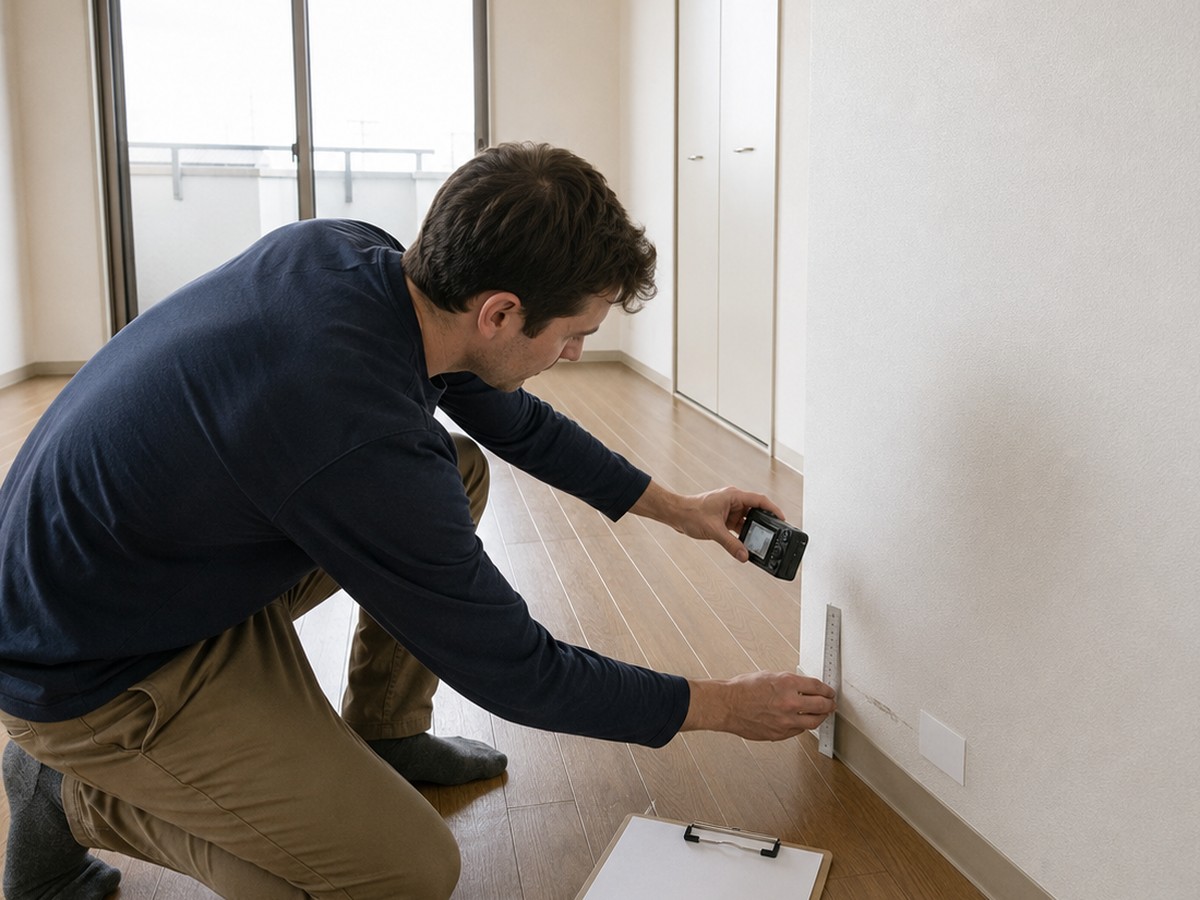
Before furniture and boxes hide the walls and floors, inspect the room and record existing scratches, stains, dents, equipment problems, and other visible damage. Use the management company's condition-report process when one is provided.
Photographs are useful when they show the location and scale of an existing issue. Keep the original files and any submitted condition report with your lease records.
Check keys, doors, windows, locks, lights, water, air conditioning, built-in equipment, alarms, and other installed items. Report problems promptly through the management company's proper channel rather than waiting until move-out.
- Walls, floors, doors, and fixtures
- Water and drainage
- Air conditioner and installed equipment
- Locks, keys, windows, and balcony doors
- Existing stains, scratches, or dents
- Condition report and photo records
Finish the first-week tasks after you move in
Once you have moved in, follow the building and local rules that apply to the new address. Set up utilities and internet as needed, learn the garbage rules, confirm rent-payment instructions, and save the management company's contact information.
If your residence status requires an address notification or update, complete the applicable municipal and residence-related procedures promptly. Settora's separate moving and address guides cover those administrative steps in more detail.
The rental process is complete when the contract, payment, keys, property condition, and practical first-week setup all match what you expected. Keeping the documents organized from day one will also make renewal or move-out much easier later.
- Utilities and internet
- Rent-payment method and due date
- Garbage and building rules
- Management-company contact details
- Address-related procedures when applicable
- Safe storage of lease and payment records
FAQ
Can foreigners rent apartments in Japan?
Yes. Foreign residents rent private housing in Japan, but the properties available to you and the screening requirements depend on the landlord, management company, guarantee company, documents, income or school situation, intended occupants, and the specific lease conditions.
Is a rental application the same as signing the lease?
No. The application normally starts tenant screening. The lease is a separate contract step after the application is approved and the final terms are explained and agreed.
Do I need a guarantor or guarantee company?
Many rentals require a personal guarantor, a rental guarantee company, or a particular guarantee arrangement. The exact requirement and fees vary by property, so confirm the specific setup before applying.
How much should I prepare for the initial payment?
The amount varies. MLIT's Apartment Search Guidebook gives roughly four to seven months of rent as a broad reference for payments needed when making a rental agreement, but the actual total depends on deposit, key money, agency fee, guarantee fees, insurance, advance rent, and the individual property.
What is the Important Points Explanation?
It is a document and explanation covering important facts and conditions of the real estate transaction before the lease is finalized. MLIT's multilingual materials for foreign residents include a sample Important Points Explanation alongside application and contract examples.
What should I do before moving furniture into the apartment?
Inspect the room, photograph existing damage, use any condition-report procedure provided by the management company, test installed equipment, confirm the keys and access items, and report problems promptly.
Official References
- MLIT: Support for Foreign Nationals in Looking for Rental Housing
- MLIT: Apartment Search Guidebook (English)
- MLIT: Standard Rental Housing Contract
- MLIT: Fixed-Term Standard Rental Housing Contract
- Consumer Affairs Agency: Points to Check Before New-Life Contracts
- Tokyo Metropolitan Government: Real Estate Transactions and Rental Housing
Final Thoughts
Renting an apartment in Japan becomes much easier when you treat each stage as a separate decision: application, screening, contract review, payment, key handover, and move-in inspection. Do not rush from approval to signature without checking the final documents and costs. Keep your records, ask when a clause is unclear, and document the room before daily life begins. A careful first week protects both your budget and your future move-out.