
How to Read Japanese Apartment Listings: Layouts, Fees, Lease Terms & Warning Signs
Decode Japanese apartment listings with confidence: layout codes, monthly and initial costs, lease terms, building details, occupancy rules, walking times and what to verify before applying.

Read a Japanese apartment listing in five passes: confirm the exact unit, calculate the total monthly cost, calculate the full move-in cost, decode the layout and lease terms, then check occupancy and screening conditions. A listing is an advertisement, not the final contract. Save the listing, ask the agent to confirm every recurring and one-time charge, verify the room during the viewing, and compare the advertised conditions with the important-matters explanation, guarantee agreement and lease before signing.
Read the listing in the right order
Japanese rental listings pack rent, fees, floor-plan codes, building details and screening conditions into a small space. Reading every field at once is inefficient, so start with the items that can immediately disqualify the property.
First confirm the exact property and room, then add the complete monthly payment, estimate the move-in amount, check the layout and floor area, identify the lease type, and only then compare equipment and marketing features.
- Exact building, room, floor and availability
- Rent plus management/common-service fees and other monthly charges
- Deposit, key money, guarantee-company charge and other initial fees
- Layout code and dedicated floor area
- Ordinary or fixed-term lease and renewal/cancellation rules
- Occupancy, pet, guarantor and foreign-resident conditions
Decode 1R, 1K, 1DK and 1LDK without guessing the real size
The number shows the count of separate rooms, while R, K, DK and LDK describe the relationship between the living space and kitchen/dining area. A 1K normally has one main room plus a separated kitchen area; a 1LDK has one separate room plus a combined living-dining-kitchen area.
The code is only a category. It does not guarantee room dimensions, sunlight, storage or furniture fit. Always compare the floor plan with the dedicated floor area in square meters and, when possible, actual measurements.
- 1R: cooking area is generally within the main room
- 1K: one room plus a separated kitchen area
- 1DK: one room plus dining-kitchen space
- 1LDK: one room plus living-dining-kitchen space
- S or N can indicate a service/storage room rather than an ordinary habitable room
- 洋室 means Western-style room; 和室 means tatami room
Use square meters and the floor plan as your reality check
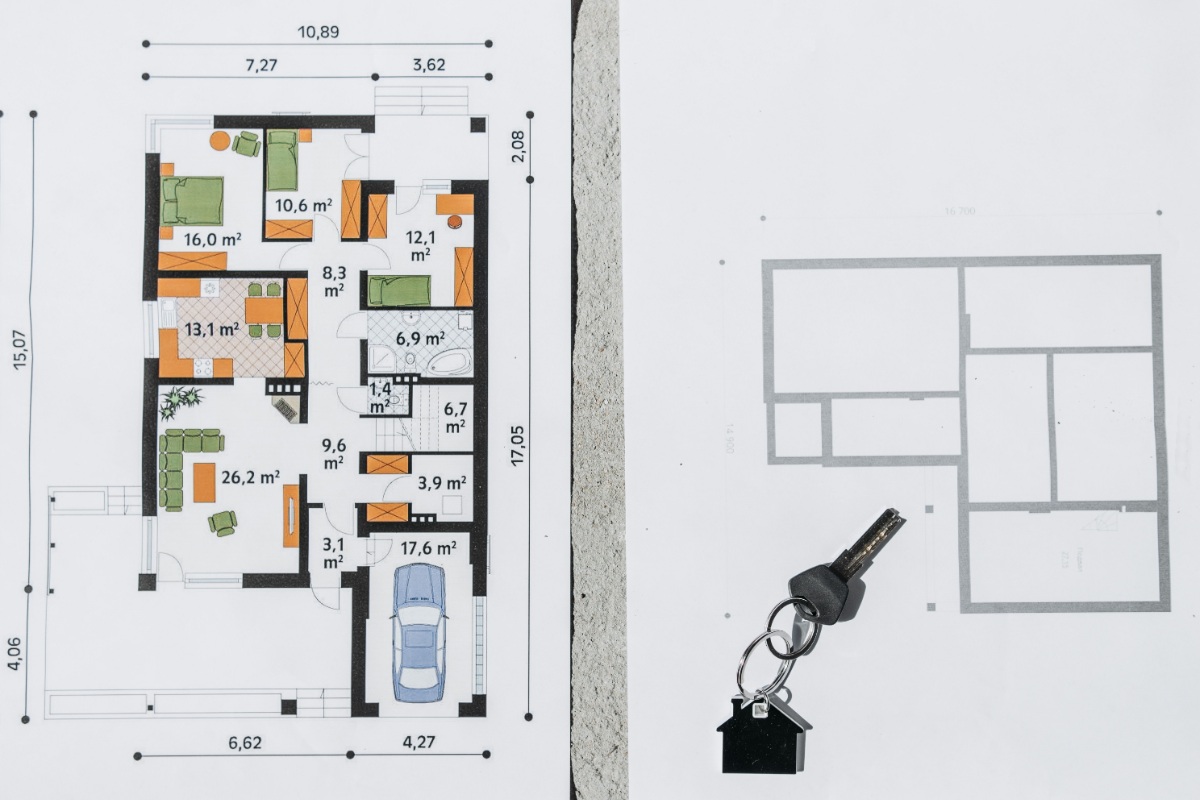
専有面積 is the private floor area shown for the unit under the listing method. Balconies, shared corridors and common entrances are generally separate from the living area, while special spaces such as lofts can require clarification.
Floor-plan drawings are useful but should not be treated as perfect scale drawings. At the viewing, check refrigerator and washing-machine spaces, door swings, ceiling height, storage depth, furniture routes and whether the actual room matches the advertisement.
- 専有面積: dedicated/private floor area
- バルコニー: balcony
- ロフト: loft
- メゾネット: unit arranged over more than one internal floor
- CL: closet; WIC: walk-in closet
- UB: unit bath; PS: pipe shaft; MB: meter box
Calculate the real monthly housing cost
賃料 or 家賃 is the base rent. Add 管理費 or 共益費 and every other recurring charge before comparing properties. A lower advertised rent can be more expensive once monthly support, parking, bicycle, water, internet or guarantee-company charges are included.
Free-rent campaigns also need careful reading. フリーレント normally waives the base rent for a stated period; other charges can continue, and an early-cancellation clause may require repayment of the benefit.
- Base rent
- Management or common-service fee
- Parking or bicycle fees
- Recurring guarantee-company fee
- Mandatory support or service fees
- Utility or internet charges collected with rent
Separate deposit, key money and every other move-in charge
敷金 is a security deposit that can be used to secure obligations such as unpaid rent or tenant-responsible damage. 礼金 is key money paid to the landlord and is generally non-refundable. A notation such as 敷1・礼1 usually means one month of rent for each item.
Do not stop at those two lines. Guarantee-company fees, brokerage, renter insurance, key replacement, cleaning, support services and administrative fees can materially change the total. Ask for a written estimate in yen before paying.
- 敷金: security deposit
- 礼金: key money
- 仲介手数料: brokerage fee
- 保証会社: rent-guarantee company charges
- 火災保険 / 借家人賠償保険: renter-related insurance
- 鍵交換費, 清掃費, 24時間サポート and other stated charges
Identify ordinary versus fixed-term leases before applying
普通借家 usually describes an ordinary lease that can continue through renewal subject to the contract and applicable law. 定期借家 is a fixed-term building lease that ends at the agreed term without ordinary renewal; a new contract is possible only if the parties agree.
The listing should trigger questions, not assumptions. Confirm the contract period, renewal fee, renewal administration fee, guarantee and insurance renewal, cancellation-notice period, and any short-term cancellation penalty.
- 契約期間: contract term
- 更新料: renewal charge
- 更新事務手数料: renewal administration fee
- 解約予告: required notice before leaving
- 短期解約違約金: early-cancellation penalty
- 再契約: possible new contract after a fixed term, only under the stated conditions
Read building structure, age, floor and direction as clues—not guarantees
Listings commonly show 木造, 鉄骨造, RC造 or SRC造. These structural descriptions matter, but they do not by themselves guarantee soundproofing, earthquake performance or comfort. Windows, wall assemblies, floor slabs, neighboring units and maintenance all matter.
The same caution applies to south-facing, corner-unit and top-floor claims. Direction and floor position affect the shortlist, but actual sunlight, heat, street noise and privacy must be checked at the property.
- 木造: wood construction
- 軽量鉄骨: light-gauge steel
- S造 / 鉄骨造: steel structure
- RC造: reinforced concrete
- SRC造: steel-reinforced concrete
- 築年月: construction date; 階 / 階建: unit floor / total stories
Treat station walking time as a standardized comparison
Real-estate advertising rules standardize walking-time calculations from road distance. The long-used display standard calculates one minute per 80 meters, with fractions rounded up. It is useful for comparing listings but is not a promise of your actual door-to-platform travel time.
Traffic lights, hills, station size, entrance location, weather and your walking speed can make the real trip longer. For a property you are serious about, walk the route at the time of day you would normally commute.
- Check which station entrance or property access point the listing uses
- Add transfer and platform walking time to your commute
- Check late-night and weekend service when relevant
- Verify bus frequency and last service for bus-dependent properties
Decode equipment and occupancy conditions before you fall in love with the room
Equipment icons and short labels can hide practical differences. バス・トイレ別, 室内洗濯機置場, 独立洗面台, 追焚機能, 浴室乾燥機, オートロック and 宅配ボックス are useful search terms, but you still need to confirm what is installed in the exact unit and who owns it.
Occupancy terms are equally important. 外国人可 means foreign applicants are accepted under the stated screening process; 外国人相談 means an application may be considered, not guaranteed. The same logic applies to pets, two-person occupancy, room sharing and instruments.
- 外国人可 / 外国人相談
- 二人入居可
- ペット可 / ペット相談
- ルームシェア可 / 相談
- 保証会社利用必須
- 保証人不要 can still mean a guarantee company is mandatory
Verify availability, transaction role and marketing claims
現況 describes the current status and 入居可能時期 indicates when move-in may be possible after screening, contracting, payment and key handover. 情報更新日 shows when the advertisement was updated, but availability can change before the next update.
取引態様 identifies the advertiser’s role, such as landlord, agent or broker. Also treat phrases such as 敷礼ゼロ, 保証人不要, ネット無料, リノベーション済 and 日当たり良好 as prompts for verification rather than complete explanations.
- Confirm the exact room is still available
- Ask who owns, manages and brokers the property
- Save the listing and written estimate
- Compare every major condition with the important-matters explanation and lease
- Do not pay because a marketing phrase sounds urgent or unusually cheap
Use a final pre-application checklist
Before submitting an application, ask the agent to confirm the property, total monthly payment, move-in estimate, refundable amounts, guarantee-company conditions, lease type, renewal and cancellation costs, occupancy restrictions, equipment and move-in timing.
Before signing, compare the listing with the actual room and the formal documents. The advertisement creates the shortlist; the viewing, written estimate, important-matters explanation, guarantee agreement and lease determine what you are actually accepting.
- Is this exact room available now?
- What is the total monthly payment?
- What is the full move-in amount in yen?
- Which charges are refundable?
- What renewal, cancellation and guarantee fees continue later?
- Are all occupants, pets and intended uses permitted?
- What differs from the current advertisement?

FAQ
Does 1LDK always mean a large apartment?
No. 1LDK describes the room arrangement, not a guaranteed size. Compare the dedicated floor area, room dimensions, shape and storage.
Does “no guarantor required” mean there is no guarantee fee?
No. A personal guarantor may be unnecessary because a rent-guarantee company is required. Check the initial, renewal and monthly charges.
Does south-facing guarantee strong sunlight?
No. It describes direction. Surrounding buildings, floor level, window size, balcony depth and season determine the actual light.
Can I rely on the advertised walking time?
Use it as a standardized comparison, not a personal travel-time guarantee. Walk the actual route and include station entrances, platforms, signals and hills.
What does “foreign residents negotiable” mean?
It means the application may be considered under the property’s screening conditions. It is not approval. Confirm residence status, income, emergency-contact, language and guarantee requirements.
Can the final contract differ from the listing?
Details can be updated or clarified, but unexplained differences should be resolved before payment or signing. Compare the advertisement, estimate, important-matters explanation, guarantee agreement and lease.
Official References
- Real Estate Fair Trade Council: Real Estate Advertising Rules and Enforcement Regulations
- Ministry of Land, Infrastructure, Transport and Tourism: Support for Foreign Residents Renting Private Housing
- Ministry of Land, Infrastructure, Transport and Tourism: Standard Residential Lease Agreement
- Ministry of Land, Infrastructure, Transport and Tourism: Fixed-Term Building Lease
- Ministry of Land, Infrastructure, Transport and Tourism: Guidelines on Restoration Disputes
Final Thoughts
Japanese apartment listings become manageable when you separate codes from decisions. Decode the layout, calculate complete monthly and move-in costs, identify the lease type, check occupancy and screening conditions, and verify the exact room. The listing is a shortlist tool; the viewing and formal written documents determine whether the apartment is truly suitable.