
Bicycle Rules in Japan: Registration, Insurance & Blue Tickets
A practical 2026 guide to owning and riding a bicycle in Japan: theft-prevention registration, used-bike transfers, liability insurance, helmets, road rules, blue tickets, parking, accidents and electric-assist checks.
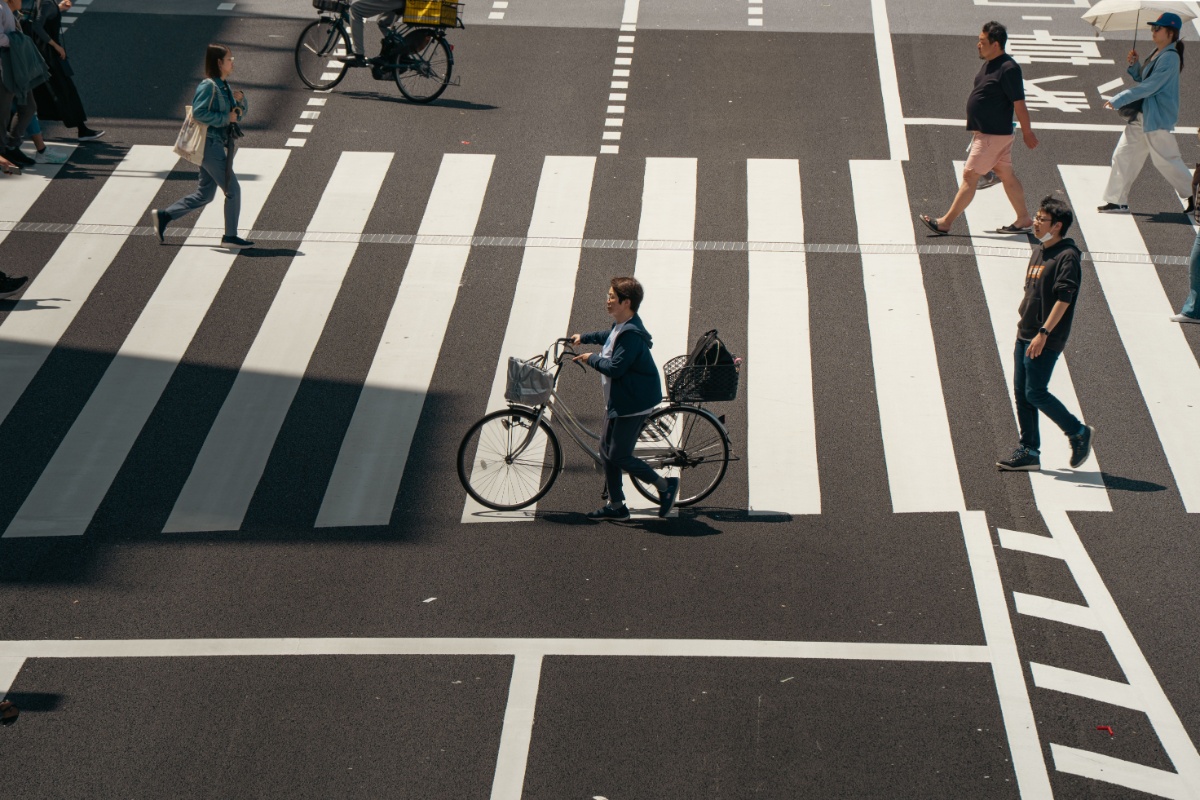
Before regular bicycle use in Japan, make sure the bicycle is theft-prevention registered under the correct owner, check the liability-insurance rule where you ride, and learn the traffic rules that apply to bicycles as vehicles. Ride on the left side of the roadway in principle, use sidewalks only in permitted or safety-related situations, obey signals and stop signs, use a light at night, never ride after drinking, and do not use a smartphone while moving. Helmet use is a nationwide duty to make efforts for all riders. Since April 1, 2026, riders age 16 and older can also be handled under the bicycle traffic-infraction notification system for designated violations. Registration procedures and insurance ordinances vary locally, so verify the prefecture or municipality that applies to you.
Register the Bicycle Under the Correct Owner
Japan's bicycle theft-prevention registration system, called bōhan tōroku (防犯登録), links a bicycle to an owner record so theft can be deterred and recovered bicycles can be identified. The Tokyo Metropolitan Police Department explains that bicycle owners are required to register their bicycles under the national bicycle-safety framework, while the actual registration system is operated through organizations designated by each prefectural public safety commission.
The local procedure matters. Do not assume that Tokyo's fee, validity period, accepted documents or transfer process is identical in another prefecture. In Tokyo, registration procedures are handled through authorized bicycle retailers, and the registration card should be kept because it is used for later changes, transfers, theft reports and disposal.
If you buy from a normal authorized bicycle shop, registration can usually be completed at purchase. Check the name, current address, bicycle description, frame number and registration number before you leave.
- Keep the purchase receipt and registration-card copy.
- Photograph the frame number and registration sticker clearly.
- Store the registration number somewhere you can access if the bicycle is stolen.
Handle Online Purchases and Used Bicycles Carefully
An online purchase, imported bicycle or secondhand bicycle can require more proof than a shop purchase because the registration point must be able to confirm ownership. Keep a receipt, sales certificate or invoice that identifies the seller, purchaser and bicycle. Take the physical bicycle when the local registration point requires inspection of the frame number.
For a used bicycle, do not simply continue riding under the previous owner's registration. Obtain the previous registration information and a transfer certificate or other ownership evidence accepted by the local system. In Tokyo, the new owner completes a new registration rather than inheriting the old owner's registration record unchanged.
A missing or altered frame number, a seller who refuses to provide ownership evidence, or registration details that do not match the bicycle should stop the transaction until the situation is clarified.
- Check the frame number before paying for a used bicycle.
- Match the bicycle to the receipt, registration record or transfer document.
- Confirm local requirements before accepting an out-of-prefecture bicycle.
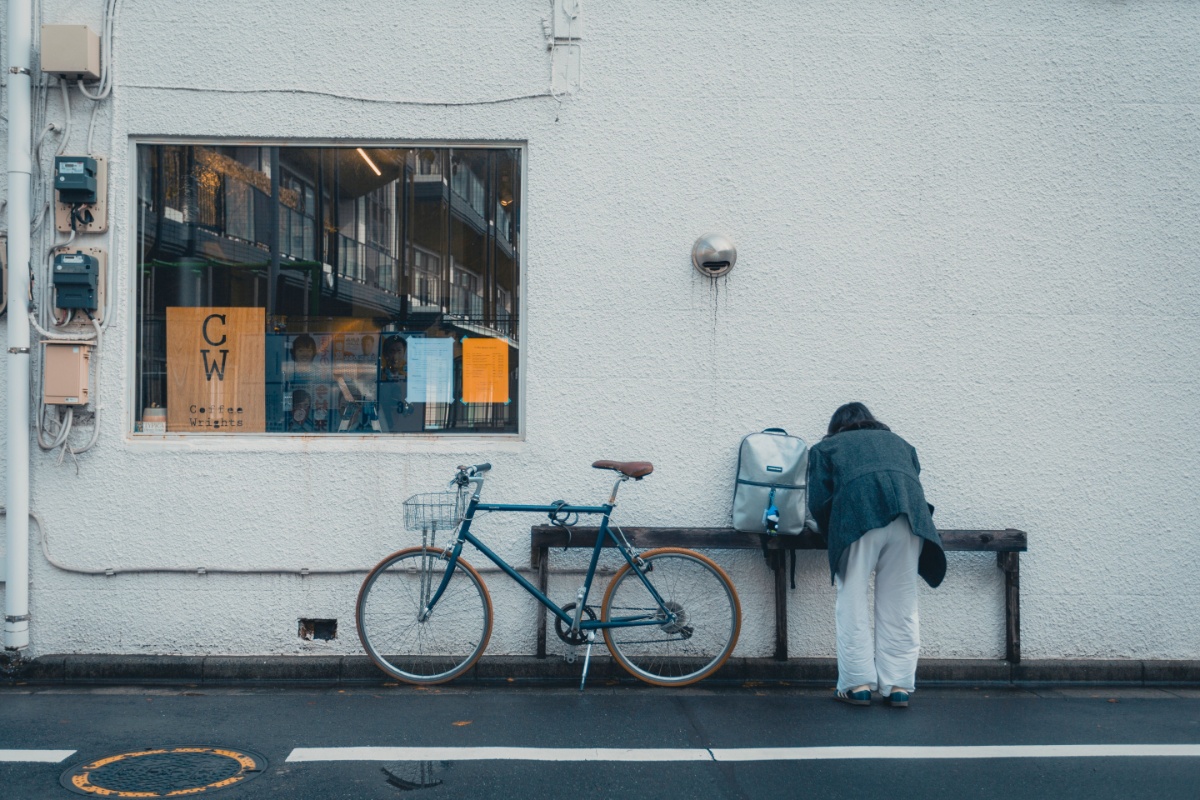
Update the Record When You Move, Sell or Dispose of the Bicycle
Registration information should continue to identify the actual owner. When your name or address changes, when you move to another prefecture, or when the bicycle is sold, given away or disposed of, follow the change, cancellation or new-registration procedure required by the relevant local registration organization.
Do not hand a bicycle to another person while leaving the record indefinitely in your name. Give the new owner the ownership and transfer documents required locally and keep evidence of the handover. If you move across prefectural lines, ask both the old and new registration organizations whether cancellation and new registration are needed.
Tokyo's police information states that its registration is valid for ten years counted from the year after registration; other prefectures can use different local arrangements, so check the rule that applies to your record.
- Address changed: check whether a local change procedure is available.
- Moving prefectures: verify cancellation and new-registration requirements.
- Selling or gifting: document the transfer and remove your ownership record correctly.
Check Bicycle Liability Insurance Where You Ride
Bicycle-liability requirements are imposed through prefectural and municipal ordinances rather than one identical nationwide insurance product. Check the official government page for the place where you ride. In Tokyo, bicycle users must have insurance or mutual-aid coverage capable of compensating another person for death or injury caused by bicycle use.
You may already have qualifying protection through personal-liability coverage attached to home or renters insurance, automobile insurance, a family policy, school coverage, an employer program or another product. Verify the actual policy wording instead of buying duplicate coverage automatically.
Business bicycle use needs separate attention. Tokyo's official guidance requires businesses using bicycles for work to maintain appropriate third-party liability coverage; personal coverage may exclude business use.
- Confirm who in the household is insured.
- Check liability limits, exclusions, deductibles and business-use treatment.
- Keep the insurer and policy contact details on your phone.
Wear a Helmet and Check the Bicycle Before Riding
Since April 1, 2023, all bicycle users in Japan have a legal duty to make efforts to wear a riding helmet. The National Police Agency continues to emphasize helmet use because head injury is a major factor in fatal and serious bicycle crashes.
A helmet should fit correctly and be fastened, but safety starts with the bicycle itself. Before riding, confirm that both brakes work, tires are properly inflated and undamaged, steering and chain operation are normal, the saddle and fasteners are secure, and the required light and reflector equipment works.
For children, check the local rules for child seats, permitted passengers and equipment as well as helmet use. Do not improvise passenger arrangements that make the bicycle unstable.
- Helmet fitted and chin strap secured.
- Front and rear brakes functioning normally.
- Front light and rear reflector or light ready for night use.
- Luggage secured so it cannot interfere with steering or wheels.
Ride on the Roadway and Keep Left in Principle
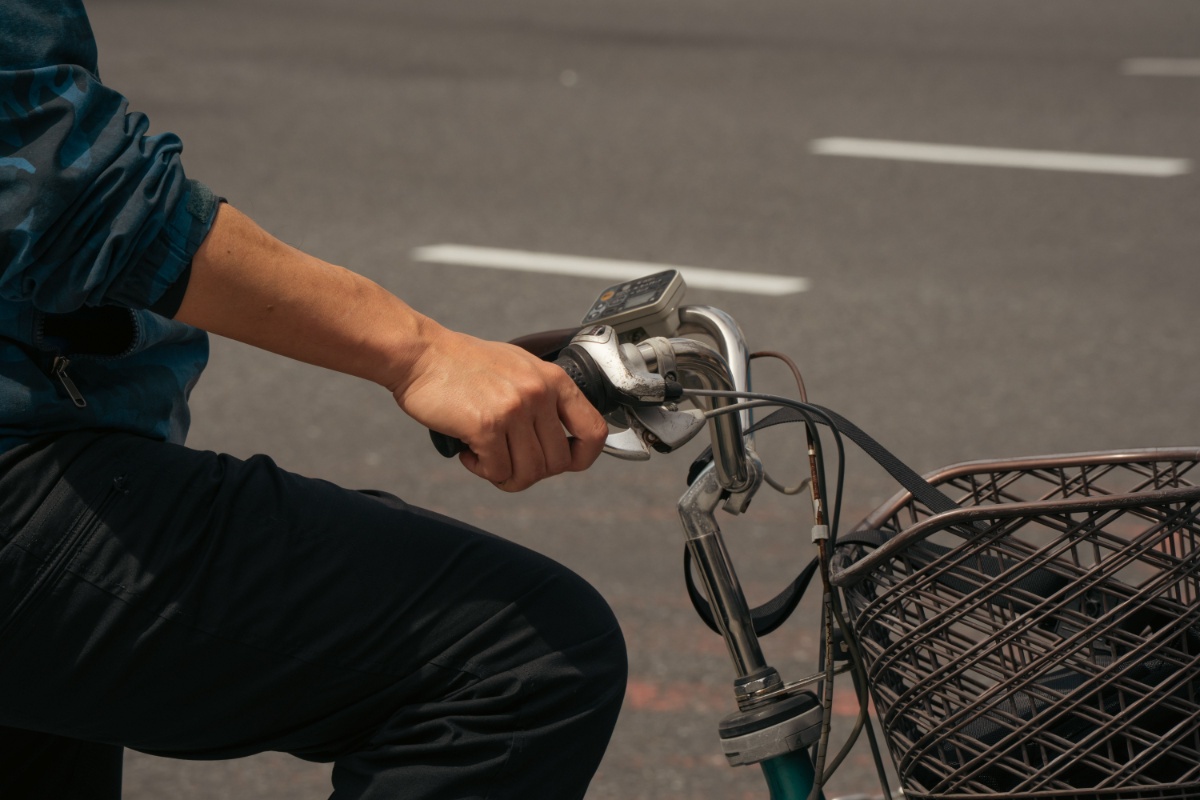
Under Japan's Road Traffic Act, a bicycle is a vehicle. When the roadway and sidewalk are separated, riding on the roadway is the basic rule and cyclists keep to the left. Follow bicycle lanes, bicycle paths, signs and road markings where they apply.
An ordinary bicycle may use a sidewalk in specified situations, including where signs or markings permit bicycle sidewalk use, when the rider is under 13, age 70 or older, or has a physical disability, and when concrete roadway or traffic conditions make roadway use unsafe.
When you lawfully use a sidewalk, pedestrians have priority. Ride slowly on the side closer to the roadway and be ready to stop. A bell is a warning device, not a tool for forcing pedestrians out of your path.
- Do not ride against traffic on the roadway.
- Slow down where pedestrians may enter your path.
- Move to the roadway side of the sidewalk when sidewalk riding is permitted.
Obey Intersections, Lights and High-Risk Prohibitions
Stop at stop signs, follow the signal that applies to your route and check carefully before entering intersections. Bicycle right turns generally use the two-stage method rather than cutting diagonally across traffic. Watch particularly for vehicles turning across your path and pedestrians entering crossings.
Use a front light at night. Do not ride after drinking. Do not hold a smartphone for a call or continuously look at a phone or other screen while riding. National penalties for bicycle smartphone use and alcohol-related bicycle conduct were strengthened from November 1, 2024 and remain in force in 2026.
Other unsafe habits can also create violations or serious accident risk: umbrella riding that blocks control or view, headphones that prevent awareness of traffic, carrying unstable bags on the handlebar, unsafe two-person riding, and ignoring railway-crossing controls.
- Stop completely where a stop sign requires it.
- Put the phone away until you are safely stopped.
- After drinking, walk or use another form of transport.
Understand the 2026 Bicycle Blue-Ticket System
On April 1, 2026, Japan extended the traffic-infraction notification system, commonly called the blue-ticket system, to bicycle riders age 16 and older for designated Road Traffic Act violations. Riders under 16 are not covered by this system and continue to be handled according to the circumstances of the case.
The National Police Agency says guidance and warnings remain the basic response for many ordinary violations. However, malicious or dangerous conduct, conduct likely to cause a serious crash, or conduct that actually creates danger can be handled through enforcement. Serious offenses such as drunk riding or dangerous obstruction remain subject to criminal procedures rather than being treated merely as an ordinary blue-ticket matter.
Do not use the existence of warnings as a tolerance rule. The legal traffic rule still applies from the first ride, and repeated or dangerous violations can lead to more serious consequences, including the bicycle-rider training system in qualifying cases.
- Blue-ticket coverage for bicycles: age 16 and older from April 1, 2026.
- Guidance does not make the underlying violation legal.
- Dangerous and serious conduct can move beyond an ordinary warning or blue ticket.
Park Only Where the Bicycle Is Allowed
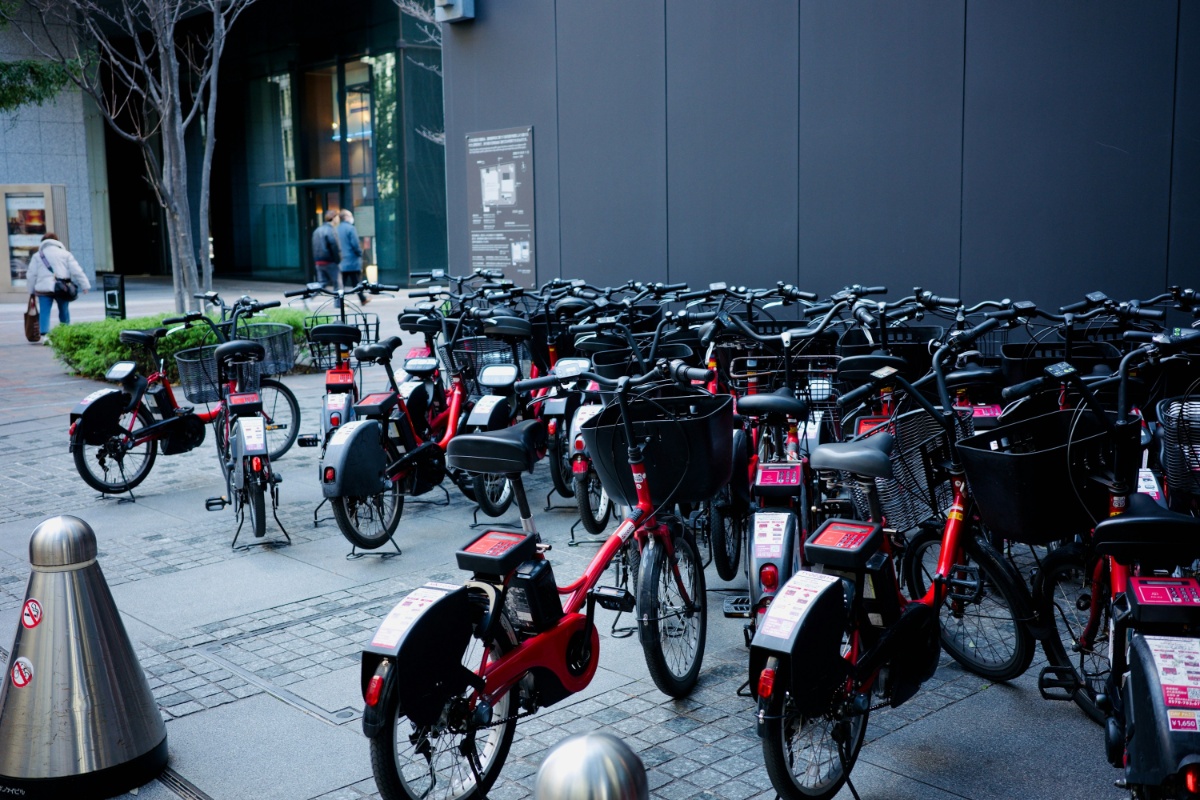
Use designated bicycle parking at stations, apartment buildings, workplaces, shops and public facilities. Do not leave a bicycle on tactile paving, station entrances, emergency routes, private property or a signed no-parking or removal area.
Municipalities can remove bicycles left in prohibited public areas and charge a local recovery fee. If your bicycle disappears from a station area, check the municipality's removal notices or storage-center information before concluding that it was stolen.
Lock the bicycle even in a managed parking area. A built-in lock plus an additional strong lock can reduce theft risk; use only a rack or fixed point where locking the frame is permitted.
- Check parking rules before leaving the bicycle.
- Do not block tactile paving or pedestrian flow.
- Keep the registration and frame number available for recovery procedures.
Report Theft and Bicycle Accidents Properly
If the bicycle is missing, first check whether a property manager or municipality removed it. If theft is likely, prepare the registration number, frame number, bicycle description, photos and ownership documents and report the theft to police promptly.
A bicycle crash is a road-traffic accident. Stop, prevent further danger, help injured people and call 119 when emergency medical assistance is needed. Report the accident to police and notify the relevant insurer. Do not leave only because the other person initially says that the injury is minor.
When it is safe, record the location, time, parties, witnesses and visible damage. Keep medical, repair and insurer records because symptoms or property damage can become clearer after the scene has ended.
- Police emergency: 110; ambulance/fire: 119.
- Exchange accurate contact information after a collision.
- Notify the insurer promptly and follow its evidence instructions.
Distinguish Electric-Assist Bicycles from Pedal-Equipped Motor Vehicles
A compliant electric-assist bicycle supports pedaling within the legal assistance limits and is treated as a bicycle. The National Police Agency publishes information on type-approved power-assisted bicycle models and explains that approved models meeting the assistance standards are subject to bicycle traffic rules.
A vehicle with pedals can still be a motor vehicle. If it has a throttle or can propel itself through motor power in a way that does not meet the legal electric-assist bicycle standard, it may be an ordinary moped or another motor vehicle. Pedaling such a vehicle does not automatically change its legal classification back into a bicycle.
Before buying an imported, unusually powerful or throttle-equipped model, confirm the legal classification. A motor-vehicle classification can trigger licence, number-plate, compulsory insurance, helmet and equipment requirements that do not apply to a normal bicycle.
- Do not rely only on the seller's phrase 'electric bicycle.'
- Check whether the model complies with Japan's electric-assist bicycle standards.
- Resolve the classification before riding on a public road.
Use a Simple Ownership and Safety Checklist
The easiest way to avoid bicycle problems in Japan is to keep ownership, insurance and riding rules as separate checks. Registration proves the owner record, insurance manages third-party financial risk, and traffic compliance determines how you may actually ride and park.
Create one bicycle record containing the receipt, frame-number photo, registration information, transfer documents, insurance details and bicycle photos. Then perform a short safety check before riding and confirm the parking destination before you leave home.
If you move, buy used, ride for work or switch to an electric model, revisit the relevant part of the checklist instead of assuming the original setup still applies.
- Ownership: registered, receipt stored, frame number photographed.
- Insurance: local requirement checked and policy coverage confirmed.
- Safety: helmet, brakes, tires, lights and luggage checked.
- Road: left-side roadway rule, signals and phone/alcohol prohibitions understood.
- Parking: legal destination identified before the trip.
FAQ
Do I need a driving licence for a normal bicycle in Japan?
No. A normal bicycle does not require a driving licence. A throttle-equipped or otherwise non-compliant powered vehicle may be legally classified as a moped or another motor vehicle and can require a licence and other motor-vehicle obligations.
Is bicycle theft-prevention registration mandatory?
Yes. Japan's bicycle-safety framework requires bicycle owners/users to obtain theft-prevention registration, while the actual registration process is operated locally through prefecture-designated organizations. Check the procedure where you use the bicycle.
Can I keep riding a used bicycle under the previous owner's registration?
Do not leave the bicycle registered to the previous owner. Obtain ownership and transfer evidence and complete the new-owner procedure required by the local registration organization.
Is a bicycle helmet mandatory in Japan?
All bicycle users have a legal duty to make efforts to wear a helmet. Non-wearing by itself is not treated like a standard helmet fine, but the National Police Agency strongly recommends helmet use because head injuries are a major cause of serious and fatal bicycle harm.
Can I ride a bicycle on the sidewalk?
Only in situations permitted by law or when concrete roadway or traffic conditions make roadway use unsafe. When sidewalk use is allowed, ride slowly on the roadway side of the sidewalk and give pedestrians priority.
Do bicycle riders get blue tickets in 2026?
Yes. Since April 1, 2026, riders age 16 and older can be handled under the traffic-infraction notification system for designated bicycle violations. Police guidance says warnings remain the basic response for many ordinary cases, while malicious, dangerous or serious conduct can lead to enforcement.
Is bicycle liability insurance required everywhere in Japan?
The requirement depends on local ordinances, so check the prefecture or municipality where you ride. Tokyo requires coverage that can compensate third parties for death or injury caused by bicycle use.
Official References
- National Police Agency: Bicycle Traffic Rules
- National Police Agency: Bicycle Rules and Enforcement FAQ
- National Police Agency: Bicycle Safety and 2026 Traffic-Infraction System
- National Police Agency: Bicycle Helmet Guidance
- National Police Agency: Type-Approved Electric-Assist Bicycles
- Tokyo Metropolitan Police Department: Bicycle Theft-Prevention Registration
- Tokyo Metropolitan Government: Bicycle Liability Insurance Requirement
Final Thoughts
A bicycle in Japan is simple to use once the responsibilities are separated clearly: register the actual owner, verify local third-party liability coverage, keep the bicycle roadworthy, follow vehicle rules, and park legally. The major 2026 change is enforcement rather than a new permission to ride differently: the blue-ticket system now reaches riders age 16 and older, while the underlying duties to ride left, protect pedestrians, obey signals, avoid alcohol and smartphone use, and use lights remain fundamental.