
How to Use City Hall in Japan: Ward Office Procedures, Documents & Tips
City hall and ward offices handle many essential resident procedures in Japan. Learn how to find the right office, prepare documents, use the counter, handle moving and My Number updates, obtain certificates and avoid wasted visits.
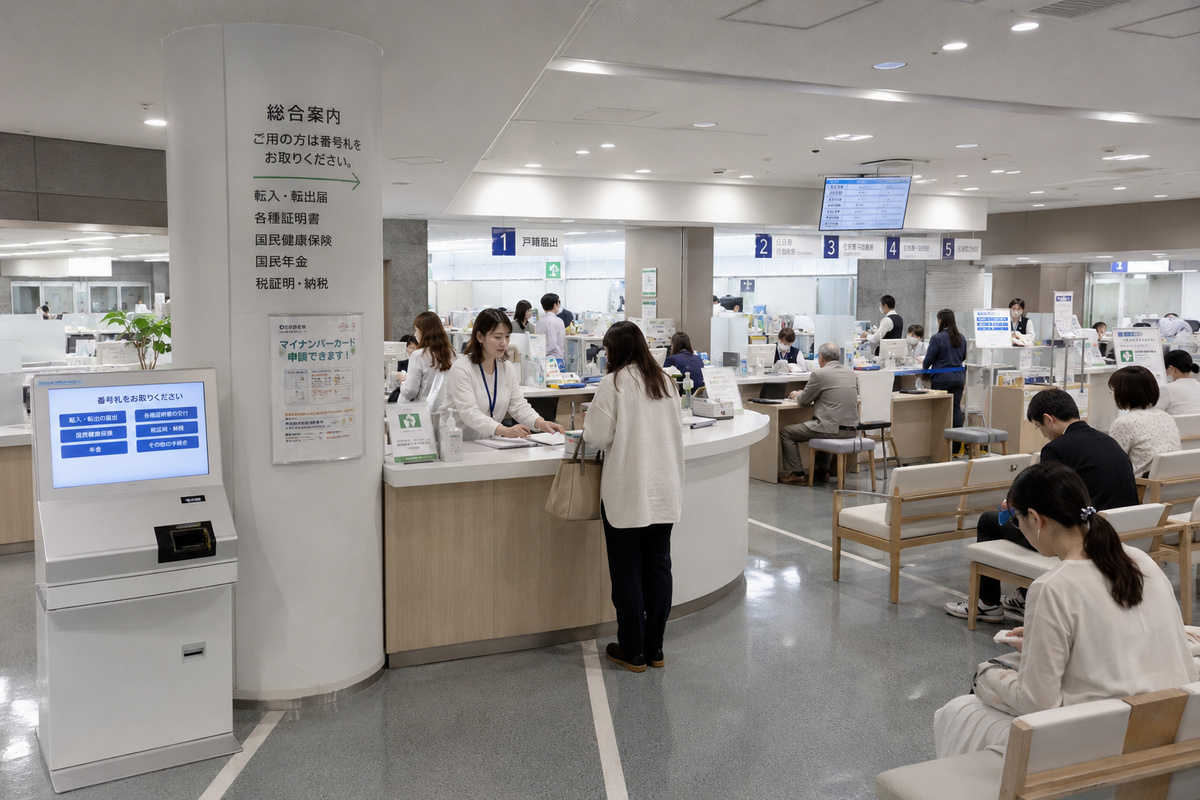
Before visiting city hall in Japan, confirm which municipality handles your registered address, the exact procedure, deadline, office location and required documents on that municipality's official website. At the office, use the information desk or ticket machine to find the correct counter, submit the form, show the required ID or cards, pay any applicable fee and keep the receipt or follow-up notice. Foreign residents should pay particular attention to address-related procedures: mid- to long-term residents must report a change of residence to the municipality within 14 days after moving, and My Number Card details must also be updated within 14 days when the registered information changes.
Know which local office is responsible for you
In everyday English, people often say 'city hall,' but the office may actually be a city office, ward office, town office, village office or a local branch. The correct office usually depends on the municipality where your resident record is registered.
Do not assume the nearest government building can handle your procedure. Some branch offices issue certificates but do not process every type of moving, insurance, tax, family or My Number procedure.
- 市役所 (shiyakusho) — city hall or city office.
- 区役所 (kuyakusho) — ward office.
- 町役場 (machiyakuba) — town office.
- 村役場 (murayakuba) — village office.
- 出張所 / 支所 — branch or local administrative office; available services vary.
Check the procedure before you leave home
Municipal rules, office hours, reservation systems, fees, accepted payment methods, branch-office services and multilingual support are not identical across Japan. Use your municipality's official website to confirm the current instructions for the exact procedure you need.
Look for the procedure name, responsible department, deadline, documents, whether a proxy is allowed, whether an appointment is available, and whether all or part of the procedure can be completed online.
- Confirm the correct municipality and office location.
- Check opening hours and holiday closures.
- Identify the department or counter responsible for the procedure.
- Check whether a reservation or numbered ticket is required.
- Verify required originals, copies, photos, PINs or supporting documents.
- Check the current fee and payment methods.
Bring the documents that city hall cannot reconstruct for you
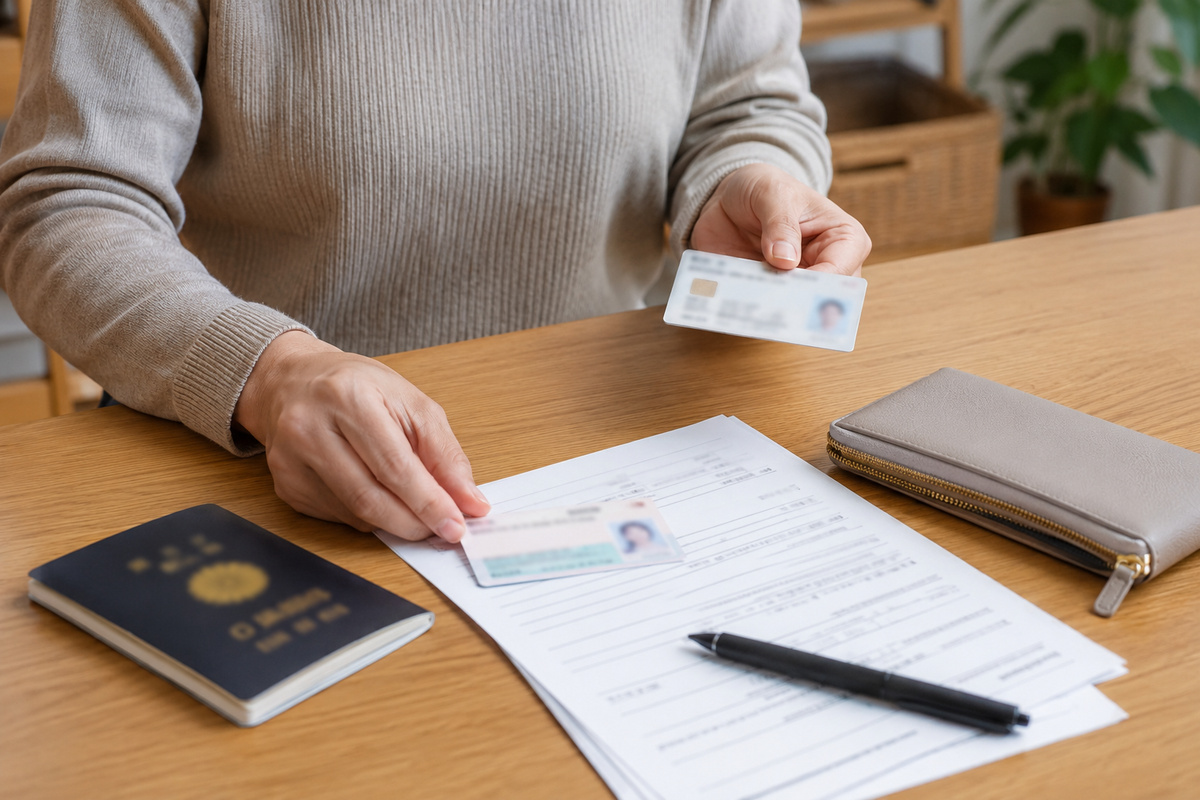
The exact list depends on the procedure, but residents commonly need identity documents and records that prove their residence, household relationship, eligibility or authority to act for someone else. Foreign residents should keep their residence card accessible rather than packing it away during a move.
If you are using a My Number Card, remember the card and the PIN required for the procedure. Some changes can affect electronic certificates on the card, so ask the counter whether an update or reissue is required.
- Residence card or other required identity document.
- My Number Card and the relevant PIN when the procedure uses it.
- Passport when the municipality or procedure specifically requires it.
- Supporting documents listed by the municipality.
- Letter of authorization and representative ID when a proxy is permitted.
- Any notice, application form or reference number related to the case.
What happens after you enter the office
Most larger offices use an information desk, numbered counters or a queue-ticket system. If you are unsure where to go, show the procedure name or notice to the information desk instead of choosing a counter at random.
At the service counter, staff may check your identity, household information and supporting documents before accepting the form. A single life event such as moving can involve several departments, so you may receive instructions to visit another counter before leaving.
- Ask the information desk for the correct counter.
- Take a numbered ticket if the office uses one.
- Complete or correct the required form.
- Present the required cards and supporting documents.
- Pay any applicable fee using the method accepted there.
- Keep the receipt, certificate, updated card or follow-up instruction.
City hall handles many resident procedures, but not everything
Municipal offices commonly handle resident registration, moving notifications, National Health Insurance administration, local tax matters, certificates and a range of family, welfare and child-related services. The exact organization and department names differ by municipality.
National agencies, employers, banks, utilities, landlords and immigration-related procedures can require separate notifications. Completing one city-hall form does not automatically update every organization that has your address or personal information.
- Resident registration and address changes.
- Moving-out, moving-in and moving-within notifications.
- National Health Insurance procedures for eligible residents.
- Resident-tax and municipal tax certificates or inquiries.
- Certificates such as a copy of the resident record where available.
- Child, family and welfare programs administered locally.
- My Number Card-related municipal procedures.
Foreign residents should treat address changes as a deadline task
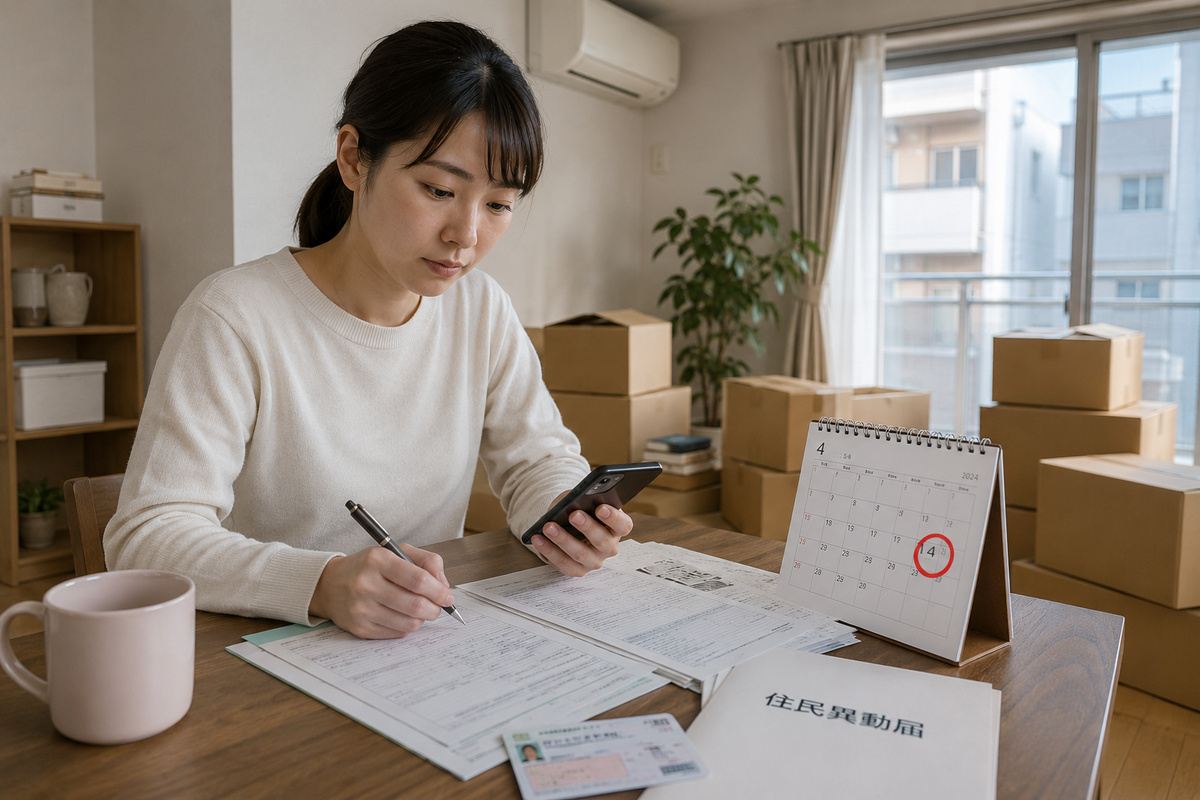
For mid- to long-term foreign residents, a change of residence must be reported within 14 days after moving to the new residence. The notification is made at the municipal office responsible for the new address, and the residence card is used for the procedure.
A municipal address update is not the same as every other immigration notification. If your employer, school, status of residence or another immigration-related fact is changing at the same time, check whether a separate procedure with the Immigration Services Agency is required.
- Do not wait for mail to arrive at the new address before registering the move.
- Bring the residence card for each person whose address must be updated.
- Keep the actual move-in date accurate.
- Check separate immigration obligations when another status-related fact also changes.
Use Mynaportal when it can remove an unnecessary trip
Japan's online moving service allows eligible My Number Card users to submit a moving-out notification through Mynaportal and send the destination municipality advance notice of the planned visit. In principle, that can remove the need to visit the old municipality just to file the moving-out notice.
The destination step is different: the moving-in or moving-within notification still requires the destination municipal procedure. Mynaportal also shows moving-related procedures and items to bring, which can help reduce missed steps.
- Online moving-out requires the eligible My Number Card/electronic-signature setup.
- Wait until the online moving-out submission is processed before the destination procedure.
- The destination municipal visit is still required for the moving-in or moving-within notification.
- Some related procedures may still require separate in-person action.
Update the My Number Card when registered information changes
When information printed or recorded on a My Number Card changes because of a move or another registered change, the card must be updated at the municipality within 14 days.
A change of address can also affect electronic certificates used for digital signatures. If you rely on online applications, ask whether the signing electronic certificate needs to be reissued after the address change.
- Bring the physical My Number Card.
- Bring or remember the PIN needed for the relevant card function.
- Complete the card-information update within the required period.
- Check the status of electronic certificates after the change.
Check whether you can get certificates without visiting city hall
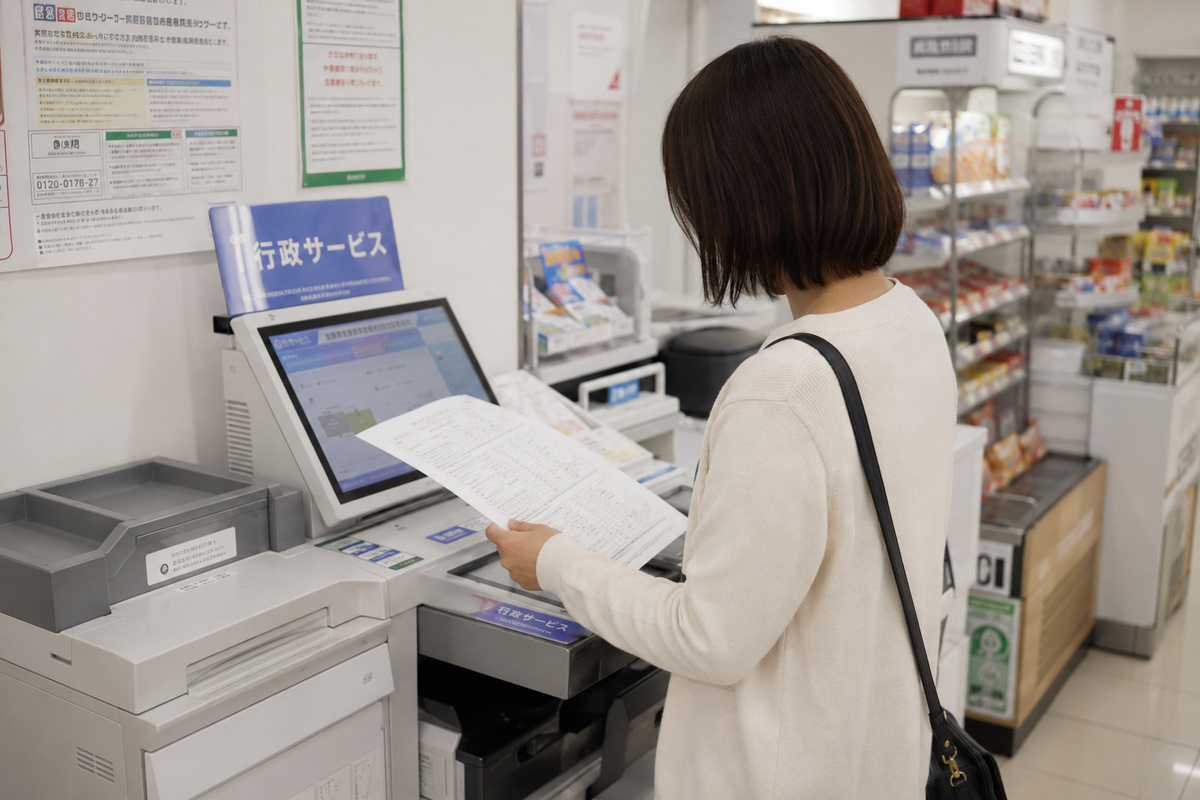
Participating municipalities offer convenience-store certificate issuance using a My Number Card or, where supported, a smartphone with the required electronic certificate. The available documents depend on the municipality and the applicant.
Common examples include copies of the resident record and seal-registration certificates, but availability, eligibility, fees and operating conditions vary. Check the official convenience-store certificate service before making a special trip to city hall.
- Confirm that your municipality participates.
- Check whether the certificate you need is offered.
- Confirm the required card, smartphone setup and PIN.
- Review the certificate contents before finalizing issuance.
- Use city hall when your case requires staff review or a certificate not offered through the kiosk.
Handle language barriers without guessing at the deadline
Multilingual websites, interpreters and language-support arrangements vary by municipality. If you cannot explain the procedure in Japanese, prepare the exact procedure name, your deadline, your address and the document you received so staff can identify the issue quickly.
Machine translation can help with ordinary forms, but names, legal wording, dates and numbers should be checked carefully. For a procedure with immigration, legal, tax, medical or major financial consequences, confirm uncertain wording with the issuing office or qualified support.
- Show the notice or procedure name rather than describing the issue from memory.
- Write down the deadline and reference number.
- Ask whether English or another language is available.
- Use simple questions such as 'What do I need to do today?' and 'Which documents are missing?'
- Do not leave an urgent procedure unresolved just because full translation is difficult.
Avoid the mistakes that cause repeat visits
Most wasted trips come from using the wrong office, arriving without a required card or PIN, assuming a proxy can handle the procedure, or discovering that another department closes earlier or requires a reservation.
Before leaving the building, confirm whether the procedure is fully complete, whether another counter is required, when any new card or certificate will be issued, and whether you must update another organization separately.
- Wrong municipality or branch office.
- Missing residence card, My Number Card or PIN.
- No authorization document for a proxy procedure.
- Arriving too close to closing time for a multi-counter procedure.
- Assuming city hall automatically updates banks, utilities, employers or landlords.
- Leaving without a receipt, reference number or next-step instruction.
FAQ
What is the difference between city hall and ward office in Japan?
The name depends on the local government structure. A city may use a city office, while designated cities and Tokyo's special wards use ward offices for many resident procedures. Use the office responsible for the municipality where your resident record is registered.
Do I need an appointment to visit city hall?
Not always. Appointment systems and walk-in rules vary by municipality and procedure. Check the municipality's official website before visiting, especially for My Number Card services and busy moving-season procedures.
Can I use city hall if I do not speak Japanese?
Yes, but language support varies. Bring the notice or procedure name, deadline and required documents, and ask whether multilingual staff, an interpreter or another support method is available.
Can I complete a move entirely online with My Number Card?
No. Eligible users can submit the moving-out notification online through Mynaportal and notify the destination municipality of the planned visit, but the moving-in or moving-within notification still requires the destination municipal procedure.
How soon must a foreign resident report a new address?
Mid- to long-term foreign residents must report a change of residence within 14 days after moving to the new residence, through the municipal office responsible for the new address.
Can I get a residence certificate at a convenience store?
In participating municipalities, eligible users can obtain certain certificates such as a copy of the resident record through supported convenience-store kiosks using a My Number Card or supported smartphone setup. The documents available differ by municipality.
Official References
Final Thoughts
City hall becomes much easier when you arrive with one clearly defined procedure rather than a general problem. Confirm the municipality, deadline, documents, cards and PINs before leaving home; use the information desk to reach the correct counter; and check whether a separate department or outside organization still needs an update. Because office rules and available services differ locally, the destination municipality's current official instructions should always be the final check.