How to Join National Health Insurance in Japan: Eligibility, 14-Day Deadline, Documents & My Number
A practical guide to joining Japan’s National Health Insurance, including eligibility, the 14-day deadline, documents, My Number, premiums and what to do when your status changes.
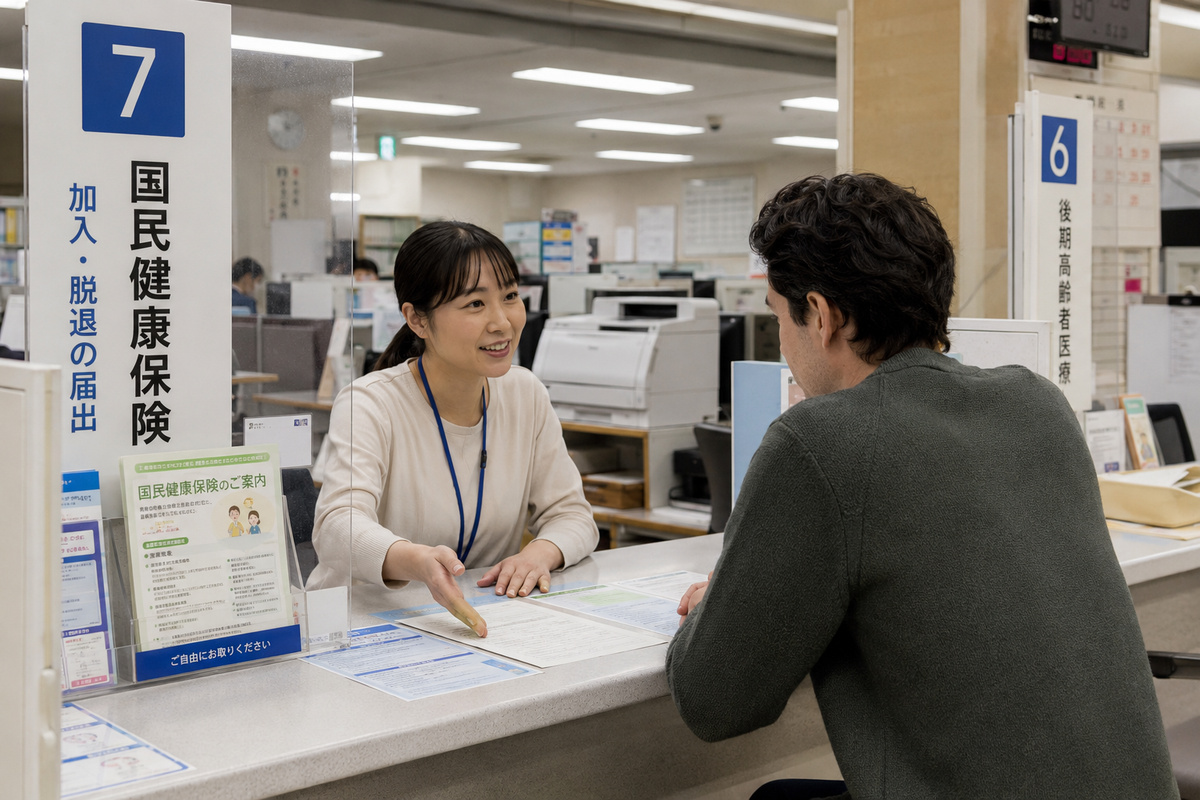
If you are registered as a resident in Japan and are not covered by employee health insurance, an approved dependent arrangement, public assistance or another qualifying public medical insurance system, you will generally need to join municipal National Health Insurance. Report the change to your municipality within 14 days of becoming eligible. In 2026, medical institutions normally confirm coverage with a My Number Card registered for health-insurance use or an eligibility confirmation document issued by the insurer.
First, check whether National Health Insurance is the right system for you
National Health Insurance, commonly called NHI or kokumin kenko hoken, is the municipal public medical insurance system for residents who are not covered by another qualifying public medical insurance plan.
The most important first step is to confirm your current insurance status. If an employer is enrolling you in employee health insurance, or if you qualify as another person’s dependent, you generally should not enroll in municipal NHI at the same time.
Foreign-resident eligibility can also depend on residence registration and residence-status conditions. Do not decide from visa length or employment status alone; ask the municipality if your situation is unclear.
- You recently moved to Japan and registered an address but have no other public health insurance.
- You left a job and your employee health insurance ended.
- You stopped qualifying as another person’s dependent.
- You are self-employed, freelance, studying, between jobs or otherwise not covered by employee insurance.
- You moved from another municipality and need to establish NHI coverage in your new municipality.
The 14-day deadline: when you need to report the change
The Ministry of Health, Labour and Welfare states that people must submit the required notification to their municipality within 14 days when they become insured by NHI or when they leave it.
The 14-day period can start after a move, loss of employee insurance, loss of dependent status or another change that makes you eligible. The effective date of coverage may be earlier than the day you finally visit city hall.
Late filing can create retroactive premiums and extra reimbursement procedures for medical bills paid before your enrollment was processed. If you have already missed the deadline, contact the municipality rather than waiting longer.
- Confirm the exact date your previous insurance ended.
- Keep any certificate showing loss of employee health-insurance eligibility.
- If you recently moved, complete resident-registration procedures as required.
- Ask the municipal office which date it will use as your NHI eligibility start date.
Where to apply and what to bring to city hall
NHI is administered by the municipality where you are registered as a resident, so the office name, counter location, required documents and available online or mail procedures differ by city, ward, town or village.
Before visiting, check the official municipal website. Some municipalities handle NHI at the main city hall, while others also accept procedures at branch offices.
If you recently left a job, proof of the date your employee health insurance ended is especially important because a resignation notice by itself may not be enough to establish the insurance-loss date.
- Residence card or other accepted identity document.
- My Number Card or another accepted document showing your Individual Number, if requested.
- Proof that previous employee or dependent coverage ended, when applicable.
- Documents for family members who are enrolling in the same household.
- Bank-account information if you want to set up automatic premium payment and the municipality supports it.
- Any additional document listed by your municipality for your specific reason for enrollment.
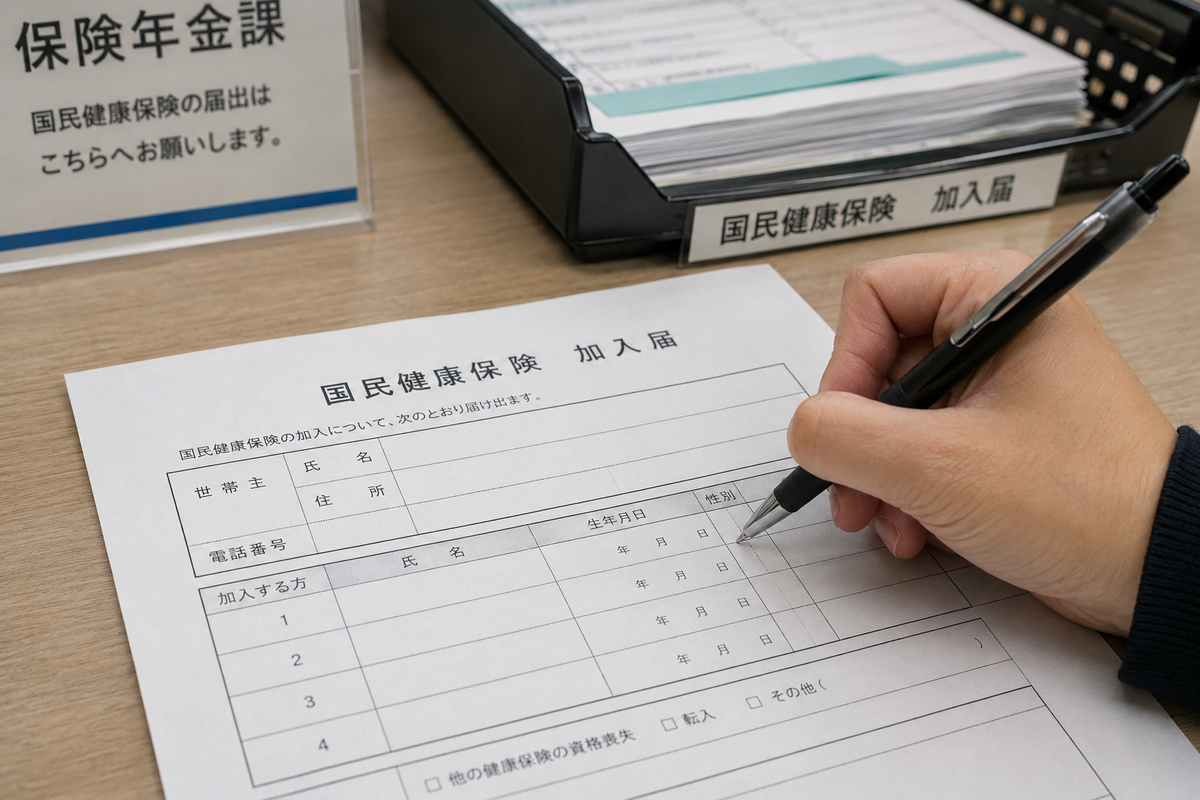
What happens during the enrollment procedure
At the counter, explain why you need to join NHI and provide the date your previous coverage ended or the date you became a resident in the municipality. The staff will check eligibility, household information and the documents required for your case.
Before leaving, confirm the effective date of NHI coverage, who in the household is enrolled, what proof of eligibility you should use, when premium notices will arrive and whether any additional document must be submitted later.
Do not assume that resident registration automatically completes NHI enrollment. The procedures are related but separate.
- Confirm your eligibility start date.
- Confirm which household members are enrolled.
- Ask when the first premium notice will be sent.
- Ask how to pay and how to change the payment method later.
- Ask what procedure is required if you start a new job, move or leave Japan.
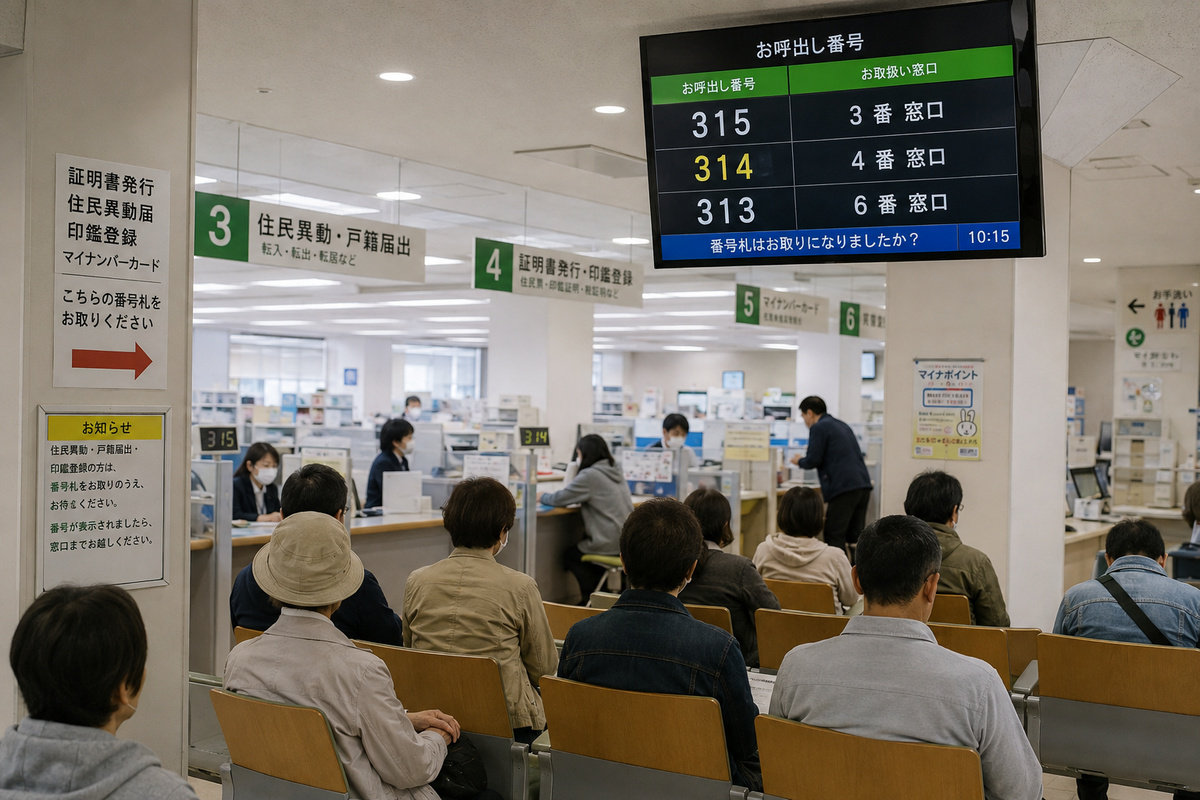
How to prove your health-insurance eligibility in 2026
Traditional health-insurance cards are no longer the standard proof of coverage. In 2026, insured people generally use a My Number Card registered for health-insurance use, known as a My Number Insurance Card, or an eligibility confirmation document issued by the insurer when applicable.
Joining NHI and registering a My Number Card for health-insurance use are separate processes. If your NHI enrollment has just changed, electronic eligibility data may take time to update, so ask the municipality which document you should use in the meantime.
Do not confuse a notice showing qualification information with a document that can independently prove eligibility at a medical institution. Follow the instructions issued by your insurer or municipality.
- My Number Insurance Card: use your registered My Number Card at supported medical institutions and pharmacies.
- Eligibility confirmation document: use the valid document issued by the insurer when applicable.
- After any insurance change, confirm that the new eligibility information is reflected before relying on the card alone.
How National Health Insurance premiums are calculated and paid
There is no single nationwide NHI premium. Municipalities calculate premiums or insurance taxes under local rules, so the amount can differ even for households with similar income.
The calculation commonly uses previous-year income, the number and ages of insured household members and annual municipal rates. For members aged 40 to 64, the premium can also include a long-term-care insurance component.
Premium notices are usually managed at household level. Even if the head of household is not personally enrolled, notices may still be addressed to that person under municipal rules.
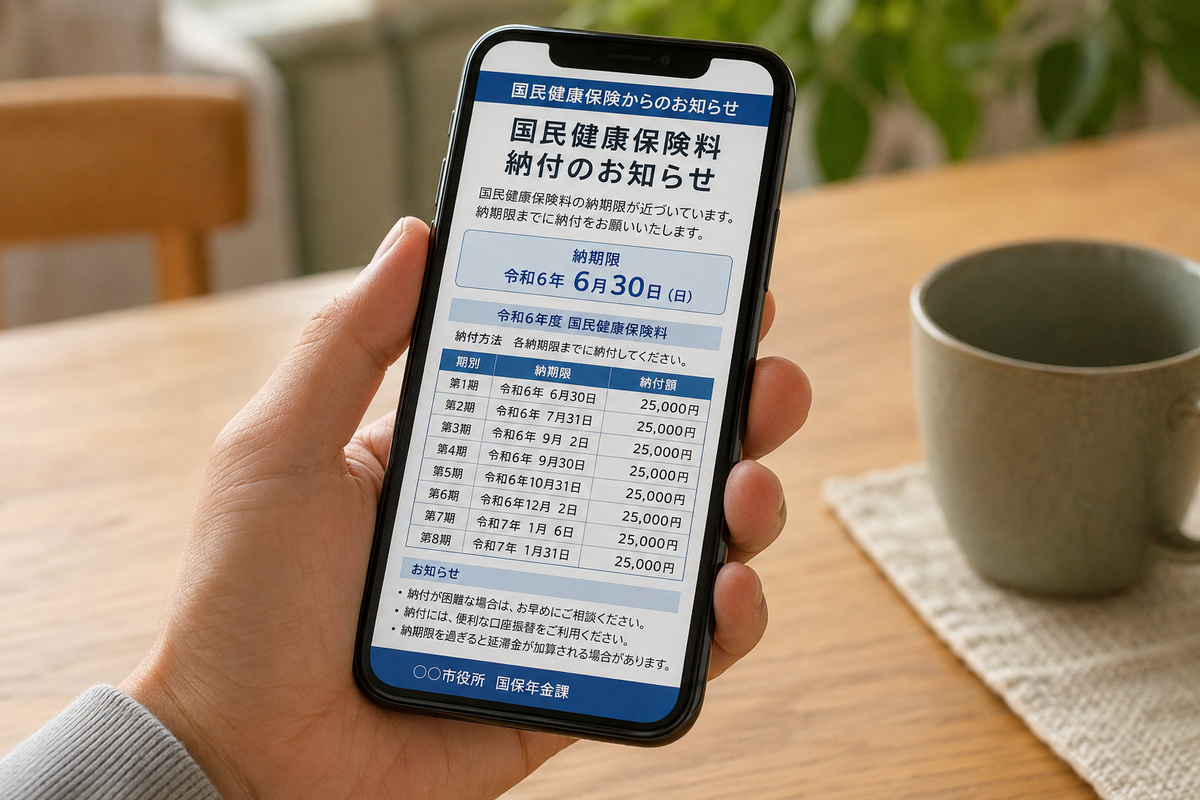
Payment methods differ by municipality and can include payment slips, convenience-store payment, bank transfer, automatic withdrawal and approved online or smartphone methods.
- Check the annual premium decision notice rather than estimating from another city’s rates.
- If you recently arrived in Japan, ask whether an income declaration is required even if you had no Japanese income in the previous year.
- Keep receipts or digital payment records until the municipality reflects the payment.
- Contact the municipality early if a premium notice appears incorrect.
Using NHI at clinics and pharmacies
NHI covers approved medically necessary treatment under Japan’s public medical insurance rules. Most working-age adults generally pay 30 percent of the approved cost at the point of care, while different statutory percentages apply for some age and income groups.
Not every service is covered. Cosmetic treatment, some health checks, optional private-room charges, some vaccinations and other non-insured services may be charged separately.
If covered medical expenses become very high, Japan’s High-Cost Medical Expense Benefit can limit the patient’s burden according to age, income and other conditions. The system was revised from August 2026, so use current MHLW information or ask your municipality before expensive planned treatment.
- Bring your My Number Insurance Card or valid eligibility confirmation document.
- Ask whether a treatment or optional service is covered before agreeing to a large charge.
- Keep receipts when you pay the full amount because your eligibility could not be confirmed.
- For planned hospitalization or expensive care, check the current high-cost medical expense rules in advance.
If premiums are difficult to pay, contact the municipality before the deadline
Ignoring premium notices can lead to reminders, late charges and collection procedures. If payment is difficult, contact the municipal NHI office before the due date.
Depending on your income, job-loss circumstances, disaster impact or other local conditions, reductions, exemptions, special calculations or payment consultation may be available. Eligibility and required evidence vary by municipality.
A low or zero income does not automatically mean the premium is zero. The municipality may need an income declaration before it can apply an income-based reduction.
- Bring recent income or job-loss documents if requested.
- Ask whether an installment arrangement or reduction program applies.
- Do not skip notices because you are waiting for another procedure to finish.
- Keep written confirmation of any approved payment arrangement.
When your situation changes: job, move, family change or leaving Japan
NHI does not always stop automatically when another insurance system starts. If you join employee health insurance, notify the municipality and complete the NHI withdrawal procedure within the required period.
When moving to another municipality, you generally leave NHI in the old municipality and complete the appropriate enrollment procedure in the new one. Premium rates and payment schedules can change after the move.
Before leaving Japan, complete the required moving-out and NHI procedures and confirm any final premium balance or refund. Also report household changes that affect insurance eligibility.
- Starting employee insurance: confirm the new start date and withdraw from NHI.
- Leaving employee insurance: compare NHI, voluntary continuation and dependent coverage without missing their separate deadlines.
- Moving municipality: complete old-municipality and new-municipality procedures.
- Leaving Japan: complete moving-out and NHI withdrawal procedures before departure where possible.
- Family changes: report births, deaths, moves and changes in dependent or employee-insurance status.
National Health Insurance enrollment checklist
The safest approach is to treat NHI as a status-change procedure rather than a single form. Confirm your current insurance first, establish the correct eligibility date, bring evidence of the change and leave city hall knowing exactly how you will prove coverage and pay premiums.
Municipal rules differ, so use national guidance for the basic framework and your own municipality’s official website for the exact documents, counters and payment methods.
- I confirmed that I am not already covered by employee insurance or an approved dependent arrangement.
- I know the date my previous coverage ended or my NHI eligibility began.
- I checked the 14-day notification deadline.
- I prepared identity, My Number and insurance-loss documents required by my municipality.
- I confirmed my NHI eligibility start date at the counter.
- I know whether to use a My Number Insurance Card or an eligibility confirmation document.
- I know when premium notices should arrive and how to pay them.
- I know what to do if I start a job, move, cannot pay or leave Japan.
FAQ
Do all foreign residents in Japan have to join National Health Insurance?
No. People covered by employee health insurance, an approved dependent arrangement, public assistance, the medical care system for people aged 75 and over, or another qualifying public medical insurance system generally should not join municipal NHI. Residence status and registration also matter.
How soon do I need to join National Health Insurance?
You generally need to submit the required notification within 14 days after becoming eligible, such as after moving into the municipality or losing employee health insurance.
Can I join NHI without a My Number Card?
A physical My Number Card is not the same thing as NHI eligibility. Municipalities can process NHI enrollment using the documents they require, and insurers provide an eligibility-confirmation method for people who are not using a My Number Insurance Card.
Will I receive an old-style health insurance card?
No new traditional health-insurance cards are issued under the current system. In 2026, coverage is normally confirmed with a My Number Insurance Card or a valid eligibility confirmation document issued by the insurer when applicable.
How much does National Health Insurance cost?
There is no nationwide fixed amount. Premiums depend on the municipality, previous-year income, household composition, age and the annual premium rates and reductions that apply.
Do I automatically leave NHI when I start a new job?
Not always. After employee health insurance begins, confirm the start date and notify the municipality so that your NHI coverage and final premium calculation can be closed correctly.
Official References
- Ministry of Health, Labour and Welfare: National Health Insurance Enrollment and Withdrawal
- Digital Agency: Using a My Number Card as a Health Insurance Certificate
- Digital Agency: My Number Card and Health Insurance Qualification Materials
- Ministry of Health, Labour and Welfare: High-Cost Medical Expense Benefit
- Shinjuku City: National Health Insurance
Final Thoughts
National Health Insurance is much easier to manage when you confirm the correct insurance system before going to city hall. Check the date your previous coverage ended, complete the municipal notification within 14 days, confirm how you will prove eligibility in 2026, and keep every premium notice and payment record. When you start a job, move or leave Japan, treat that change as a new insurance procedure rather than assuming the system updates itself automatically.