
How to Pay Bills at a Convenience Store in Japan: Barcodes, Cash, Receipts & Rules
Many Japanese bills can be paid at a convenience-store register if the payment slip is still valid and the store is listed as an accepted location. This guide explains how to check the slip, pay safely, keep proof, and handle tax, pension, utility, and rejected payments.
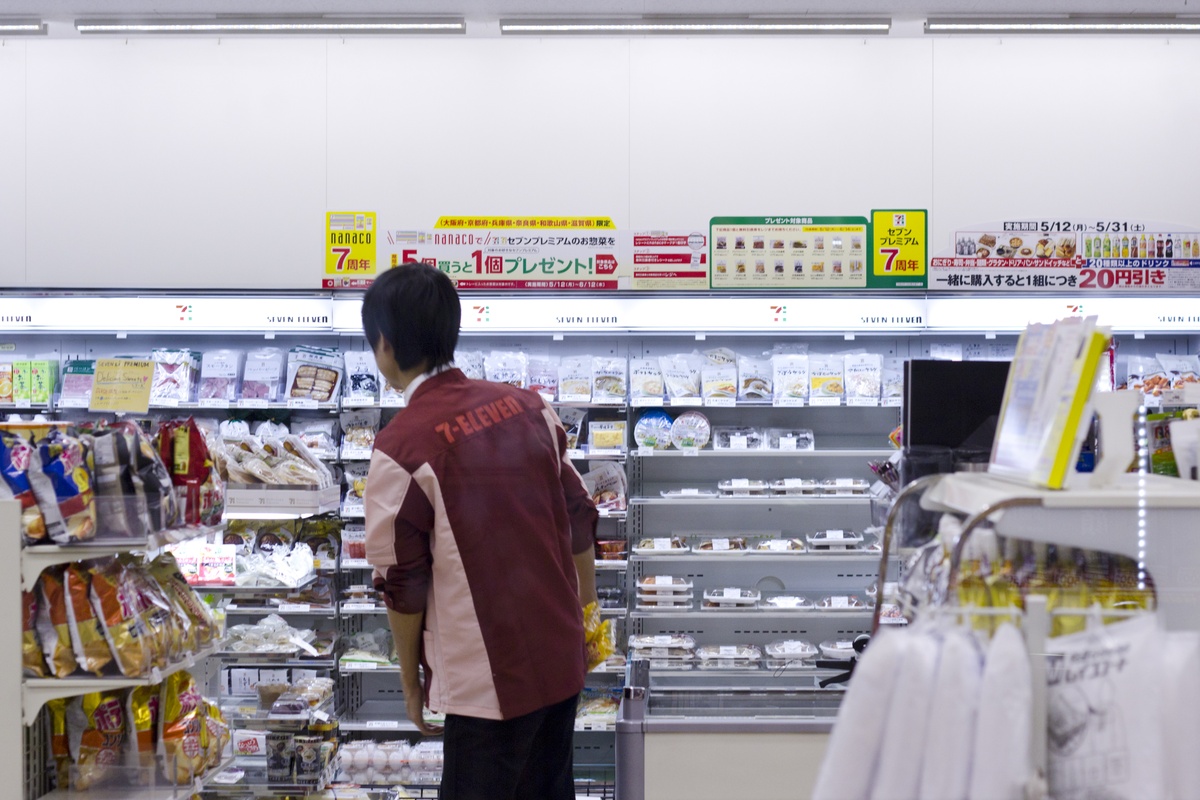
For a normal paper payment slip, first confirm the issuer, amount, payment or handling deadline, readable barcode, and the convenience-store chains printed as accepted locations. Take the complete slip to a participating store, use cash unless that specific bill and chain clearly allow another method, confirm the register amount, and keep the stamped customer copy or payment receipt. If the barcode is damaged, the handling period has expired, the store is not listed, or the payment exceeds that collection system’s limit, contact the issuer instead of trying to alter the slip.
1. Know Which Type of Payment Document You Have
Several documents used in Japan look similar but do not follow the same payment route. A paper payment slip with a convenience-store barcode is normally taken directly to the cashier. A document that gives payment numbers may require a store terminal or multi-copy machine first. National tax can also use a special QR-code route in which a supported kiosk converts the QR information into a payment form for the register.
Common issuers include electricity, gas and water companies, municipalities, the Japan Pension Service, insurers, telecommunications companies, online sellers and other service providers. FamilyMart’s current collection-service guidance includes utility charges, telephone, water, insurance, National Pension and various public charges, but only qualifying slips are accepted.
The safest rule is simple: follow the instructions printed by the issuer. A barcode by itself does not mean that every convenience-store chain can process the bill.
- Paper barcode slip: usually taken directly to the cashier.
- Payment-number instructions: may require a kiosk or multi-copy machine first.
- National-tax QR code: handled through a supported kiosk, then paid at the register.
- App payment: a separate payment route; do not also pay the paper slip afterward.
2. Check the Slip Before You Leave Home
Check the issuer name, your name or account reference, billing period, amount and deadline. If the service period or amount looks unfamiliar, contact the issuer before paying. This also prevents duplicate payment when an original bill and a reminder arrive close together.
Look for terms such as 支払期限 (shiharai kigen, payment deadline), 納期限 (nōkigen, tax or contribution due date) and 取扱期限 (toriatsukai kigen, handling deadline). An issuer may still accept some overdue forms, but that is not universal. The fact that a barcode still scans does not automatically cancel late fees, collection action or service-suspension procedures.
Inspect the barcode and the paper itself. Do not cut through the payment section, write over the barcode, cover it with tape, heavily fold it or damage it. Also check the front or back for the convenience-store chains that are authorized to accept the payment.
- Correct issuer and account.
- Correct billing period and amount.
- Payment deadline and any separate handling deadline.
- Readable, undamaged barcode.
- Your chosen convenience-store chain is listed.
- The bill has not already been paid by app, bank transfer or another copy.
3. Choose the Payment Method Before You Go
Cash is the safest default for counter collection payments. Do not assume that a normal credit card, debit card, prepaid card, electronic money or smartphone wallet will work just because the same store accepts it for shopping.
Lawson states that its collection-agent payment service is cash only. FamilyMart accepts qualifying paper slips when the barcode is printed on the front and FamilyMart is shown on the reverse; some eligible collection payments can use FamiPay, but the bill must meet the service conditions. For national-tax QR payments at FamilyMart, the current official procedure requires cash at the register after the multi-copy machine issues the payment ticket.
If the issuer charges a handling fee, check the slip or the issuer’s explanation before paying. The convenience store does not decide the fee.
- Default choice: bring enough cash for the full amount.
- Do not rely on credit cards or ordinary e-money for collection payments.
- Check FamiPay eligibility for the exact bill rather than assuming.
- Do not split a collection payment unless the issuer explicitly allows it.
4. Pay the Bill at the Register Step by Step
For a normal barcode slip, join the regular register line and hand the complete document to the cashier. A simple phrase is: 「この払込票を支払いたいです」 (Kono haraikomi-hyō o shiharaitai desu — “I would like to pay this payment slip.”).
The cashier scans the barcode and the payment amount appears in the store system. Read the amount on the screen or ask the cashier to confirm it before you pay. Complete any acknowledgement on the customer-facing register screen only after checking the amount.
After payment, wait until the cashier finishes processing the customer copy. Take the returned document, receipt and change before leaving. Do not walk away immediately after handing over the cash.
- Bring the complete slip.
- Hand it to the cashier and state that you want to pay it.
- Confirm the displayed amount.
- Pay with the permitted method.
- Wait for the customer copy or receipt.
- Check the date, amount and document before leaving.
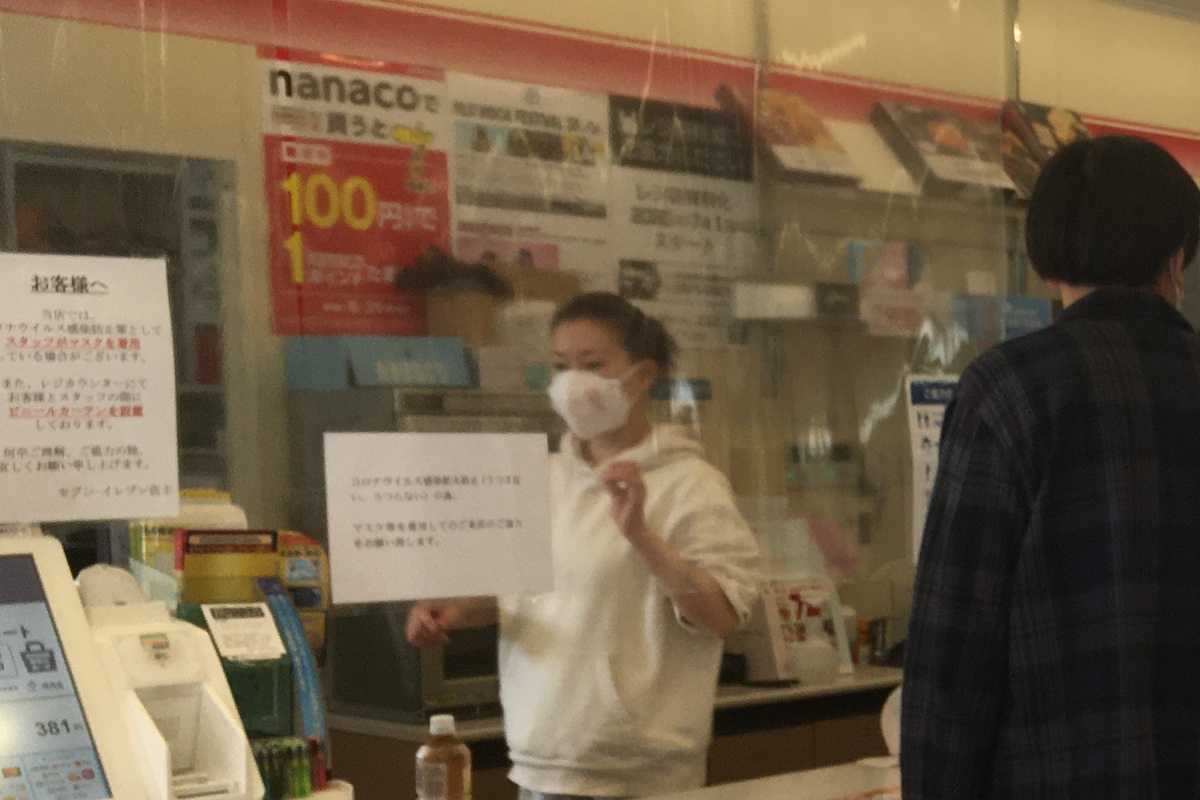
5. Keep the Customer Copy as Payment Evidence
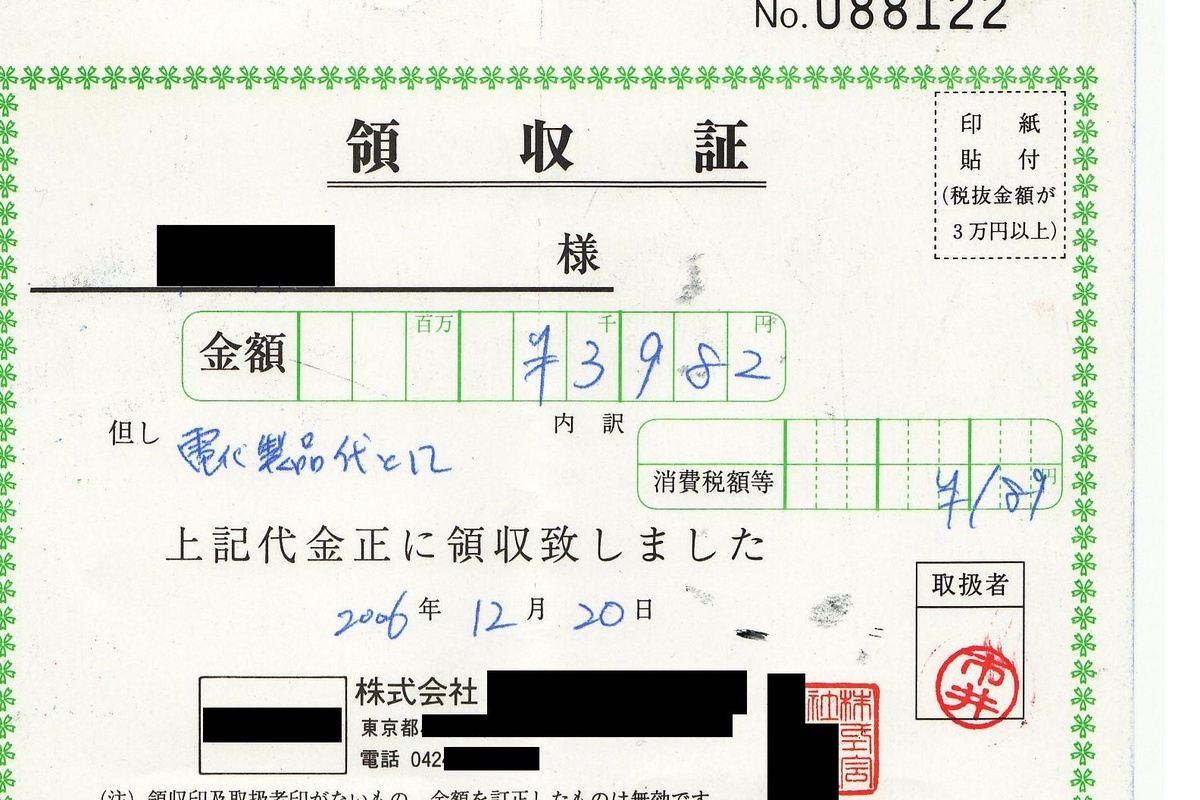
The most important proof may be the section returned from the payment slip rather than the ordinary shopping receipt. Depending on the document, it may be labeled お客様控え (customer copy), 領収証, 領収証書 or 払込金受領証.
Keep the proof flat and readable until the issuer’s online account, next statement or administrative record shows that the payment was received. Photographing it is useful as a backup, but a photo may not replace the original when formal proof is required.
The Japan Pension Service specifically notes that people who need a paper receipt should use a financial institution, post office or convenience store rather than relying only on electronic payment. If proof is lost, contact the issuer with the payment date, amount and store details; the convenience store may not be able to reissue the collection receipt.
- Check that the amount and payment date are correct.
- Keep the original until the account is updated.
- Take a backup photo after payment.
- Do not throw away the proof simply because you also received a normal register receipt.
6. Utility Bills: Electricity, Gas and Water
Utility payment slips commonly show a billing period, customer number, due date, amount, barcode, accepted payment locations and a customer receipt section. Present the document in the form required by the provider; do not detach a section that the issuer says must stay attached.
If the due date has passed, check the utility company’s current instructions. Some providers continue accepting certain expired barcodes, while others require a replacement bill or another payment route. Even when an old barcode still works, late-payment notices, fees or suspension procedures may already be in progress.
If service has already been stopped, or you have received a disconnection warning, pay promptly using the instructed method and contact the utility provider. The cashier cannot restore service, extend the deadline or negotiate the account.
- Check the service period so you do not pay an old duplicate.
- Keep all detachable sections until the cashier returns the correct customer copy.
- Treat the utility provider’s deadline rules as controlling.
- Contact the provider directly after a service suspension or disconnection warning.
7. National Tax: Barcode Forms and the QR-Code Kiosk Route
National tax uses specific procedures. A barcode payment form issued or sent for national tax can be used for eligible payments of 300,000 yen or less per form. The National Tax Agency instructs taxpayers to take the barcode form and cash to a participating convenience-store counter.
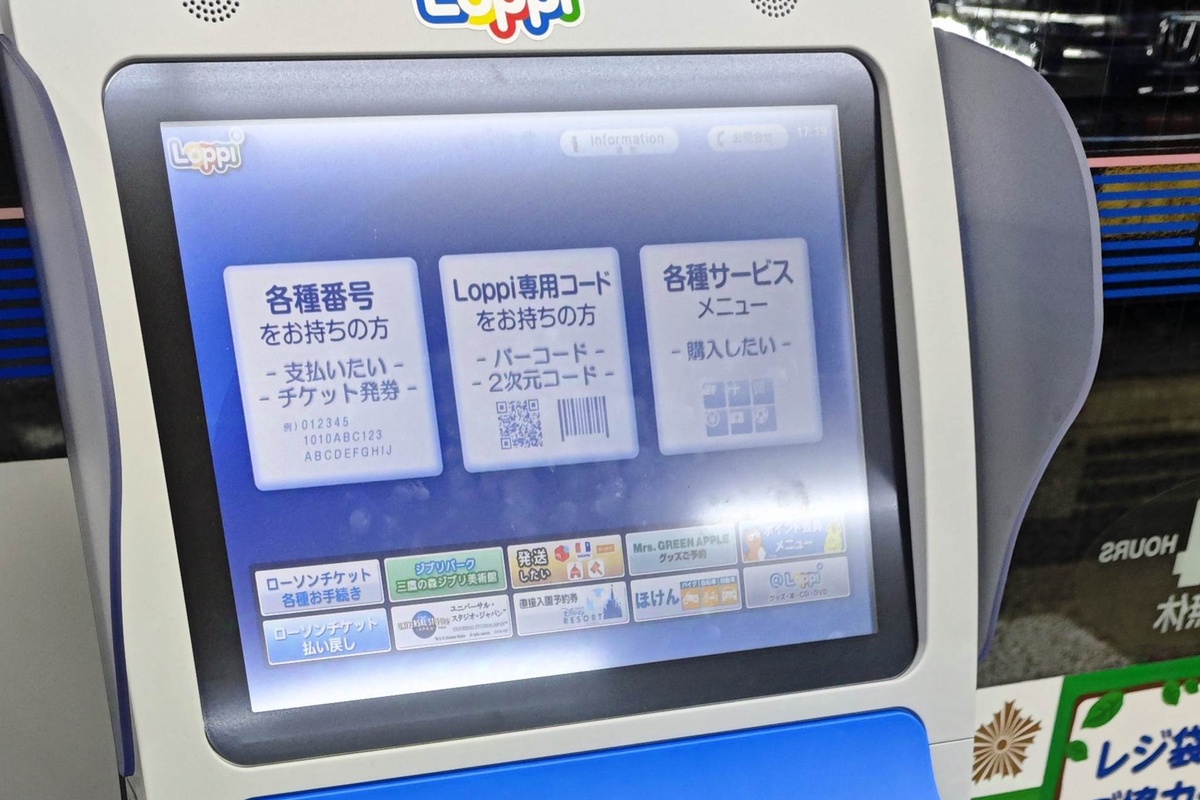
The National Tax Agency also provides a QR-code convenience-store route for eligible national-tax payments of 300,000 yen or less. At Lawson, Natural Lawson or Ministop, the QR code is read at a Loppi terminal; at FamilyMart, it is read at a supported multi-copy machine. The machine issues a payment form or application ticket, which is then taken to the register and paid in cash.
This means a national-tax QR code is not simply shown to every cashier. Follow the kiosk procedure for the supported chain. Keep the payment receipt after completion, especially if you may need to show that payment was made before the tax system updates.
- Barcode national-tax form: 300,000 yen or less per form.
- QR-code national-tax route: 300,000 yen or less.
- Loppi is used at Lawson-family chains listed by the National Tax Agency.
- FamilyMart uses a supported multi-copy machine.
- Payment at the register is in cash for this national-tax QR procedure.
8. Local Taxes, Resident Tax and eL-QR in 2026
Resident tax paid by ordinary collection, fixed-asset tax, light-vehicle tax and some municipal charges may arrive with a barcode, an eL-QR code or both. The exact methods depend on the municipality and the document, so do not treat one city’s rules as a nationwide rule.
For eligible local taxes, eL-QR can support payment through the Local Tax Payment Site and participating payment channels. If you need a stamped paper receipt immediately, check whether the issuing municipality recommends a counter or convenience-store method instead of an app or online route.
As of August 2026, the Local Tax Payment Site has also announced a broader standardized eL-QR payment framework for local public charges beginning on September 24, 2026. That expansion does not mean every municipal bill will automatically be payable at every convenience-store counter; the issuer, code and payment instructions on the document remain controlling.
- Check the municipality printed on the bill.
- Check whether the document uses a normal barcode, eL-QR or both.
- Use the official Local Tax Payment Site only for supported eL-QR payments.
- Choose a counter method when you specifically need immediate paper proof and the issuer allows it.
9. National Pension and Municipal Insurance Slips
The Japan Pension Service accepts National Pension contribution payment slips at listed convenience stores, financial institutions and post offices. There is no payment fee for using the official payment slip. A contribution slip over 300,000 yen cannot be paid at a convenience store; use another method instructed by the Japan Pension Service.
Municipal National Health Insurance, nursing-care insurance and other local insurance premiums follow the rules of the issuing municipality. A store may reject a document with no usable barcode, an amount above the collection limit, an expired handling period or a barcode that cannot be read.
Use the correct slip for the correct contribution period. If the document is damaged or missing, ask the issuing authority for a replacement rather than changing the barcode or writing over the payment area.
- National Pension: listed convenience stores are an official payment option.
- National Pension slips over 300,000 yen cannot be paid at a convenience store.
- Municipal insurance rules vary by local authority.
- Ask for a reissued slip when the original cannot be used.
10. If the Store Rejects the Bill, the Payment Is Late or You Paid Twice
A cashier may be unable to process the bill because the barcode is unreadable, the chain is not an accepted location, the handling period has ended, the amount exceeds the collection system’s limit, the document has been altered, the bill was already paid or the payment system is temporarily unavailable.
Ask whether the failure is a barcode problem or an acceptance-rule problem, then contact the issuer. The store cannot change the amount, extend a tax deadline, waive a late fee or manually override the issuer’s collection rules.
If you paid the wrong bill or paid twice, keep every receipt and contact the recipient organization immediately. Counter collection payments are normally not reversed by the convenience store after completion. The issuer decides whether the extra payment can be refunded or applied to another billing period.
For bills involving tax, insurance, pension, rent or essential utilities, do not ignore the notice because payment is difficult. Contact the issuer before the problem escalates and ask what official options are available.
- Do not alter or recreate a rejected payment slip yourself.
- Request a replacement slip or an official alternative method from the issuer.
- Keep both receipts after a duplicate payment.
- Mark paper slips as paid after app payment so nobody pays them again.
- Contact the issuer quickly when a deadline has already passed.
FAQ
Can I pay every bill at any convenience store in Japan?
No. The document must meet the issuer’s conditions and the convenience-store chain must be listed as an accepted location. A readable barcode alone does not guarantee acceptance everywhere.
Can I pay a convenience-store bill by credit card?
Usually not for ordinary collection-agent payments. Cash is the safest default. Lawson’s collection service is cash only, while FamilyMart has limited FamiPay eligibility for qualifying bills. Check the exact bill and chain.
Can I pay an expired payment slip?
Sometimes, but only if the issuer still accepts it. A barcode that scans after the due date does not necessarily remove late charges or other consequences. Check the issuer’s current instructions when a deadline has passed.
What proof should I keep after paying?
Keep the returned customer copy or formal payment receipt, such as a stamped receipt section or 払込金受領証. Photograph it as a backup and keep the original until the issuer confirms payment.
Why will a convenience store reject a bill over 300,000 yen?
Many government collection systems have a 300,000-yen-per-form limit. National-tax barcode and QR convenience-store payments and National Pension payment slips use this threshold. Private-bill limits can differ.
Can the convenience store cancel a payment after I finish?
Normally no. If you paid the wrong bill or paid twice, keep the receipt and contact the issuer or recipient organization immediately.
Is an app payment the same as paying the paper slip at the store?
No. An authorized app payment is a separate payment route. Once you complete the app payment, mark the paper as paid and do not take the same slip to a convenience-store counter.
Official References
- National Tax Agency: Convenience-Store Payment Using a Barcode Form
- National Tax Agency: Convenience-Store Payment Using a QR Code
- FamilyMart: Payment Slips and Collection Service
- FamilyMart: National Tax Payment
- Lawson: Collection-Agent Payment Service
- Japan Pension Service: Paying with a National Pension Payment Slip
- Local Tax Payment Site
Final Thoughts
Convenience-store bill payment is reliable when the document is valid and you follow the issuer’s exact instructions. Check the issuer, billing period, amount, deadline, barcode and accepted store; bring cash unless another method is clearly allowed; confirm the register amount; and keep the returned proof. If the bill is rejected, overdue, damaged or duplicated, solve the problem with the issuer rather than asking the convenience store to override the collection rules.