
How to Apply for a Re-entry Permit in Japan: Special vs Ordinary Guide
A practical 2026 guide to Japan’s special and ordinary re-entry permits: eligibility, deadlines, fees, required documents, online limits, pending residence applications and return procedures.

For most mid-to-long-term residents taking a short trip, Japan’s special re-entry permit is the simplest option: if you are eligible, hold a valid passport and residence card, declare your intention to return at departure, and come back within one year or before your current period of stay expires—whichever comes first—no advance Immigration application or fee is normally required. If you may stay abroad for more than one year, need a longer margin, or want a multiple permit, apply for an ordinary re-entry permit before leaving Japan. The ordinary permit can be granted for up to five years within your current period of stay, and current counter fees are ¥4,000 for single and ¥7,000 for multiple permission.
Start With Your Latest Possible Return Date
The first decision is not which form to fill out. It is the latest date you may need to return to Japan. That date determines whether the special re-entry system is enough or whether you should apply for an ordinary re-entry permit before departure.
For a special re-entry permit, the deadline is generally the earlier of one year from the day you leave Japan and the expiration date of your current period of stay. If your residence status expires sooner than one year, that earlier date controls.
- Short trip and return safely within the earlier deadline: special re-entry may be enough.
- Possible absence longer than one year: consider an ordinary re-entry permit before leaving.
- Never assume a re-entry permit extends your underlying period of stay.
What Re-entry Permission Actually Protects
A re-entry permit preserves your existing status of residence when you temporarily leave Japan and later return within the permitted period. Without an applicable re-entry arrangement, leaving Japan can cause the existing status and period of stay to end.
Re-entry permission is not a new visa and does not create a fresh period of stay when you return. It lets you continue under the same status and remaining authorized period, subject to the normal landing examination.
When You Can Use the Special Re-entry Permit
The special re-entry permit, often called the deemed re-entry permit, is generally available to foreign residents in Japan who hold a valid passport and a qualifying status of residence and who plan to return within the permitted period.
The system is not generally available to people whose authorized period of stay is three months or less or whose status is Temporary Visitor. Certain people involved in immigration-enforcement or status-revocation procedures are also excluded.
- Hold a valid passport.
- Mid-to-long-term residents should also have their residence card.
- Return within one year of departure or before the period-of-stay expiration date, whichever is earlier.
- If Immigration has given you an individual restriction or instruction, confirm eligibility directly before travel.
How to Use the Special Re-entry Permit at Departure
You do not normally file an advance application at an Immigration office for the special re-entry system. At the airport or seaport, you must clearly indicate that your departure is temporary and that you intend to return to Japan.
The practical step is to complete the re-entry departure record and mark the appropriate declaration for special re-entry. Present it together with your passport and, when applicable, your residence card to the immigration inspector.
- Check passport and residence-card validity before travel.
- Calculate your latest return date before departure.
- Mark the re-entry intention correctly on the departure record.
- Do not surrender your residence card as if you were leaving Japan permanently.
When an Ordinary Re-entry Permit Is the Safer Choice
Apply for an ordinary re-entry permit before leaving Japan when your planned absence may exceed one year, when your return date is uncertain enough that the special system gives too little margin, or when you need a multiple permit for repeated international trips.
An ordinary permit is also necessary when you are not eligible for the special re-entry system. The application must be made before departure; you cannot leave Japan first and then start a normal re-entry permit application from overseas.
- Absence may exceed one year.
- You expect repeated travel and want multiple permission.
- You are excluded from the special re-entry system.
- Immigration has instructed you to obtain ordinary permission.
Single vs Multiple Re-entry Permit
A single re-entry permit can be used once. A multiple re-entry permit can be used repeatedly during its validity period. The ordinary permit is granted within the period of stay you already hold and can be valid for up to five years for most foreign residents.
For Special Permanent Residents, the maximum ordinary re-entry validity can be up to six years, while the special re-entry period is generally two years.
- Single: one return to Japan.
- Multiple: repeated departures and returns during the permit period.
- The permit cannot remain valid beyond the applicable legal or residence-status limit.
Documents for an Ordinary Re-entry Permit
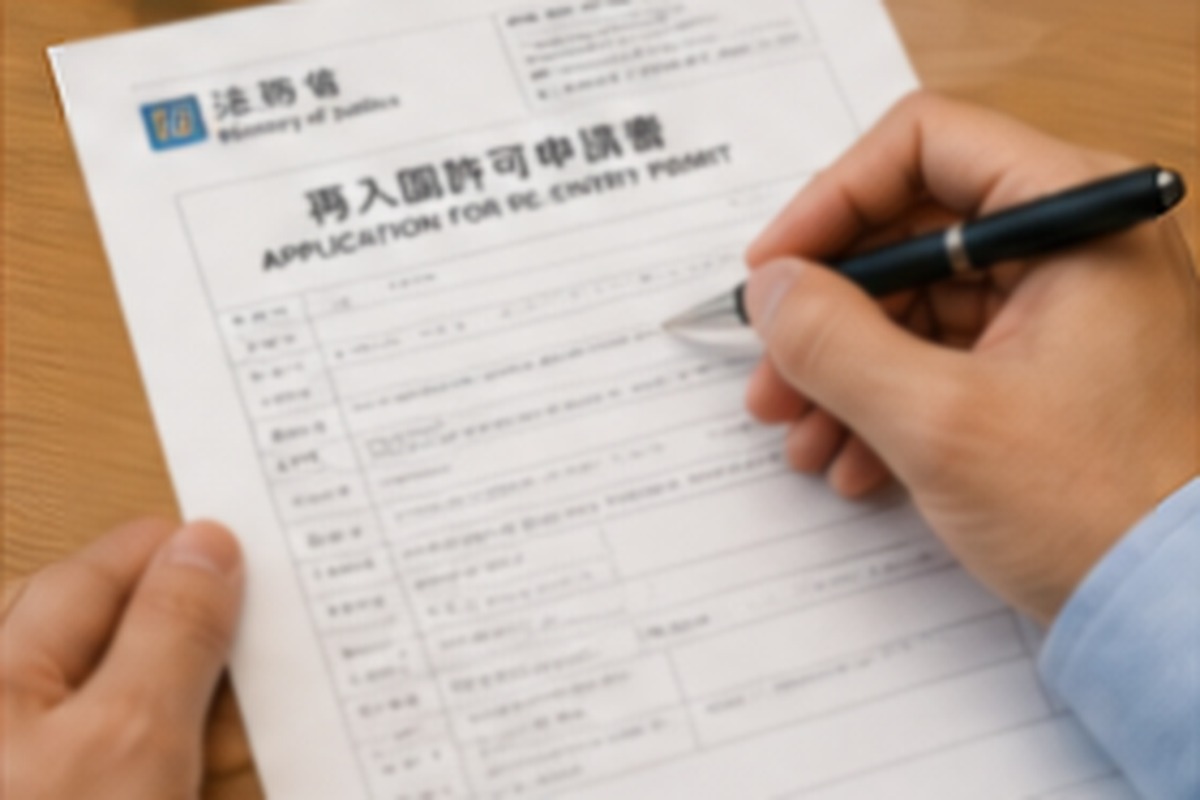
The standard Immigration application requires the official re-entry permit application form together with identity and residence documents. If a representative is allowed to submit the application, additional proof of identity or authority may be required.
Check the latest form before visiting because Immigration may revise document formats or instructions.
- Application for Re-entry Permit.
- Passport.
- Residence card or Special Permanent Resident Certificate.
- Written explanation if a passport cannot be presented for a legitimate reason.
- Representative identification or authorization documents when applicable.
Where to Apply and How Long It Usually Takes
Apply at the Regional Immigration Services Office that has jurisdiction over your residential address. Office procedures and counter arrangements can differ by location, so confirm the local office information before you go.
The official procedure page lists same-day processing as the standard processing period for an ordinary re-entry permit. Treat that as a service guideline rather than a reason to wait until the day of your flight; incomplete documents or local congestion can still cause problems.
2026 Fees and the Limits of Online Filing
For ordinary re-entry permits under the current fee schedule, the counter fee is ¥4,000 for single permission and ¥7,000 for multiple permission. When a qualifying re-entry application is made online, the fees are ¥3,500 and ¥6,500 respectively.
A re-entry application is not generally available online as a standalone request. The Immigration online system permits re-entry applications when filed at the same time as certain eligible residence applications such as change of status, extension of period of stay, or acquisition of status.
- Counter: ¥4,000 single / ¥7,000 multiple.
- Eligible online filing: ¥3,500 single / ¥6,500 multiple.
- Special re-entry permit: no advance application fee.
Travel While a Residence Application Is Pending
Immigration’s current FAQ states that travel is possible while an extension or change-of-status application is pending, including travel using re-entry permission or the special re-entry system. However, the return deadline can be more complicated because the special period after the printed expiration date does not give unlimited overseas flexibility.
For a pending application, Immigration instructs residents using special re-entry to return by the earlier of one year from departure or two months after the previous period-of-stay expiration, and then receive the application result before that two-month period ends. Because timing errors can have serious consequences, confirm your exact dates with the office handling your application before you leave.
- Keep a way for Immigration to contact you while abroad.
- Confirm which card and period of stay are currently operative.
- Plan to return and receive the result before the applicable special-period deadline.

If You Cannot Return Before the Deadline
A special re-entry permit cannot be extended while you are outside Japan. If you miss that deadline, you may lose the ability to return under the previous status and may need a new visa and landing procedure.
An existing ordinary re-entry permit may be extendable through a Japanese embassy or consulate in limited circumstances and within legal limits, but that is different from extending the underlying period of stay. Contact the nearest Japanese mission and Immigration before the ordinary permit expires.
If Your Passport or Residence Card Is Lost Abroad
Report a lost passport to the local police and your embassy or passport authority. If proof of your Japanese residence status or re-entry deadline is needed for boarding, Immigration guidance allows a representative in Japan to request a certificate confirming the re-entry permit deadline in appropriate cases.
A residence card lost abroad does not automatically make special re-entry impossible, but airlines and other authorities may still need evidence of your right to return. Reissue the residence card promptly after returning to Japan.
Final Pre-departure Checklist
Before leaving, verify the dates and documents one last time. Most re-entry problems come from a missed deadline, a mistaken assumption that everyone receives one full year, or failing to declare the intention to return at departure.
Permanent Resident status also requires proper re-entry protection. Permanent Residents do not have an ordinary period-of-stay expiration, but leaving without the appropriate re-entry arrangement can still jeopardize the status.
- Confirm passport and residence-card validity.
- Calculate the latest return date from both the one-year rule and your period-of-stay expiration.
- Choose special, single, or multiple re-entry permission.
- Apply before departure if an ordinary permit is needed.
- Mark the temporary-departure/re-entry declaration correctly.
- Keep copies of your passport, residence card and permit details.
- If your residence application is pending, verify the special-period return deadline separately.
FAQ
Do I need to visit Immigration for a short overseas trip?
Usually not if you qualify for the special re-entry permit, hold the required valid documents, correctly declare your intention to return at departure, and return before the applicable deadline.
Is the special re-entry permit always valid for one full year?
No. It ends earlier if your current period of stay expires before the one-year anniversary of departure.
Can I extend a special re-entry permit while I am overseas?
No. Immigration states that the special re-entry permit cannot be extended from abroad.
How long can an ordinary re-entry permit be valid?
For most foreign residents it can be granted for up to five years within the current authorized period of stay. Special Permanent Residents have a different maximum of up to six years.
What are the current fees for an ordinary re-entry permit?
The current counter fees are ¥4,000 for single permission and ¥7,000 for multiple permission. Eligible online applications are ¥3,500 and ¥6,500 respectively.
Can Temporary Visitors use the special re-entry permit?
No. Temporary Visitor status is excluded from the general special re-entry system.
Can I travel while my visa extension or status-change application is pending?
Immigration says travel can be possible using re-entry permission, but the return and result-receipt deadlines need careful calculation. Confirm the dates with the office handling your application before departure.
Does Permanent Resident status mean I can leave Japan without re-entry permission?
No. Permanent Residents also need an appropriate re-entry arrangement when temporarily leaving Japan.
Official References
- Immigration Services Agency: Special Re-entry Permit
- Immigration Services Agency: Application for Re-entry Permit
- Immigration Services Agency: Re-entry Permit Explanation
- Immigration Services Agency: Immigration and Residence Examination FAQ
- Immigration Services Agency: Online Application Q&A
- Immigration Services Agency: 2025+ Immigration Procedure Fee Revision
- Immigration Services Agency: Special Permanent Resident FAQ
Final Thoughts
For most short trips, the special re-entry permit is simple—but only when the dates are truly safe. Work backward from the latest possible return date, compare it with your current period-of-stay expiration, and use an ordinary re-entry permit when one year is not enough or repeated travel makes multiple permission more practical. If a residence application is pending or Immigration has given you an individual instruction, confirm your exact case before leaving Japan.