
How to Register a Marriage in Japan: City Hall & International Marriage Guide
A practical 2026 guide to marriage registration in Japan, including the marriage notification, two adult witnesses, international-marriage documents, after-hours filing, surnames, immigration follow-up, and records to update after acceptance.
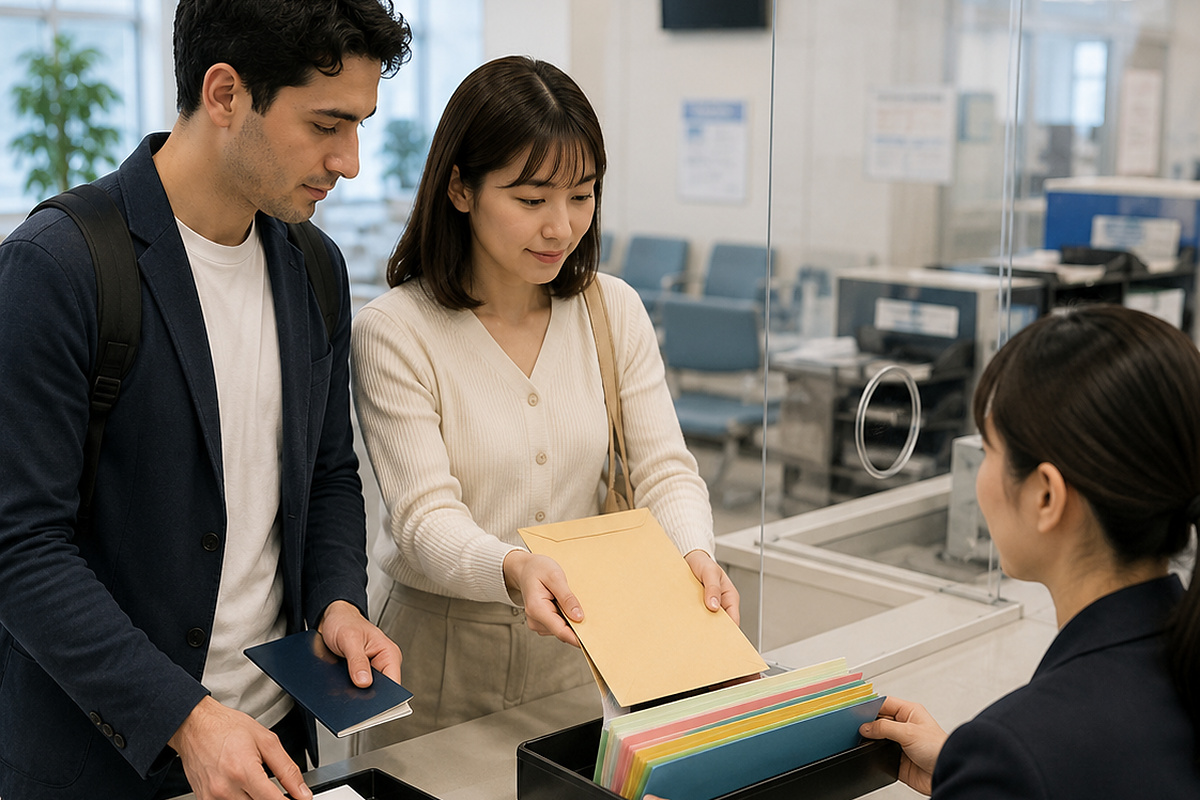
To create a marriage under Japan’s notification system, submit a 婚姻届 (kon'in todoke, marriage notification) to an eligible city, ward, town, or village office. The standard form requires the signatures of the two people marrying and two adult witnesses; filing itself has no government filing fee. For an ordinary domestic filing, a family-register certificate is generally no longer attached from March 1, 2024. If either person is a foreign national, additional proof such as a passport or nationality document, a certificate of legal capacity to marry, and Japanese translations may be required, with the exact checklist depending on nationality and circumstances. A marriage that was already validly formed under foreign law follows a different reporting route and should generally be reported within three months when a Japanese national is involved. Marriage does not automatically change your address, residence status, residence card, insurance, bank records, or other registrations, so plan the follow-up procedures separately.
Choose the Correct Marriage Route First
The documents and legal effect depend on how the marriage is being created. Before collecting certificates, decide which route applies. The most common route for residents in Japan is to create the marriage in Japan by filing a marriage notification at a municipality.
If the marriage has already become legally valid under the law of another country, the Japanese procedure is normally a report of an already-established marriage rather than a second Japanese-style marriage ceremony. When a Japanese national marries under foreign law, the marriage should generally be reported within three months so that the Japanese family register can be updated.
Two foreign nationals may also be able to marry in Japan through the Japanese notification system, but the municipality must confirm that each person satisfies the marriage requirements of the law that applies to them. Because country-specific evidence varies, contact the filing municipality before choosing a symbolic filing date.
- Route 1: create the marriage in Japan by filing 婚姻届
- Route 2: report a marriage already validly formed under foreign law
- Route 3: two foreign nationals marry in Japan under the Japanese notification route
- International cases: confirm the municipality’s country-specific document list in advance
Where and When You Can File
A Japanese marriage notification can be filed with the city, ward, town, or village office connected to either person’s registered domicile or current location. Municipal counter hours differ, and many offices also receive family-register notifications through an after-hours or holiday desk.
For a marriage created by notification in Japan, the date on which a valid notification is received becomes the legal marriage date. That makes accuracy especially important if you want a specific anniversary date.
Filing the notification is free. However, later certificates, translations, authentication, postal services, or immigration procedures can have separate fees.
- File at an eligible city / ward / town / village office
- The accepted filing date becomes the legal marriage date
- Government filing fee for the marriage notification: none
- Check the specific office’s counter and after-hours rules before traveling
Standard Marriage Notification: Form, Signatures, and Witnesses
The marriage notification is called 婚姻届. Municipalities use a nationally compatible form, and many allow a form obtained from another municipality. If you download a form, follow the municipality’s print-size instructions; for example, Edogawa City requires the marriage notification to be printed on A3 paper.
Both people marrying sign the notification. The standard Japanese-style marriage notification also requires signatures from two adult witnesses. The witnesses do not have to be parents; they can be other adults who understand that they are witnessing the marriage notification.
Seals are generally optional on current forms. Use permanent black ink and avoid pencils or erasable pens. If another person physically carries the already-signed notification to the counter, the marriage parties remain the declarants.
- 婚姻届 completed by the two people marrying
- Two adult witness signatures
- Permanent black pen or ink
- Identity document for the person presenting the notification
- Seal is generally optional under current rules
Documents for Two Japanese Nationals
For an ordinary marriage between two Japanese nationals filed at a Japanese municipality, prepare the completed marriage notification and an accepted identity document for the person presenting it.
From March 1, 2024, municipalities generally no longer require a family-register certificate to be attached to an ordinary family-register notification because the relevant information can be confirmed electronically. This is a major simplification compared with older guides.
Unusual cases can still require additional confirmation, so follow the filing municipality’s instructions if a record is not electronically available or another special circumstance applies.
- Completed marriage notification
- Two adult witness signatures
- Accepted identity document
- Family-register certificate generally not attached for ordinary domestic filing from March 1, 2024
- Check special cases with the municipality
Extra Documents When a Foreign National Is Involved
An international marriage usually requires more evidence because the municipality must confirm that the foreign national is legally able to marry under the applicable national law. The Ministry of Justice explains that a certificate of legal capacity to marry is a standard form of proof.
The usual document set can include a passport or other proof of nationality, a certificate of legal capacity to marry, and—depending on nationality and circumstances—a birth certificate, affidavit, declaration, or substitute evidence. Countries that do not issue a standard legal-capacity certificate may use alternative documents.
Foreign-language documents must be accompanied by Japanese translations, and the translator must be identified. The Ministry of Justice states that the person concerned may translate the document themself. Because the exact package varies by country and municipality, ask the filing office to review your intended documents before the filing date.
- Passport or other proof of nationality
- Certificate of legal capacity to marry, when issued by the country
- Birth certificate or substitute supporting document when required
- Japanese translation of every required foreign-language document
- Translator’s identity shown on the translation
- Advance document check strongly recommended

How to Fill Out the Marriage Notification
Copy names, dates of birth, addresses, and nationality information from the official documents you will use. International cases are especially sensitive to differences in spelling, name order, middle names, diacritics, and transliteration.
For Japanese nationals, complete the registered-domicile and family-register information as instructed on the form. Complete the parent information and other required family-register fields carefully. If a field does not fit an international case, ask the municipality rather than inventing an abbreviation.
Have both witnesses complete their own required fields and signatures. Before filing, compare the final form with passports, family-register information, and supporting certificates line by line.
- Match names exactly to supporting official documents
- Check Western dates and Japanese-era dates where the form uses them
- Verify current address and registered domicile separately
- Do not shorten a foreign name without municipal guidance
- Have witnesses complete and sign their own fields
- Photograph or copy the completed form for your records before submission
Surnames and the Japanese Family Register
When two Japanese nationals marry under the current Civil Code, the couple selects the husband’s or wife’s surname for the new family register. The choice is made as part of the marriage notification.
When a Japanese national marries a foreign national, the Japanese spouse’s surname does not automatically change simply because the marriage is registered. The foreign spouse is recorded in connection with the Japanese spouse’s family-register entry but does not become a Japanese family-register member in the same way as a Japanese national.
A Japanese spouse who wants to take the foreign spouse’s surname can generally file a surname-change notification within six months of the marriage without first obtaining family-court permission. After that six-month period, a family-court procedure is generally required.
- Two Japanese spouses: select one spouse’s surname under the current system
- Japanese + foreign spouse: Japanese spouse’s surname does not change automatically
- Foreign spouse is recorded in relation to the Japanese spouse’s family register
- Japanese spouse taking foreign spouse’s surname: six-month notification route is important
After-Hours, Weekend, Mail, and Representative Filing
Many municipalities receive marriage notifications at night, on weekends, and on holidays. The office may only take custody of the document at that time and perform the legal review on the next business day. If there is no disqualifying defect, municipalities such as Yokohama explain that the notification can be accepted retroactively to the date it was originally received.
That does not mean every after-hours filing is guaranteed. A missing signature, unclear international document, or issue requiring another authority can delay or prevent acceptance. If the date matters, use the municipality’s preliminary-review service when available. Edogawa City specifically recommends advance review for popular dates and after-hours filings.
Some municipalities also accept family-register notifications by mail. A representative may be allowed to physically bring a notification after the parties have signed it. These routes have practical limitations, so confirm mailing, identity, correction, and contact rules with the municipality before relying on them.
- After-hours desk: document may be held for next-business-day review
- Valid filing can be accepted with the original receipt date
- Use preliminary review when a specific anniversary date matters
- Mail acceptance depends on the municipality’s procedure
- A representative carrying the form does not replace the parties’ required signatures
What Happens After the Marriage Is Accepted
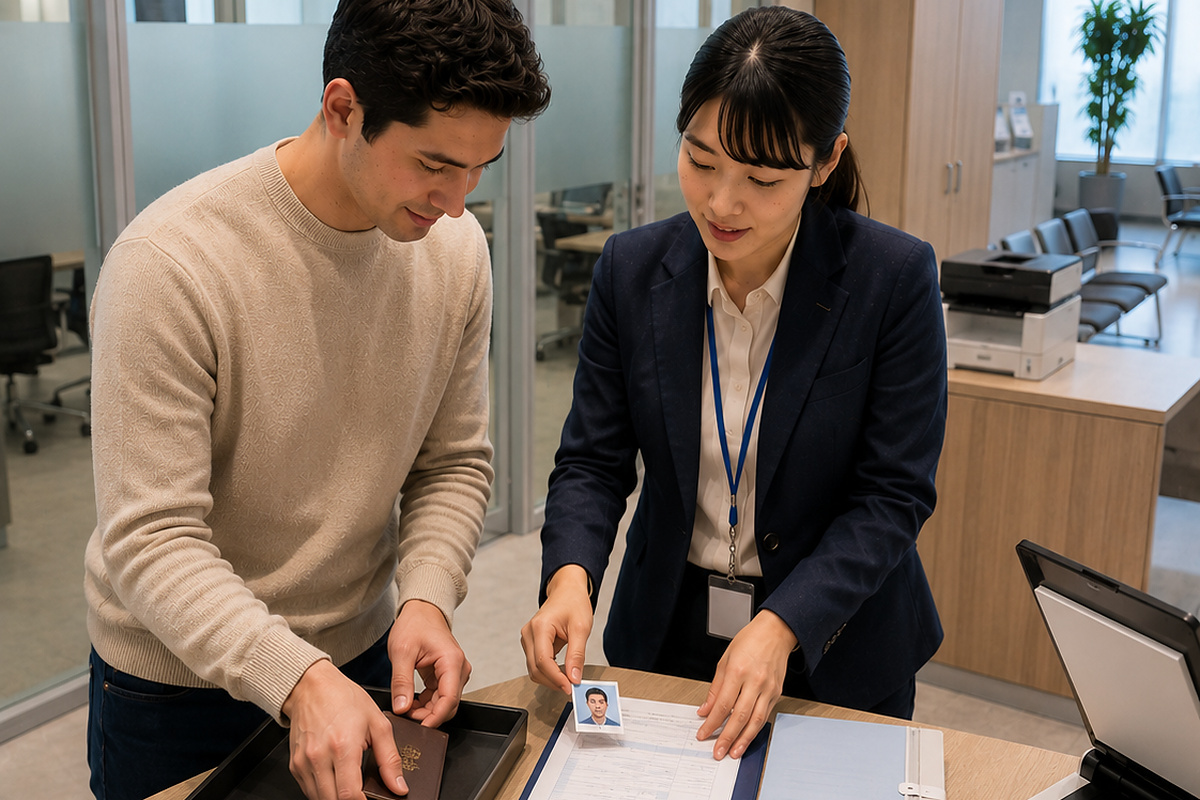
Once the municipality accepts the notification, the marriage is legally recorded. The timing for updated certificates depends on where the filing was made, where the Japanese family register is kept, whether other authorities must be contacted, and how busy the office is.
If you need immediate proof for an employer, embassy, immigration procedure, bank, or another institution, ask whether a 婚姻届受理証明書 (certificate of acceptance of marriage notification) is available and when it can be issued.
An updated family-register certificate may take longer than the acceptance certificate, especially when the filing office and registered domicile are in different municipalities. Do not promise another institution a same-day updated family register unless the municipality has confirmed it.
- Marriage becomes legally recorded after acceptance
- Ask about 婚姻届受理証明書 if proof is needed quickly
- Updated family-register timing varies
- Keep copies of translations and supporting foreign certificates

Marriage Does Not Automatically Change Immigration Status
Marriage to a Japanese national does not automatically change a foreign spouse’s current status of residence. 'Spouse or Child of Japanese National' is a separate residence status administered by the Immigration Services Agency, and the appropriate application must be made if the foreign spouse wants or needs that status.
For spouse-status procedures, the Immigration Services Agency may require a Japanese spouse’s family-register certificate showing the marriage and a marriage certificate issued by the foreign spouse’s country, along with other financial and relationship evidence.
Separately, if marriage changes a residence-card item such as the foreign resident’s legal name or nationality/region, the Immigration Services Agency requires notification of that change within 14 days. If nothing printed or registered on the residence card changes, marriage alone does not create a generic 'marriage update' to the card.
- Marriage and immigration status are separate legal procedures
- Spouse status requires its own application
- Residence-card name / nationality-region change: notify within 14 days
- Do not assume a residence status changes automatically on the marriage date
Other Records to Update After Marriage
A marriage notification does not automatically move either person’s address or combine two resident-record households. If you move, submit the appropriate address notification separately. If you already live at the same address but are recorded as separate households, the municipality may require a separate household-combination procedure.
If a legal name changes, check your My Number Card, passport, employer payroll and social insurance, bank accounts, credit cards, insurance policies, utilities, mobile phone contract, driving licence, professional registrations, and other records that use your legal identity.
A new 2026 point applies to registered real-property owners. From April 1, 2026, an owner whose registered address or name changes must generally register that change in the real-estate registry within two years. The Legal Affairs Bureau specifically lists a name change caused by marriage as an example.
Make a list based on your actual records rather than trying to update everything on the same day. Prioritize identity, immigration, employment, insurance, banking, and any deadline-controlled registration.
- Address and household changes are separate city-hall procedures
- Update identity and financial records if the legal name changes
- Check employer, insurance, bank, cards, utilities, phone, licence, and passport as relevant
- Registered real-property owner: 2026 name/address change-registration rule may apply
- Track deadlines separately from the marriage notification
Common Problems Before Filing
The most common international-marriage problem is assuming that one country’s standard checklist applies to every nationality. Municipal staff may need to verify foreign law, document authenticity, or substitute evidence. Get the municipality’s current checklist before ordering or translating expensive certificates.
Name mismatches are another frequent source of delay. A passport, birth certificate, legal-capacity certificate, and Japanese translation may express the same name differently. Flag the difference to the municipality in advance.
A symbolic date can also create pressure. Popular dates, weekends, and after-hours filing can be busy, and a defect found later may require correction. Preliminary review is the safest way to protect a specific filing date.
Never sign or submit a marriage notification without genuine consent from both parties. If consent, identity, or authenticity is disputed, the issue is not a routine clerical correction and professional legal advice may be appropriate.
- Do not order foreign documents until the municipality confirms what it needs
- Resolve spelling and translation differences before filing
- Check witness fields and signatures
- Use preliminary review for a specific anniversary date
- Keep originals, translations, and copies organized
- Seek qualified help for disputed consent or complex legal-status issues
Marriage Registration Checklist
Use this checklist as a final control, then replace any generic item with the exact instruction from your filing municipality. International cases should be checked against nationality-specific requirements before the planned filing date.
If you are reporting a marriage already formed abroad rather than creating the marriage in Japan, use the foreign-marriage reporting checklist instead of blindly following the two-witness domestic route.
- Confirm which marriage route applies
- Confirm filing municipality and counter / after-hours rules
- Complete 婚姻届 in permanent ink
- Obtain two adult witness signatures for the standard Japanese-style notification
- Prepare identity documents
- Foreign national: prepare nationality proof, legal-capacity evidence, and required supporting documents
- Attach Japanese translations and identify the translator
- Use preliminary review if the filing date matters
- After acceptance, obtain proof or updated family-register documents as needed
- Handle address, household, immigration, residence-card, name, and other record updates separately
- If you own registered real property and your registered name/address changes, check the 2026 two-year change-registration obligation
FAQ
How much does it cost to submit a marriage notification in Japan?
The municipality does not charge a filing fee for the marriage notification itself. Separate costs can arise for certificates, translations, authentication, postage, immigration procedures, or other follow-up documents.
Do both people have to go to city hall together?
Not always. The two people marrying must complete and sign the notification, but a municipality may allow another person to physically carry the signed form to the counter. International or unusual cases are easier to resolve when the parties can respond to questions, so confirm the filing office’s procedure.
Can our parents be the two witnesses?
Yes, if they are adults and complete the witness fields correctly. The witnesses do not have to be the parents; other adults can also serve as witnesses.
Do we need personal seals on the marriage notification?
Seals are generally optional under current family-register notification rules. Signatures and correct completion of the form remain important.
Do Japanese nationals still need a family-register certificate when filing?
For ordinary domestic family-register notifications, attachment of a family-register certificate is generally no longer required from March 1, 2024. Special situations or overseas procedures can differ, so follow the receiving authority’s instructions.
Does marriage automatically change my surname or address?
No single rule changes every record automatically. Two Japanese spouses select one surname under the current system, while a Japanese spouse marrying a foreign national does not automatically take the foreign spouse’s surname. Address and household-record changes require separate procedures.
Does marrying a Japanese citizen automatically give me a spouse visa?
No. Marriage registration and immigration status are separate. A foreign spouse who wants the status 'Spouse or Child of Japanese National' must complete the appropriate Immigration Services Agency application.
Can we submit the marriage notification at night or on a holiday?
Many municipalities accept family-register notifications through an after-hours desk, but the document may be held for review on the next business day. If the chosen date matters, ask for a preliminary review before the filing date.
Official References
- Ministry of Justice — Marriage Notification Procedure
- Ministry of Justice — International Marriage and Family Register Q&A
- Ministry of Foreign Affairs — Family Register and Nationality Notifications Abroad
- Edogawa City — Marriage Notification
- Edogawa City — Family Register Notification Forms
- Yokohama City — Marriage Notification
- Immigration Services Agency — Spouse or Child of Japanese National
- Immigration Services Agency — Change of Residence Card Items
- Tokyo Legal Affairs Bureau — Mandatory Address and Name Change Registration from 2026
- Ministry of Justice — Age of Majority and Marriage Age
Final Thoughts
Marriage registration in Japan is straightforward when the correct route is identified first, but international cases can become document-heavy. For a standard Japanese-style marriage notification, prepare the signed 婚姻届, two adult witnesses, and identity documents; if a foreign national is involved, confirm the exact nationality-specific certificates and translations with the municipality before the planned filing date. Use preliminary review when a specific anniversary date matters. After acceptance, treat address, household, immigration status, residence-card items, surnames, financial records, and any 2026 real-property registry obligation as separate follow-up tasks rather than assuming the marriage notification updates them automatically.