
How to Apply for a Spouse Visa in Japan: COE, Documents, Fees & Steps
A practical 2026 guide to Japan’s spouse-of-Japanese-national residence status: choose the COE or in-Japan status-change route, prepare marriage, financial and relationship evidence, check current fees and TB-screening rules, and avoid common application mistakes.

If your spouse is a Japanese national, the usual residence status is “Spouse or Child of Japanese National” (日本人の配偶者等). If you are abroad, the standard route is normally to obtain a Certificate of Eligibility (COE) in Japan and then apply for the visa at a Japanese embassy or consulate. If you already hold another eligible residence status in Japan, you may apply for a change of status without leaving Japan. The application is not approved simply because a marriage is legally registered: Immigration checks the marriage, the couple’s real relationship, living/support arrangements, and the required documents. Use the latest ISA checklist because fees and document rules can change.
First, make sure you are using the correct spouse route
In everyday English, “spouse visa” can refer to several different Japanese immigration routes. This article focuses on a foreign national married to a Japanese citizen who is applying for the residence status “Spouse or Child of Japanese National” (日本人の配偶者等).
If your spouse is a permanent resident, the relevant status is normally “Spouse or Child of Permanent Resident.” If your spouse is in Japan on a work or study status and you are joining them as a dependent, “Dependent” (家族滞在) may be the relevant route instead. The document set and work rights are not the same, so choosing the correct status before collecting paperwork prevents avoidable delays.
- Japanese spouse → usually “Spouse or Child of Japanese National.”
- Permanent-resident spouse → usually “Spouse or Child of Permanent Resident.”
- Work/study-status spouse → often “Dependent,” depending on the sponsor’s status and circumstances.
- Do not select a route only because people online call all three a “spouse visa.”
Choose the correct application route: COE from overseas or change of status in Japan
If you are living outside Japan and plan to move to Japan, the standard route is generally: obtain a Certificate of Eligibility (COE), then apply for the visa at the Japanese embassy or consulate serving your place of residence, then enter Japan. A spouse or another eligible proxy in Japan can submit the COE application. The Ministry of Foreign Affairs states that a visa application can technically be made without a COE, but it may require substantially more supporting evidence and can take several months.
If you are already living in Japan under another residence status, you may be able to apply for a Change of Status of Residence to “Spouse or Child of Japanese National.” This lets an eligible resident apply without leaving Japan. The Immigration Services Agency says the application should be made after the reason for the change arises and before the current period of stay expires.
A Temporary Visitor stay is different. Do not assume that marrying in Japan automatically allows a visitor to switch to spouse status inside Japan. Changes from Temporary Visitor are restricted and should not be used as the default plan; confirm your individual route with Immigration before relying on an in-Japan change.
- Outside Japan: COE → visa application overseas → entry to Japan.
- Already holding another residence status in Japan: consider Change of Status of Residence.
- Temporary Visitor: do not assume an in-Japan status change will be accepted.
- A COE facilitates the visa and landing process but does not guarantee visa issuance.
Build the document set around the latest ISA checklist
For a Japanese-national spouse case, the Immigration Services Agency’s current checklist includes the application form, a compliant photograph, the Japanese spouse’s family register (koseki), a foreign marriage certificate where applicable, evidence of living expenses, a resident record, a letter of guarantee, the official questionnaire, and evidence showing the couple’s relationship. The exact list depends on whether the filing is for a COE, a change of status, renewal, or another procedure.
Japanese-issued certificates generally need to be issued within three months of submission. Documents written in a foreign language require a Japanese translation. Immigration may request additional evidence after filing even when the standard checklist was complete.
Do not copy an old checklist from a blog or an earlier application. Open the official page for your exact procedure shortly before filing and compare it line by line with your packet.
- Application form and required photograph.
- Japanese spouse’s koseki showing the marriage; if the marriage is not yet recorded there, additional marriage-registration evidence may be needed.
- Marriage certificate issued by the foreign authority where applicable, with Japanese translation.
- Evidence of the household’s ability to cover living costs.
- Resident record (jūminhyō) and letter of guarantee as required by the procedure.
- Official questionnaire.
- Relationship evidence such as couple photographs and, where useful, communication records.
Relationship evidence is a core part of the application
Immigration is checking whether the marriage is legally valid and whether the relationship is genuine. The ISA checklist currently asks for two to three unedited snapshot photographs in which both spouses can be clearly identified, and it also lists materials such as social-media or call records where available.
Strong evidence tells one consistent story. The dates in the questionnaire, the koseki, marriage certificate, addresses, travel history, photographs, and explanation of how the relationship developed should not contradict one another. If there are unusual facts—long periods living apart, a short courtship, a language barrier, or a previous marriage—explain them plainly rather than trying to hide them.
More pages are not automatically better. A smaller, well-organized set showing the relationship over time is usually more useful than hundreds of repetitive screenshots.
- Use clear, unedited couple photos from different times or settings.
- Keep a simple chronological relationship timeline for your own cross-check.
- Translate key foreign-language evidence where needed.
- Check names, dates, addresses and major events for consistency before submission.
- If Immigration asks for additional evidence, answer the request directly and by the stated deadline.
Prepare financial and household evidence without inventing a “minimum income”
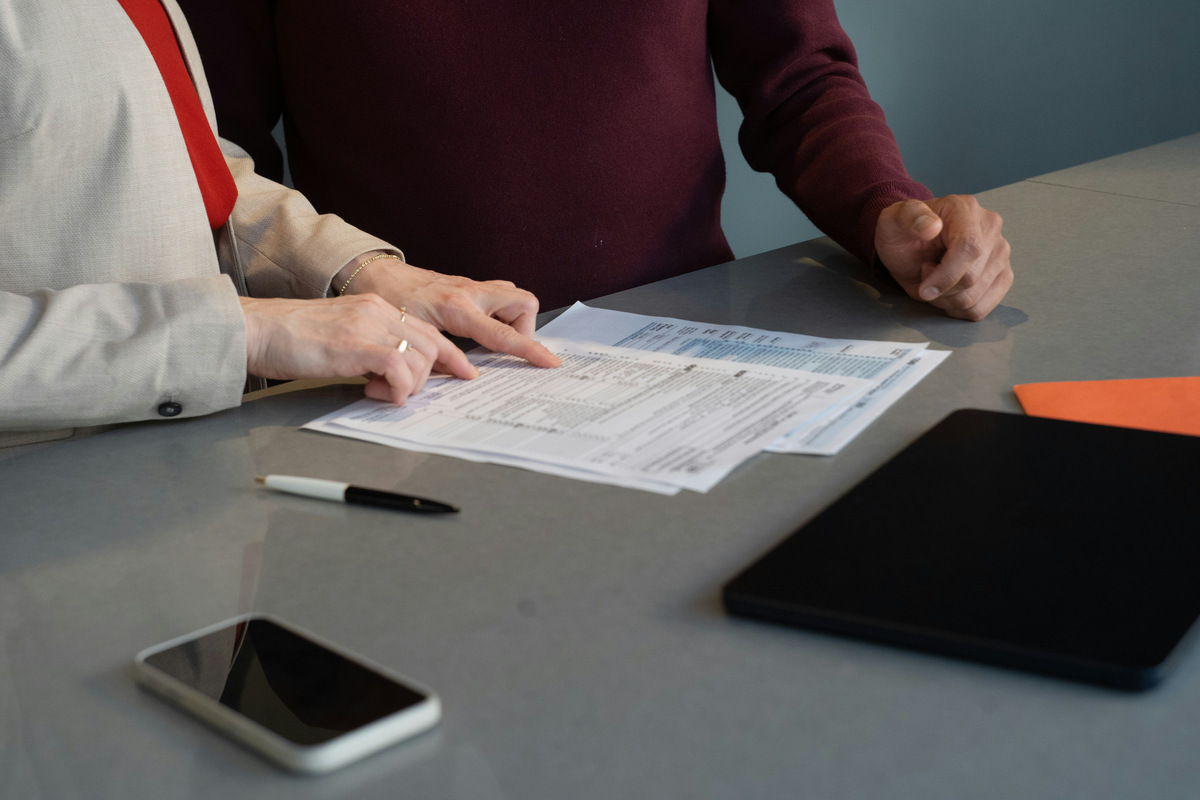
The official spouse-status checklist focuses on whether the applicant’s living expenses in Japan can be supported. It commonly asks for recent resident-tax taxation/non-taxation and tax-payment certificates for the person with the higher income, or alternative evidence when those municipal certificates cannot be issued—for example because the person recently arrived in Japan or moved.
There is no single universal income number published on the standard spouse-status page that guarantees approval. Avoid websites that claim a fixed salary threshold automatically decides every case. The practical goal is to document a realistic and sustainable household: income, savings, employment or other support should make sense together.
If your standard municipal tax certificates are unavailable, use the alternatives permitted by the current checklist and, when necessary, ask the regional immigration office what evidence fits your situation.
- Use current municipal tax/income and tax-payment certificates when available.
- If those documents cannot be issued, prepare alternative support evidence allowed by the official checklist.
- Make household income, employment, savings and living arrangements internally consistent.
- Do not fabricate income or omit material financial problems.
2026 alert: some COE applicants must complete pre-entry TB screening
Japan’s pre-entry tuberculosis screening system (JPETS) now affects some long-term entrants from designated countries. As of August 2026, the official JPETS guidance covers nationals of the Philippines, Vietnam, Indonesia, Nepal, Myanmar and China as target-country nationals in principle, while implementation timing differs by country and exemptions apply in specified situations.
The submission requirement is already in force for applicants from the Philippines and Nepal for covered applications filed on or after June 23, 2025, and for Vietnam on or after September 1, 2025. The official FAQ states that implementation for Indonesia, Myanmar and China is still being coordinated. If the rule applies, the applicant must use a designated panel clinic and submit the official TB Clearance Certificate with the COE application (or visa application when applying without a COE).
Because nationality, current country of residence and exemption categories matter, check the JPETS site immediately before starting the medical process. Do not pay a non-designated clinic and assume its certificate will be accepted.
- Check whether your nationality and current residence make you subject to JPETS.
- Use only a Japanese-government-designated panel clinic.
- For the Philippines and Nepal, the requirement applies to covered applications from June 23, 2025.
- For Vietnam, the requirement applies to covered applications from September 1, 2025.
- Implementation for Indonesia, Myanmar and China remains subject to official rollout updates.
Submit the application and track the current fee rules
A COE application itself is a pre-entry immigration procedure; after the COE is issued, the overseas spouse normally uses it for the visa application at the relevant Japanese embassy or consulate. For applicants already in Japan, a Change of Status of Residence can be filed through the applicable Immigration procedure, and eligible users may use the online residence-application system.
As of August 19, 2026, the ISA fee page states that a successful Change of Status of Residence costs ¥6,000 for a counter application or ¥5,500 for an online application. A further fee revision has been published in a 2026 draft/public-comment process with an intended October 1, 2026 effective date. Because that later schedule may change or be finalized differently, verify the live ISA fee page before paying rather than relying on a saved article.
Keep the application receipt or online acceptance information and copies of everything submitted. If Immigration sends a request for additional material, answer the specific request rather than replacing the entire file with unrelated documents.
- Current change-of-status fee as of August 19, 2026: ¥6,000 at the counter or ¥5,500 online, payable when permission is granted.
- A further fee change is under a 2026 rulemaking process; re-check the official fee page if filing later in 2026.
- Keep a complete copy of the submitted packet.
- Keep your current passport and residence-card details accurate during processing.
Do not treat processing time as a guaranteed countdown
Processing time varies with the application type, regional office workload, completeness of the documents, and whether Immigration asks for additional evidence. A straightforward case and a complex case can take very different amounts of time.
The practical mistake is planning a job start, international move, lease, or flight around an unofficial “approval date” from social media. Use Immigration’s published processing information as a reference, but build margin into your plans and avoid commitments that depend on approval by a specific day.
For an overseas case, remember that COE issuance is not the final visa decision. The Ministry of Foreign Affairs specifically notes that a COE does not guarantee a visa.
- Do not book non-refundable travel around an estimated approval date.
- Respond quickly if Immigration requests more documents.
- Check that your passport, contact details and mailing arrangements remain usable while the case is pending.
- Treat the COE, overseas visa and entry stages as separate steps.
After approval: work rights, address registration and renewals
“Spouse or Child of Japanese National” is a status based on personal status rather than a specific employer or occupation. That makes it fundamentally different from employer-tied work statuses. However, approval of the spouse status does not replace ordinary resident obligations such as address registration, health-insurance procedures, pension, tax and other municipal steps that may apply after moving.
The Ministry of Foreign Affairs lists periods of stay of five years, three years, one year or six months for this status. The period actually granted is decided case by case. Apply for an extension before the period of stay expires if you will continue residing in Japan under the same status.
If you move after arrival, update the required address records. Settora’s address-registration and moving guides cover the municipal side separately so this visa guide can stay focused on immigration.
- Check the period of stay printed on your residence card; do not assume you received the maximum period.
- Complete municipal address procedures after moving into your residence.
- Handle health insurance, pension and tax procedures that apply to your household.
- Prepare renewal well before the current period of stay expires.
If the marriage ends, do not ignore your immigration status
If you hold a spouse-based status and divorce your spouse or your spouse dies, the Immigration Services Agency requires a notification concerning the spouse within 14 days. The notification itself is separate from deciding what status you may qualify for next.
Do not assume the residence card simply remains usable until its printed expiry date without consequences. Your next options depend on the facts—for example another qualifying status, work, family circumstances or other legal grounds. If the situation is complicated, obtain advice from Immigration or a qualified immigration professional rather than relying on old forum posts.
Long-term residents may eventually consider permanent residence, but marriage to a Japanese national does not make permanent residence automatic. Permanent-residence applications have their own requirements and document checks.
- Divorce or death of the spouse: submit the required spouse notification within 14 days.
- Review the basis of your continued residence promptly.
- Do not confuse a spouse-status renewal with permanent residence.
- Use the current ISA rules for any next-step application.
FAQ
Can I get a spouse visa just by marrying a Japanese citizen?
No. A legally valid marriage is essential, but Immigration also examines the required documents, the authenticity of the relationship, support and living arrangements, and other facts of the case. Marriage registration by itself is not an automatic residence-status approval.
Can I apply for a Japanese spouse visa from inside Japan?
If you already hold another eligible residence status in Japan, you may apply for a Change of Status of Residence. A Temporary Visitor case is different and should not be treated as the normal in-Japan route; confirm the specific circumstances with Immigration.
Do I need a Certificate of Eligibility if I am applying from overseas?
The usual route is to obtain a COE first. The Ministry of Foreign Affairs says a visa application can be made without one, but the applicant may need substantially more verification documents and processing can take several months. A COE also does not guarantee visa issuance.
How many couple photos should I submit?
The current ISA checklist for a Japanese-national spouse case asks for two to three unedited snapshot photos showing both spouses clearly, and it lists other relationship evidence such as social-media or call records where available. Always confirm the latest checklist before filing.
Is there a minimum income for a spouse visa in Japan?
The standard official checklist does not publish one fixed income amount that guarantees approval. It requires evidence showing how living expenses in Japan will be covered, including tax/income documents or permitted alternatives depending on the case.
How much does a spouse-status change cost in 2026?
As of August 19, 2026, a successful Change of Status of Residence costs ¥6,000 for a counter application or ¥5,500 for an online application. A further fee revision is in a 2026 rulemaking process, so check the live ISA fee page before paying if you apply later in the year.
Do spouse-visa applicants need a TB test before entering Japan?
Some do. JPETS applies to specified long-term entrants from designated countries, with implementation dates and exemptions that vary. The requirement is already in force for covered applicants from the Philippines and Nepal and for Vietnam; implementation for Indonesia, Myanmar and China is still being coordinated as of August 2026.
Official References
- Immigration Services Agency — Spouse or Child of Japanese National (spouse application documents)
- Immigration Services Agency — Change of Status of Residence
- Immigration Services Agency — Residence application fees
- Immigration Services Agency — Online residence application Q&A
- Immigration Services Agency — Notification concerning spouse
- Ministry of Foreign Affairs — Specified visa: Spouse or child of Japanese national
- Japan Pre-Entry Tuberculosis Screening (JPETS) — Official FAQ
- Immigration Services Agency — 2026 immigration-law amendment information
- Immigration Services Agency — 2026 public-comment draft on further residence-procedure fee changes
Final Thoughts
A strong spouse-status application is not about producing the thickest file. It is about using the correct route, following the current official checklist, and presenting one coherent account of a real marriage, household and plan for life in Japan. Before filing, re-check the ISA spouse-status page, the live fee page and—if you are applying from overseas—the JPETS rules for your nationality and country of residence. Then keep a complete copy of the packet and respond promptly if Immigration asks for more evidence.