
How to Find an Apartment in Japan: Search, Costs, Agents & Viewings
A practical 2026 guide for foreign residents on finding an apartment in Japan, from budget and area selection to agents, documents, viewings, costs, and screening readiness.

Start apartment hunting in Japan by setting a total monthly budget, choosing a realistic commute area, and preparing the basic information an agent may ask for. Search online to learn the market, but confirm availability and applicant conditions with a real estate agency before becoming attached to a listing. For each serious candidate, compare rent plus management fees, expected move-in costs, guarantor or guarantee-company requirements, contract conditions, room dimensions, sunlight, noise, internet options, and the route to the station. Government guidance for foreign residents also recommends viewing the property, preparing identification and income or school information early, and understanding the important contract terms before applying.
Build your apartment search around the life you actually need
A good apartment search starts before you open a listing site. Write down the conditions that would make daily life workable: maximum monthly housing cost, preferred commute time, earliest move-in date, number of occupants, room size, must-have equipment, pet needs, bicycle or car parking, and whether you need support in English or another language.
Separate must-haves from preferences. If every condition is non-negotiable, your search can become unnecessarily narrow. On the other hand, treating the cheapest rent as the only priority can create a long commute, weak access to groceries or clinics, or a room that does not fit your furniture and appliances.
The Ministry of Land, Infrastructure, Transport and Tourism recommends clearly telling the real estate agent your preferred station, rent, size, furnishings, and equipment. That same principle works well before you contact an agency: turn your search into a short, realistic brief.
- Maximum rent plus management or common-service fee
- Acceptable commute time and number of train transfers
- Earliest and latest move-in date
- Minimum room size and layout
- Essential equipment such as air conditioning or indoor washing-machine space
- Pet, bicycle, parking, or accessibility requirements
- Language-support needs
Set a budget for both monthly living and move-in costs
The advertised rent is only one part of the decision. Monthly housing costs can also include a management or common-service fee, utilities, internet, parking, and transportation. Compare the total monthly burden rather than the rent line by itself.
Initial costs can be much larger than one month's rent. The current MLIT Apartment Search Guidebook lists items such as security deposit, key money, agency fee, damage-insurance premium, advance rent, common-service fee, and a guarantee-company fee when applicable. Its rule of thumb is roughly four to seven months of rent, while actual amounts vary by property and region.
Before applying, ask for a written estimate that separates every move-in charge. This makes it easier to compare two apartments that have similar rent but very different upfront costs.
- Rent
- Management or common-service fee
- Deposit and key money when required
- Agency fee
- Guarantee-company fee when required
- Damage or fire insurance
- Advance rent and prorated rent
- Other property-specific move-in charges
Choose the area by commute, daily life, and the last walk home
Start with the places you must reach regularly: work, school, a partner's workplace, childcare, or medical care. Then compare rail lines, transfer points, first and last train practicality, and the walking route from the station.
The nearest station is not the whole story. A slightly longer walk on a bright, flat route can be more comfortable than a shorter route beside heavy traffic, steep hills, or poorly lit streets. If possible, visit the area at the time you would normally come home.
Check everyday infrastructure around serious candidates. Supermarkets, convenience stores, clinics, pharmacies, banks or ATMs, parks, bicycle parking, and garbage collection points can matter more after move-in than a stylish listing photo.
- Door-to-door commute, not only train time
- Walking route from station or bus stop
- Groceries and daily shopping
- Clinic and pharmacy access
- Street noise and nighttime lighting
- Flood, slope, or other local hazard information where relevant
- Garbage area and bicycle or vehicle parking
Use listing sites to learn the market, then verify the real conditions
Online listings are excellent for learning typical rent, layouts, building age, station distance, and the range of available areas. Use several listings to understand the market before narrowing your search.
A listing is not a guarantee that the room is still available or that every applicant can use the same conditions. Contact the agency to confirm current availability, move-in timing, applicant requirements, pet rules, guarantor or guarantee-company conditions, and total initial cost.
Learn common Japanese layout terms such as 1R, 1K, 1DK, and 1LDK. MLIT's guidebook explains that the number shows independent rooms, while L, D, and K refer to living, dining, and kitchen space. Also check the actual square meters and floor plan rather than relying on the label alone.
- Current availability
- Exact rent and monthly fees
- Move-in date
- Applicant and occupancy conditions
- Guarantor or guarantee-company requirement
- Pet and instrument rules
- Contract type and renewal conditions
Choose an agency that can work with your actual situation
Real estate agencies can search beyond the properties displayed in their storefront and can confirm details with landlords or management companies. For foreign residents, the most useful agency is not simply the one with the most listings; it is one that can explain which properties are realistic for your residence status, work or school situation, language needs, and move-in schedule.
Tokyo's multilingual living guidance recommends using an agency in the area you want to live and notes that there are also property websites aimed at foreign residents. MLIT publishes multilingual housing guidance and information intended to make private rental housing easier to access for foreign nationals.
Tell the agent the facts early. If you need English support, are newly employed, are a student, will live with another person, have a pet, or do not have a personal guarantor, say so before viewings are arranged. This saves time for both you and the agency.
- Preferred area and budget
- Occupation, employer, school, or other status
- Number of occupants
- Residence status and expected length of stay when relevant to screening
- Japanese-language ability or translation needs
- Guarantor situation
- Desired move-in date
Prepare screening information before you find the perfect room
A desirable apartment can move quickly, so prepare the information normally requested for an application before you fall in love with a room. MLIT's guidebook lists examples such as a passport, residence card, proof of earnings, employment certificate, or student registration certificate, with exact requirements depending on the property and screening process.
A guarantor or rental guarantee company is commonly part of Japanese rental screening. Do not assume that one method works for every apartment. Ask the agency which guarantee company is used, what information it needs, whether an emergency contact is required, and what fees apply.
Keep your name, address, phone number, employment or school information, and expected move-in date consistent across the documents you provide. If something has recently changed, tell the agent rather than allowing conflicting information to appear during screening.
- Passport and residence card when applicable
- Japanese phone number and email address
- Employer, income, or school information
- Proof of income or enrollment when requested
- Co-occupant information
- Emergency contact details when requested
- Guarantor or guarantee-company information
Treat the viewing as an inspection, not a photo opportunity
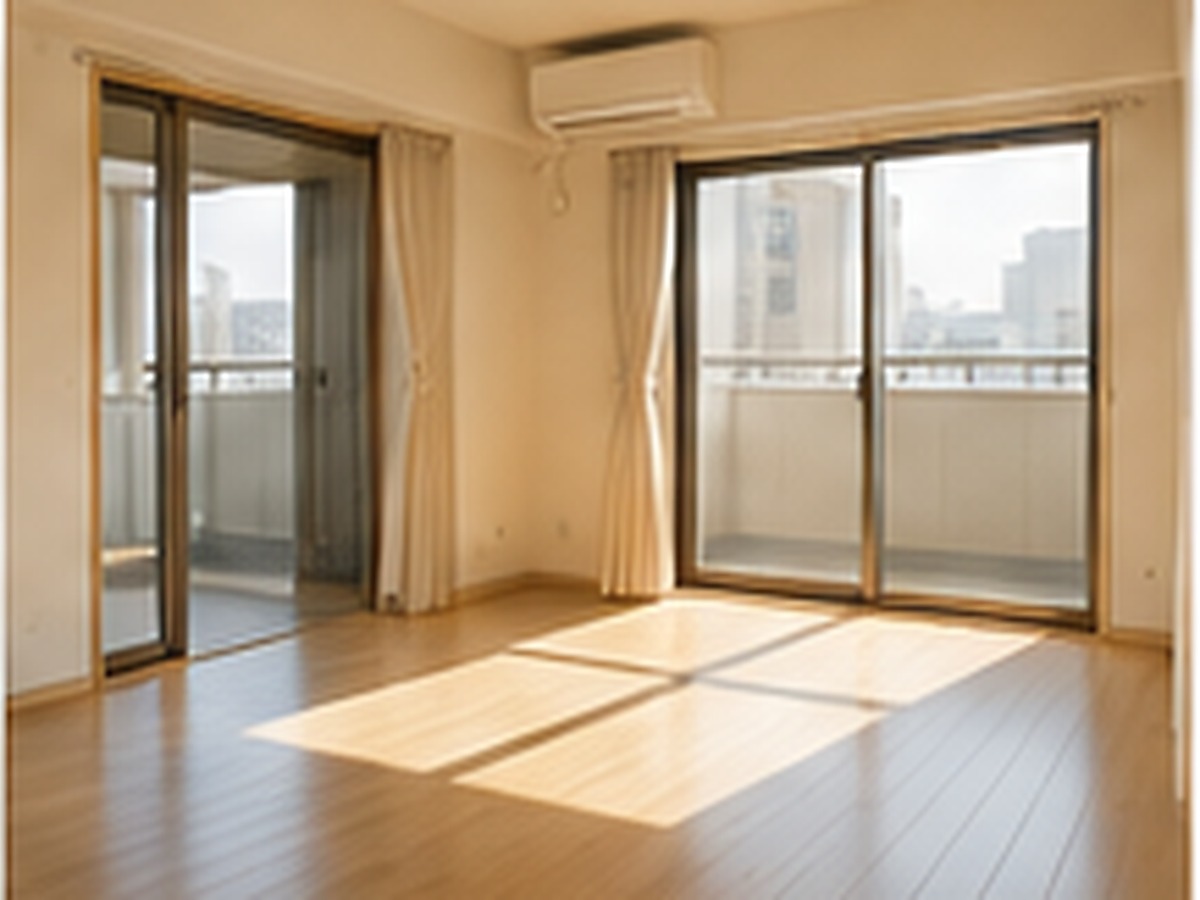
A floor plan cannot tell you whether the room feels dark, noisy, damp, cramped, or difficult to furnish. If you can, visit the apartment before applying and inspect the details that will affect everyday life.
MLIT specifically advises checking kitchen and air-conditioning equipment and confirming there is enough room for items such as a refrigerator and washing machine. Measure the spaces that matter to you, especially if you already own large furniture or appliances.
Look beyond the main room. Check storage, window direction, balcony, water pressure where possible, mobile reception, intercom, mailbox, parcel box, bicycle parking, garbage area, building security, and the condition of shared spaces. Ask what equipment belongs to the property and what you would need to provide yourself.
- Sunlight and window direction
- Noise with windows open and closed
- Storage depth and usable dimensions
- Refrigerator and washing-machine space
- Air conditioner and other installed equipment
- Mobile signal and internet options
- Building entrance, mailbox, parcel box, and shared areas

Inspect the neighborhood as carefully as the room
After the viewing, walk the route you would use most often. MLIT's guidebook recommends checking the surrounding environment and access to stations, bus stops, supermarkets, convenience stores, post offices, banks, hospitals, and parks.
Notice practical details that listing photos rarely show: train or road noise, restaurant exhaust, school or nightlife traffic, steep slopes, bicycle congestion, construction nearby, and how safe the route feels after dark.
If the apartment is a serious candidate, spend ten or fifteen minutes nearby without the agent. That short pause can reveal whether the area feels convenient and comfortable enough for ordinary life.
- Station and bus access
- Groceries and daily errands
- Traffic and train noise
- Nighttime lighting and pedestrian route
- Nearby construction or busy commercial activity
- Local disaster and evacuation information where relevant
Ask the questions that can change your decision before you apply
Application is the point where the process becomes more formal. Before reaching it, make sure you understand the major conditions that could change the total cost or your ability to live the way you expect.
Ask whether the lease is a regular or fixed-term contract, what the initial estimate includes, whether there is a renewal fee, what guarantee-company costs apply, what the cancellation rules are, and whether pets, co-occupants, instruments, bicycles, or other important lifestyle needs are permitted.
If you do not fully understand an important condition, ask for an explanation before applying. The official guidance for foreign residents emphasizes understanding the important points of the rental contract; the safest time to surface questions is before you feel committed to the room.
- Regular lease or fixed-term lease?
- Total initial payment?
- Deposit, key money, agency fee, insurance, and guarantee fee?
- Renewal fee or renewal procedure?
- Required guarantor or guarantee company?
- Earliest move-in date?
- Pet, instrument, co-occupancy, parking, and bicycle rules?
- Internet line already installed or only available to apply for?
- Cancellation or withdrawal conditions before contract?
Shortlist with a scorecard and know when to walk away
When you have two or three serious options, compare them on the same criteria instead of relying on the strongest first impression. A simple scorecard for total monthly cost, initial cost, commute, room usability, neighborhood, screening fit, and contract conditions can make the trade-offs much clearer.
Do not rush because an agent says another applicant may be interested. A genuinely good apartment still needs to work for your budget and daily life. If the costs are unclear, the required conditions keep changing, or important questions are not answered, ask for clarification or choose another property.
Once you have selected a room and are ready to apply, move to the rental-process stage: application, tenancy examination, important-points explanation, contract, payment, and key handover. MLIT's guidebook notes that the application-to-move-in period is often around one to two weeks when the process is straightforward, but timing varies by property and screening.
- Total monthly cost
- Total initial cost
- Commute and neighborhood
- Room layout and equipment
- Screening and guarantor fit
- Contract and renewal conditions
- Move-in timing
- Confidence that all major questions were answered
FAQ
Can foreigners find and rent apartments in Japan?
Yes. Foreign residents rent private housing throughout Japan, but the available properties and screening conditions depend on the landlord, management company, guarantor or guarantee company, documents, income or school situation, communication needs, and the specific property. Ask an agency early which listings are realistic for your circumstances.
Should I search online or go to a real estate agency?
Use both. Online listings are useful for learning rents, layouts, areas, and building types. An agency can confirm whether a listing is still available, explain applicant conditions, arrange a viewing, and clarify costs and screening requirements.
How much money should I prepare before renting an apartment in Japan?
It varies widely. MLIT's Apartment Search Guidebook gives a rough rule of thumb of about four to seven months of rent for the payments required when making a rental agreement, including items such as deposit, key money, agency fee, insurance, advance rent, common-service fees, and guarantee fees when applicable. Always request the actual written estimate for the property.
Do I need a guarantor to find an apartment in Japan?
A personal guarantor or rental guarantee company is commonly required for the application and contract process. The exact arrangement differs by property, so ask the agency which option is required and what information and fees apply before you submit an application.
What documents should I prepare for apartment hunting?
Common examples include a passport, residence card when applicable, phone and contact details, employer or school information, proof of income or employment, student enrollment documents, co-occupant information, and guarantor or emergency-contact details. The exact list is set by the property and screening process.
What should I check during an apartment viewing?
Check sunlight, noise, storage, room dimensions, refrigerator and washing-machine space, installed equipment, mobile reception, internet options, balcony, building entrance, mailbox, parcel box, bicycle parking, garbage area, and the route to the station and daily shops. If possible, revisit the area at the time you would normally come home.
Official References
- MLIT: Support for Foreign Nationals in Looking for Rental Housing
- MLIT: Apartment Search Guidebook (English)
- Tokyo Intercultural Portal Site: Find a Place to Live
- Fudousan Japan: Guide for Foreigners Who Want to Rent an Apartment
- Tokyo Metropolitan Government: Real Estate Transactions and Rental Housing

Final Thoughts
Finding an apartment in Japan is easier when you separate the search from the contract. First build a realistic budget and area shortlist, learn the local market, work with an agency that understands your situation, prepare screening information early, and inspect both the room and neighborhood. Then compare the full cost and contract conditions before you apply. The goal is not to win the first available room; it is to choose a home that still makes sense after the excitement of the viewing is gone.