How to Make an Appointment in Japanese
Practical Japanese scripts for booking, confirming, changing, or canceling appointments at clinics, public offices, restaurants, salons, and other everyday services in Japan.

The most reusable phrase is 予約をしたいのですが (Yoyaku o shitai no desu ga), meaning “I’d like to make an appointment.” Then use a short sequence: state the service, offer a date or time, give your name and phone number, and repeat the final booking details. If you are not sure whether a reservation is required, ask 予約は必要ですか (Yoyaku wa hitsuyō desu ka), “Is an appointment necessary?”
The Core Appointment Pattern
You do not need advanced Japanese to make most everyday appointments. A reliable opening is 予約をしたいのですが (Yoyaku o shitai no desu ga), “I would like to make an appointment.” For a medical visit, say 診察の予約をしたいのですが (Shinsatsu no yoyaku o shitai no desu ga). For an administrative procedure, 手続きの予約をしたいのですが (Tetsuzuki no yoyaku o shitai no desu ga) works when the office actually uses appointments.
A practical conversation usually follows four steps: purpose → preferred date or time → your details → confirmation. The Japan Foundation’s Irodori lesson on restaurant reservations uses the same real-life sequence: date, number of people, time, contact details, and a final confirmation. Keep this structure in front of you rather than trying to improvise a long sentence.
If you only want to check an existing booking, say 予約について確認したいのですが (Yoyaku ni tsuite kakunin shitai no desu ga), “I would like to confirm something about my appointment.” If you are unsure whether appointments are even accepted, start with 予約は必要ですか (Yoyaku wa hitsuyō desu ka).
- 予約をしたいのですが。— I would like to make an appointment.
- 診察の予約をしたいのですが。— I would like to make a medical appointment.
- 予約について確認したいのですが。— I would like to confirm something about an appointment.
- 予約は必要ですか。— Is an appointment necessary?
Prepare Before You Call
Telephone Japanese becomes much easier when every likely answer is already written down. Prepare the exact service or department, two or three possible dates, a preferred time range, your full name, your telephone number, and any special request that matters to the booking.
For clinics, note whether this is a first visit or follow-up, the department if you know it, the main symptom, and whether you have a referral. For restaurants, prepare the number of people and any important allergy or seating request. For public offices, write down the procedure name and ask what documents and counter you need.
Keep a pen and calendar ready. Do not volunteer sensitive information that the organization has not requested. If an unexpected caller asks for passwords, PINs, one-time codes, or payment, end the call and contact the organization again through its published official contact route.
- Purpose or service you need
- Two or three possible dates
- Preferred time range
- Full name and telephone number
- Number of people when relevant
- First visit / follow-up / consultation / procedure type
- Any existing reservation, patient, application, or customer reference
- Language, accessibility, allergy, dietary, or child-related request
- Pen and calendar for final confirmation
Dates, Times, and Availability
To ask about a specific date, say 4月10日は空いていますか (Shigatsu tōka wa aite imasu ka), “Is April 10 available?” If you are flexible, 午前中で空いている時間はありますか (Gozenchū de aite iru jikan wa arimasu ka), “Is there an available time in the morning?” is more useful than forcing one exact slot.
If the first proposal does not work, say すみません、その時間は難しいです。ほかの時間はありますか (Sumimasen, sono jikan wa muzukashii desu. Hoka no jikan wa arimasu ka), “I’m sorry, that time is difficult. Is there another time?” When a proposed slot works, はい、その時間でお願いします (Hai, sono jikan de onegai shimasu) closes the choice cleanly.
Japanese offices and medical institutions may use the 24-hour clock. Repeat the time back before ending the call. For example, 15時、午後3時ですね (Jūgo-ji, gogo san-ji desu ne), “15:00, 3 p.m., correct?”
- 一番早い日はいつですか。— What is the earliest available date?
- 火曜日か木曜日を希望しています。— I prefer Tuesday or Thursday.
- その時間でお願いします。— That time works for me.
- ほかの時間はありますか。— Is another time available?
Making a Medical Appointment
Medical booking systems differ by institution and department. Some clinics accept appointments, some combine appointments with walk-in reception, and some services require a referral or use a separate booking route. Check the institution’s official information or call before traveling. Tokyo’s official foreign-patient information pages explicitly advise users to contact medical institutions in advance because acceptance conditions can change.
A useful opening is お電話失礼します。診察の予約をしたいのですが (Odenwa shitsurei shimasu. Shinsatsu no yoyaku o shitai no desu ga), “Excuse me for calling. I would like to make a medical appointment.” Staff may ask 初診ですか、再診ですか (Shoshin desu ka, saishin desu ka), “Is this your first visit or a follow-up?”
Give only the main information needed for booking: 初診です (Shoshin desu), “It is my first visit”; 内科を希望しています (Naika o kibō shite imasu), “I would like internal medicine”; 紹介状があります (Shōkaijō ga arimasu), “I have a referral letter”; or 英語で対応できますか (Eigo de taiō dekimasu ka), “Can you provide service in English?”
The Ministry of Health, Labour and Welfare’s Medical Information Net can be used to search for medical institutions, and its interface provides multiple language options. For the complete visit process, use Settora’s clinic guide rather than trying to solve reception, insurance, examination, payment, and prescriptions inside this language article.
- 初診です。— It is my first visit.
- 再診です。— It is a follow-up visit.
- 診察券を持っています。— I have a patient card.
- 紹介状があります。— I have a referral letter.
- 英語で対応できますか。— Can you provide service in English?
- 通訳をお願いできますか。— Can I request an interpreter?
- 子どもの予約です。— The appointment is for my child.
City Hall and Public-Office Appointments
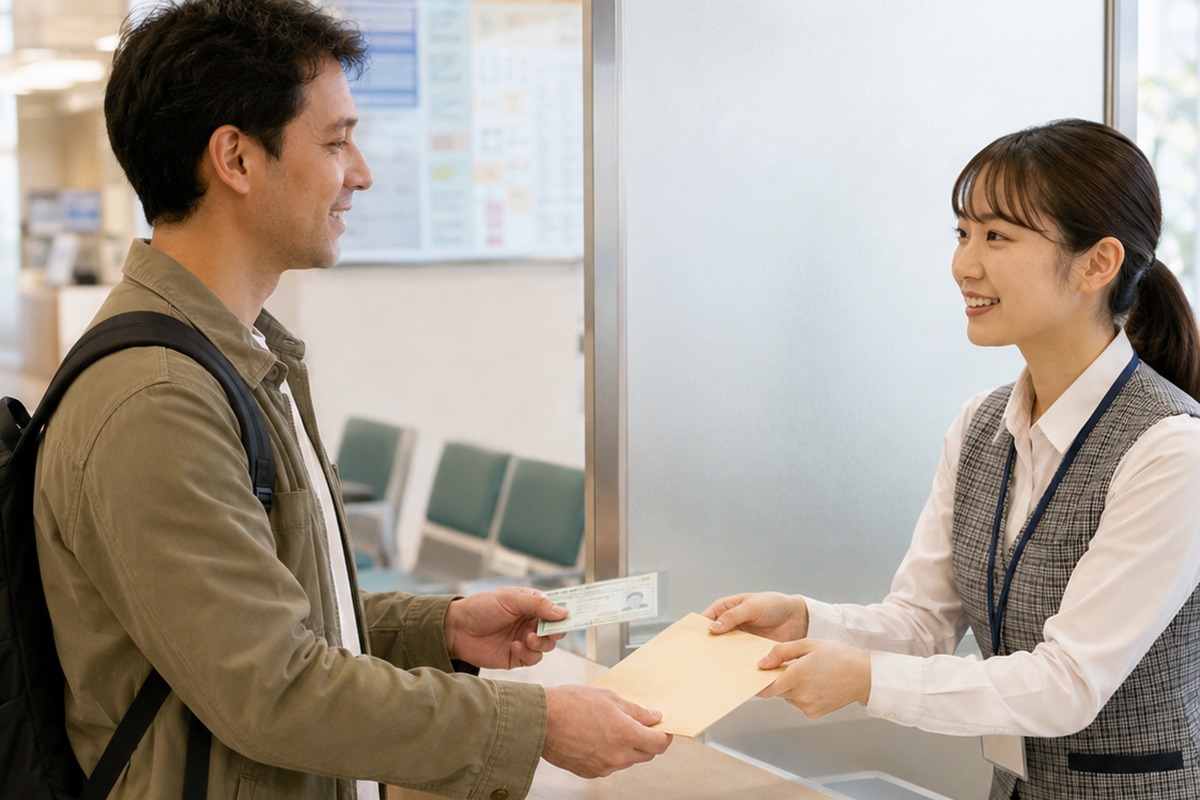
Do not assume that every city-hall procedure requires an appointment. Many ordinary services still use walk-in reception or numbered tickets, while some consultations, special counters, weekend services, or language-support sessions may use reservations. Ask この手続きは予約が必要ですか (Kono tetsuzuki wa yoyaku ga hitsuyō desu ka), “Is an appointment required for this procedure?”
If you need advice rather than a specific form, 住所変更の手続きについて相談したいのですが (Jūsho henkō no tetsuzuki ni tsuite sōdan shitai no desu ga), “I would like to ask about the address-change procedure,” gives the staff enough context to route you correctly.
Before ending the call, ask 必要な書類を教えてください (Hitsuyō na shorui o oshiete kudasai), “Please tell me which documents are required,” and 当日は何階の窓口に行けばいいですか (Tōjitsu wa nankai no madoguchi ni ikeba ii desu ka), “Which floor and counter should I go to on the day?”
- この手続きは予約が必要ですか。— Is an appointment required for this procedure?
- 外国語の通訳がいる日に予約できますか。— Can I book for a day when language support is available?
- 必要な書類を教えてください。— Please tell me which documents are required.
- 当日は何階の窓口に行けばいいですか。— Which floor and counter should I go to?
Restaurants, Salons, and Everyday Services
For a restaurant, a complete first sentence can be 予約をしたいのですが、土曜日の7時に2名で空いていますか (Yoyaku o shitai no desu ga, doyōbi no shichi-ji ni ni-mei de aite imasu ka), “I’d like to make a reservation. Is Saturday at 7 p.m. available for two people?”
The Japan Foundation’s Irodori reservation exercise shows the practical questions you should expect: the date, number of guests, time, name, telephone number, and a final read-back of the reservation. This makes it an excellent model for many other everyday bookings as well.
For a salon, カットの予約をしたいのですが、金曜日の夕方は空いていますか (Katto no yoyaku o shitai no desu ga, kin’yōbi no yūgata wa aite imasu ka), “I’d like to book a haircut. Is Friday evening available?” For a repair counter, 修理の持ち込み予約をしたいのですが (Shūri no mochikomi yoyaku o shitai no desu ga), “I’d like to book a drop-off appointment for a repair.”
Confirm service duration, what to bring, and any cancellation rule when these matter. A reservation does not automatically guarantee a final price, treatment time, or completion time.
- 何名様ですか。— How many people?
- 2名です。— Two people.
- お名前をお願いします。— May I have your name?
- 電話番号をお願いします。— May I have your phone number?
- アレルギーがあります。— I have an allergy.
Giving Your Name and Phone Number
Foreign names are often the hardest part of a phone call. Say your name slowly and be ready to repeat it in katakana. 名前はアレックス・スミスです。カタカナでは、ア・レ・ッ・ク・ス、ス・ミ・スです (Namae wa Arekkusu Sumisu desu. Katakana de wa, A-re-k-ku-su, Su-mi-su desu) is a clear model.
For a telephone number, pause between groups and read the digits carefully. Zero is commonly ゼロ, while よん and なな are often easier to distinguish than alternate readings for 4 and 7. After giving the number, ask the staff to repeat it if the booking is important.
For medical, municipal, banking, immigration, and other official procedures, use the name that matches the organization’s existing record or the identification you will present.
- お名前をもう一度お願いします。— Please say your name again.
- カタカナでは〜です。— In katakana, it is …
- 電話番号は〜です。— My telephone number is …
- もう一度確認していただけますか。— Could you confirm it once more?
Confirm Before Ending the Call
Never rely on memory after several dates or times have been discussed. Repeat the final date, time, place, department or service, name, and anything you must bring.
A useful confirmation sentence is 確認ですが、4月10日木曜日の午後3時、内科の予約でよろしいですか (Kakunin desu ga, shigatsu tōka mokuyōbi no gogo san-ji, naika no yoyaku de yoroshii desu ka), “To confirm: Thursday, April 10 at 3 p.m., for internal medicine, correct?”
If the organization issues a reference, ask 予約番号はありますか (Yoyaku bangō wa arimasu ka), “Is there a reservation number?” Also confirm required documents, arrival time, and whether the booking is fully confirmed or only provisional.
- Date and day of week
- Time
- Location, branch, floor, counter, or department
- Service or treatment booked
- Your name and party size when relevant
- Required documents or items
- Reservation or confirmation number
- How early to arrive
Changing, Canceling, or Arriving Late
To change a booking, say 予約を変更したいのですが (Yoyaku o henkō shitai no desu ga), “I would like to change my appointment.” Give the current booked date, time, name, and reservation number before proposing a new date.
To cancel, say 申し訳ありませんが、予約をキャンセルしたいです (Mōshiwake arimasen ga, yoyaku o kyanseru shitai desu), “I’m sorry, but I would like to cancel my appointment.” Ask whether a cancellation charge or other condition applies instead of assuming cancellation is free.
If you will be late, contact the organization as soon as possible. 予約しているスミスです。10分ほど遅れそうです (Yoyaku shite iru Sumisu desu. Juppun hodo okuresō desu), “This is Smith, and I have an appointment. I may be about ten minutes late.” Then ask そのまま伺っても大丈夫ですか (Sono mama ukagatte mo daijōbu desu ka), “Is it okay for me to continue coming?”
- 予約を変更したいのですが。— I would like to change my appointment.
- 別の日に変更できますか。— Can I change it to another day?
- 予約をキャンセルしたいです。— I would like to cancel my appointment.
- 10分ほど遅れそうです。— I may be about ten minutes late.
Common Replies You May Hear
Recognizing a few staff replies is more valuable than trying to understand every sentence. 少々お待ちください means “Please wait a moment,” 確認いたします means “I will check,” and 空きがあります means “There is availability.”
If you lose the thread of the conversation, say もう一度、ゆっくりお願いします (Mō ichido, yukkuri onegai shimasu), “Once more, slowly, please.” This is polite and direct. You can also ask メールで送っていただけますか (Mēru de okutte itadakemasu ka), “Could you send it by email?” when the organization can provide written confirmation.
If an automated menu answers first, listen for the relevant service category and use Settora’s separate phone-number and automated-menu guide for the full navigation strategy rather than trying to memorize every possible menu here.
- 少々お待ちください。— Please wait a moment.
- 確認いたします。— I will check.
- 空きがあります。— There is availability.
- その時間は埋まっています。— That time is fully booked.
- 最短で金曜日です。— The earliest is Friday.
- 予約は受け付けていません。— We do not accept appointments.
- 当日受付です。— Registration is on the day.
- 折り返しお電話します。— We will call you back.
Email and Online Booking
Online booking pages often ask for the service, date, time, name, phone number, email address, number of people, and notes. Submitting a request is not always the same as receiving a confirmed booking.
Watch for terms such as 予約確定 (confirmed reservation), 仮予約 (provisional reservation), 承認待ち (awaiting approval), and 受付完了 (submission received). Save the confirmation page or message and check whether a second approval email is required.
A concise email can state the booking request, preferred date and time, service, name, phone number, and a request for confirmation. Avoid sending sensitive identity details unless the organization specifically requires them through an appropriate channel.
- 予約確定 — confirmed reservation
- 仮予約 — provisional reservation
- 承認待ち — awaiting approval
- 受付完了 — submission received
- 予約希望について — useful email subject meaning “Regarding an appointment request”
Troubleshooting Language or Booking Problems
If you cannot understand the date, ask 日付をもう一度お願いします (Hizuke o mō ichido onegai shimasu), “Please repeat the date.” If two dates sound similar, say both possibilities and ask which one is correct.
If the first available slot is too late, ask whether cancellations are sometimes released or whether another branch can accept the booking. キャンセルが出た場合、連絡していただけますか (Kyanseru ga deta baai, renraku shite itadakemasu ka), “Could you contact me if there is a cancellation?” may be accepted by some services, but do not assume a waiting list exists.
If you need language support, ask before booking whether interpretation is available and whether you may bring your own interpreter. For medical care, Tokyo’s HIMAWARI service and official medical-information services can help with institution information; availability and acceptance should still be confirmed with the medical institution.
If you reach the wrong department, say 予約の担当につないでいただけますか (Yoyaku no tantō ni tsunaide itadakemasu ka), “Could you connect me with the person responsible for appointments?”
- 日付をもう一度お願いします。— Please repeat the date.
- ほかの支店でも予約できますか。— Can I book at another branch?
- 通訳をお願いできますか。— Can I request an interpreter?
- 予約の担当につないでいただけますか。— Could you connect me with the person responsible for appointments?
Appointment Checklist
Before you end any appointment conversation, make sure you can answer four questions: what is booked, when is it, where do you go, and what do you need to bring. If one of those is unclear, ask again before hanging up.
For medical emergencies or severe symptoms, do not wait for an ordinary appointment slot. Follow emergency guidance and call 119 when emergency medical assistance is required.
- Confirm that the organization accepts or requires appointments.
- Prepare the purpose and two or three possible dates.
- State whether it is a first visit, follow-up, consultation, procedure, or service booking.
- Give your name and phone number slowly.
- Confirm party size and special requests when relevant.
- Repeat the final date, time, location, department, and reservation number.
- Ask what to bring and how early to arrive.
- Check change, cancellation, and late-arrival rules.
- Save the confirmation message or write down the final instructions.
FAQ
Is 予約 the same as an appointment and a reservation?
Yes. 予約 (yoyaku) is used broadly for medical appointments, restaurant reservations, salon bookings, consultations, tickets, and many other scheduled services. The surrounding noun tells you what kind of booking it is.
What is the most natural opening phrase?
予約をしたいのですが (Yoyaku o shitai no desu ga) is polite, flexible, and easy to reuse. You can add the service before の予約, such as 診察の予約 for a medical appointment or カットの予約 for a haircut.
Can I say 予約してください?
It will usually be understood, but it sounds more like a direct instruction. 予約をしたいのですが or 予約をお願いしたいのですが is generally smoother when speaking to staff.
How do I ask whether walk-ins are accepted?
Say 予約なしでも大丈夫ですか (Yoyaku nashi demo daijōbu desu ka), meaning “Is it okay without an appointment?”
How do I say that I already booked online?
Say インターネットで予約しました (Intānetto de yoyaku shimashita), “I made a reservation online,” then give your name and confirmation number if one was issued.
How do I book for another person?
Explain who the appointment is for, for example 子どもの予約をしたいのですが, “I’d like to make an appointment for my child.” For sensitive or official procedures, the organization may need to speak directly with the person or verify consent.
Should I use my legal name or preferred name?
For medical, municipal, banking, immigration, and other official procedures, use the name that matches the organization’s record or the identification you will present. You can tell staff your preferred form of address afterward.
What should I do if the matter is urgent?
Say clearly that the situation is urgent. For severe illness, breathing difficulty, loss of consciousness, major injury, or another medical emergency, do not wait for an ordinary appointment; follow emergency guidance and call 119 when emergency medical assistance is needed.
Official References
- Japan Foundation Irodori — Elementary 2 Lesson 3: Restaurant Reservation by Phone
- Japan Foundation Irodori — Elementary 2 Course Materials
- Japan Foundation Irodori — 2026 Updates
- Tokyo Metropolitan Government — Foreign-Patient Medical Institution Information
- Tokyo Metropolitan Government — HIMAWARI Foreign-Patient Medical Information Service
- Ministry of Health, Labour and Welfare — Medical Information Net
- Ministry of Health, Labour and Welfare — Medical Information Net FAQ
- Japan National Tourism Organization — Guide for When You Are Feeling Ill
Final Thoughts
Making an appointment in Japanese becomes manageable when you use one repeatable pattern: state what you need, offer a few possible times, give your details slowly, and repeat the final booking information before ending the call. Booking systems differ among clinics, public offices, restaurants, salons, and shops, so always confirm whether a reservation is required, what to bring, how early to arrive, and what happens if you need to change or cancel.