How to See a Dentist in Japan: Insurance, Costs, Appointments & What to Expect
A practical 2026 guide to seeing a dentist in Japan: how to find and book a clinic, what insurance proof to bring, insured versus private treatment, costs, first-visit steps, useful Japanese phrases, and urgent dental care.
To see a dentist in Japan, choose a clinic that treats your problem, book before going when possible, and bring valid proof of public-health-insurance eligibility plus a list of medicines and allergies. As of August 2026, the old health-insurance-card transition has ended: use a My Number health insurance card if you have one, or a qualification confirmation certificate if you do not. For covered care, the normal patient share depends on age and income; many residents through age 69 pay 30%. Before treatment starts, ask whether each option is covered by insurance or is private treatment, how many visits are likely, and what costs could change.
Choose the Right Type of Dental Clinic
For ordinary toothache, sensitivity, cavities, gum problems, broken fillings, crowns that have come off, routine examinations and many common procedures, a general dental clinic (shika, 歯科) is usually the right starting point.
For impacted wisdom teeth, major jaw or facial swelling, oral injuries, difficult extractions, jaw-joint problems or lesions inside the mouth, look for dental and oral surgery (shika kōkū geka, 歯科口腔外科). A general dentist can also examine you first and refer you when hospital-level or specialist care is more appropriate.
Orthodontics (kyōsei shika, 矯正歯科) and pediatric dentistry (shōni shika, 小児歯科) are separate services. Orthodontic care is often private treatment, although limited medical exceptions exist, so confirm the fee structure before diagnostic work begins.
- General dentistry: toothache, cavities, gum problems, fillings, crowns and routine care
- Dental/oral surgery: difficult extractions, wisdom teeth, jaw problems, trauma and oral lesions
- Orthodontics: tooth alignment and bite treatment
- Pediatric dentistry: dental care for children
Find a Clinic and Confirm Language Support
Japan's Ministry of Health, Labour and Welfare operates Medical Information Net (Navi), which lets residents search nationwide for medical and dental facilities using location, reception hours, treatment type, services and language-support information. The Japan Dental Association also provides a directory of member dentists.
Do not rely on a single directory label. A clinic listed as supporting English may have only one dentist or staff member who can use English, and that person may not work every day. Confirm the exact language support when you book.
Also check whether the clinic is accepting new patients, whether it handles urgent cases, its opening days, payment methods, accessibility and whether your specific treatment area is offered.
- New-patient availability
- Appointment and urgent-care policy
- English or other language support on your visit date
- General dentistry, oral surgery, orthodontics or pediatric services
- Opening hours, location, accessibility and payment methods
Book Before You Go and Describe the Problem Clearly
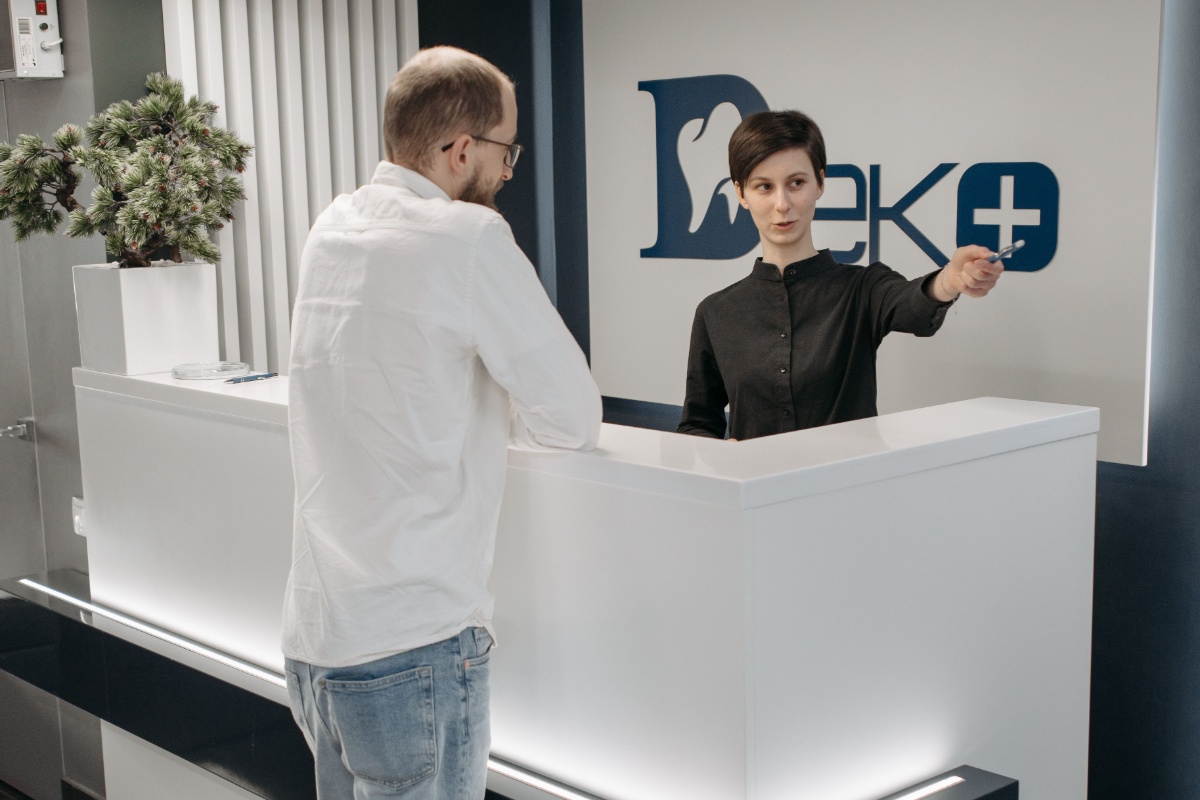
Many Japanese dental clinics use appointments. The Japan Dental Association recommends booking and telling the clinic what you want to discuss. Clinics may accept telephone, web, app or in-person bookings, but an online request is not necessarily confirmed until the clinic sends confirmation.
When you contact the clinic, state whether it is your first visit, where the problem is, when it started and whether it is becoming worse. Mention swelling, bleeding, trauma, a lost filling or crown, fever, or severe pain at the beginning of the call because these details can affect how quickly you should be seen.
If you need English, say so when booking rather than after arriving. For severe pain or swelling, ask directly whether a same-day urgent slot is available.
- Hajimete no jushin desu. — This is my first visit.
- Ha ga itakute, yoyaku o toritai desu. — I have tooth pain and would like an appointment.
- Eigo de taiō dekimasu ka? — Can you provide service in English?
- Kyō mite moraemasu ka? — Can I be seen today?
Bring the Right Insurance and Medical Information
The conventional health insurance card is no longer the normal proof of eligibility. Its validity ended on December 1, 2025, and the temporary acceptance of an expired conventional card ended on July 31, 2026. At a medical or dental reception desk in August 2026, use a My Number health insurance card if you have one, or a qualification confirmation certificate if you do not.
If a My Number health insurance card cannot be read because of equipment or network trouble, the Ministry of Health, Labour and Welfare describes alternative qualification-verification methods. Ask reception what it needs rather than assuming you must pay 100% immediately.
Bring a patient card if you have visited before, a current medicine list, allergy information and any relevant referral letter, X-rays or treatment records. Tell the dentist about pregnancy, diabetes, heart disease, anticoagulants, osteoporosis medicines and previous reactions to anesthetics or antibiotics because these may affect treatment planning.
- My Number health insurance card or qualification confirmation certificate
- Patient card for repeat visits
- Medicine and supplement list
- Allergies and important medical conditions
- Relevant referral letters, X-rays or treatment records
- A payment method accepted by the clinic
Understand the 2026 Patient Copayment Before Treatment
For treatment covered by Japan's public health insurance, you generally pay only the applicable patient share rather than the full insured fee. The Ministry of Health, Labour and Welfare states that the standard share varies by age and, for older patients, income: many people through age 69 pay 30%, people age 70 to 74 generally pay 20%, and people age 75 or older generally pay 10%, with income-based exceptions that can raise the share.
Your actual dental bill still depends on the examinations, X-rays, procedures, materials and number of visits. A universal 'first visit costs ¥X' figure is therefore misleading. If cost matters, ask for an estimate and ask which parts are insured.
Keep the itemized receipt and treatment statement. They help you compare the billed services with the treatment you received and give you a useful record if you later change clinics.
- Check your own copayment rate rather than assuming everyone pays the same percentage
- Ask whether X-rays, materials and procedures are covered before agreeing
- Keep itemized receipts and treatment statements
Separate Insured Treatment From Private Treatment
Public insurance covers dental services and materials defined by the national medical-fee system when the diagnosis and clinical requirements are met. Many examinations, X-rays, cavity treatments, gum-disease treatments, extractions and standard restorations can be insured, but coverage depends on the exact procedure and material.
Private treatment (jiyū shinryō, 自由診療) is priced by the clinic. Whitening, many orthodontic treatments, most implant treatment and some cosmetic or material choices are commonly private. The Japan Dental Association states that implants are basically outside public insurance and emphasizes understanding cost, duration, surgery and other burdens in advance.
Before accepting an expensive private option, ask whether an insured alternative exists, what the quoted price includes, whether temporary work or follow-up is extra, and what happens if the treatment plan changes.
- Is this option covered by insurance?
- Is there an insured alternative?
- What exactly is included in the private-treatment quote?
- How many visits are expected?
- What could make the total cost change?
Know What Usually Happens at the First Visit
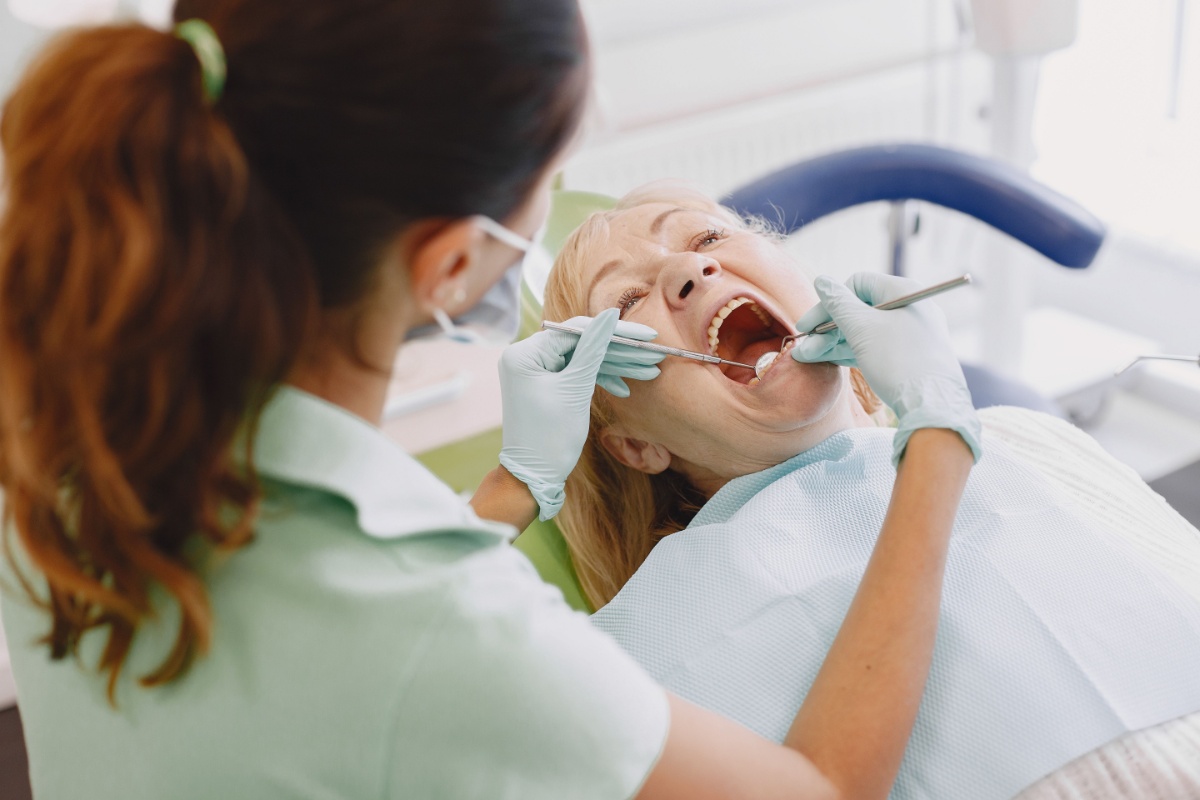
The first visit often begins with a questionnaire covering your symptoms, medical history, medicines, allergies and previous dental treatment. The dentist or hygienist may ask when the problem began, what triggers pain and which tooth or area seems affected.
The clinical visit can include an oral examination, bite or jaw checks, X-rays or photographs when clinically needed, an explanation of the likely cause and treatment options, and either urgent treatment, temporary treatment, cleaning or a later appointment for definitive care.
Do not assume the first visit will complete treatment. Dental care is frequently staged so the dentist can diagnose the problem, control pain or infection, make laboratory items, or confirm healing before the next step.
- Medical and symptom questionnaire
- Dental and gum examination
- X-rays or photographs when necessary
- Explanation of diagnosis and options
- Emergency or temporary treatment when needed
- Payment and next appointment
Use X-Rays and Explanations to Make an Informed Decision
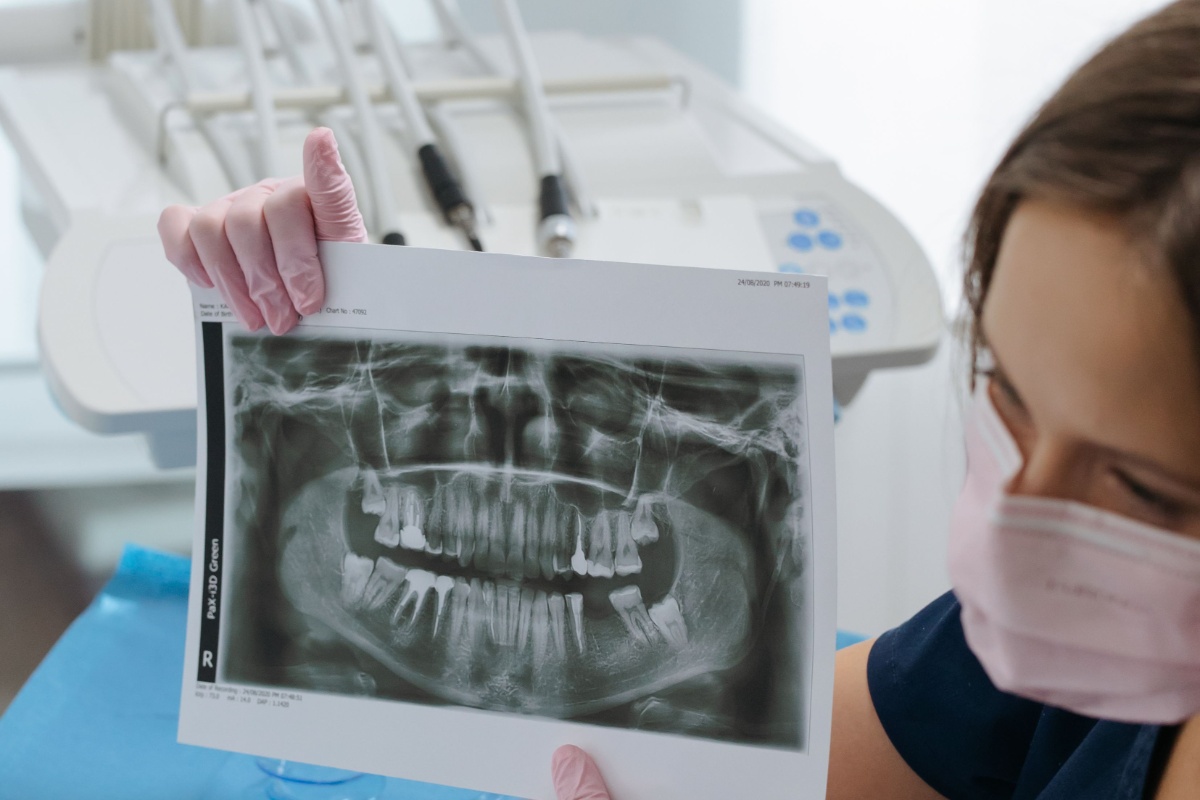
Ask the dentist to point to the affected area on an X-ray, photograph or diagram and explain what each proposed procedure is meant to achieve. If you are or may be pregnant, tell the clinic before imaging or treatment.
Before treatment, make sure you understand which tooth is being treated, whether the work is temporary or final, whether drilling, extraction, anesthesia or laboratory work is planned, how many appointments are likely, and whether the option is insured or private.
If language is difficult, ask for key terms or choices to be written down. Machine translation can help with simple communication, but complex surgery, expensive private treatment and irreversible decisions may justify a trusted interpreter or professional language support.
- Which tooth or area is the problem?
- What happens if I wait?
- Is today's work temporary or final?
- What risks and alternatives matter?
- How many visits are expected?
- Is this insured or private treatment?
Expect Some Dental Treatment to Take Several Visits
Root-canal treatment, crowns, dentures, gum treatment, extraction follow-up and complex restorations can require several appointments. Laboratory-made items also need production time, and the dentist may need to confirm that pain, swelling or infection is controlled before continuing.
Before leaving each visit, ask what was completed, whether anything is temporary, what symptoms are expected, what warning signs require contact, and when the next appointment should occur. Missing a follow-up can allow a temporary restoration to fail or an unfinished problem to worsen.
If you need to cancel or will be late, contact the clinic as soon as possible. Long private-treatment appointments may have specific cancellation rules.
- Confirm what was done today
- Ask whether a filling or crown is temporary
- Confirm the next appointment and its purpose
- Know what symptoms require an earlier call
Handle Payment, Receipts and Prescriptions Before Leaving
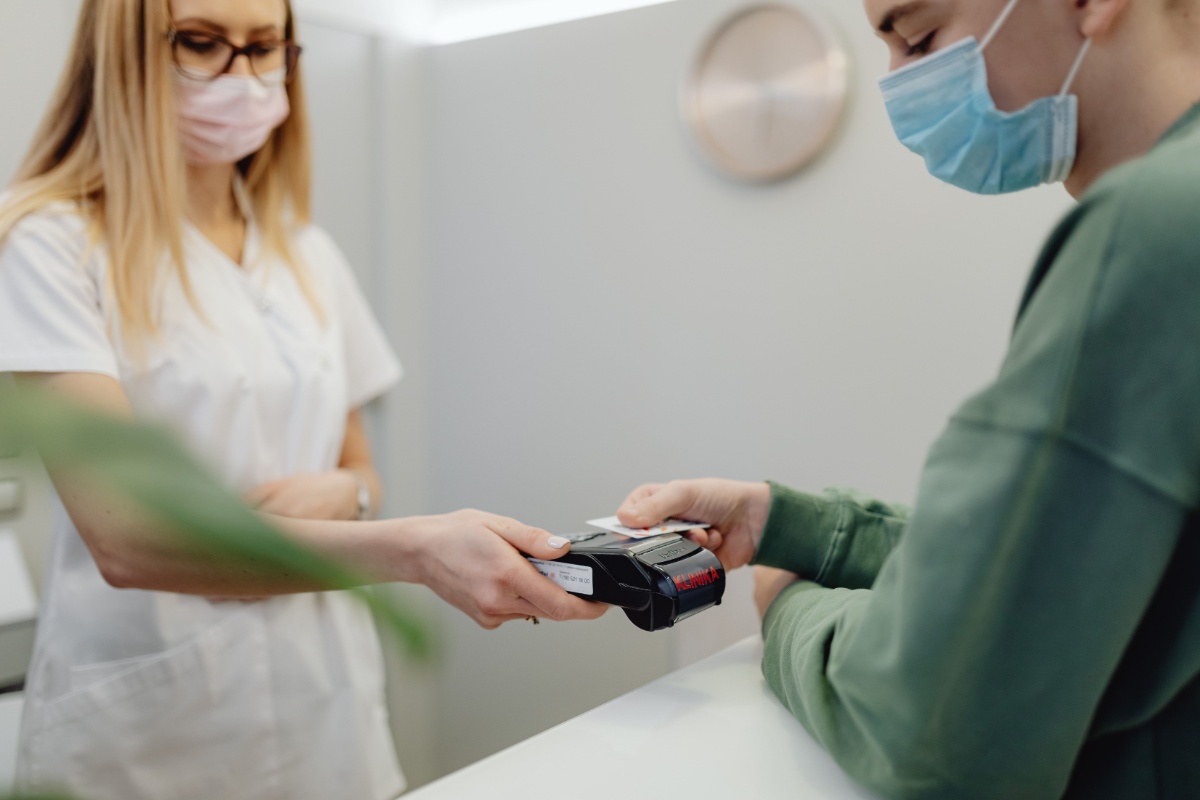
Payment methods differ by clinic. Some dental offices still prefer cash for insured treatment, while others accept cards or electronic payments. Confirm before the visit, especially if private treatment may be involved.
Compare the amount paid with the receipt and treatment statement. If something is unclear, ask reception before you leave rather than trying to reconstruct the bill later.
A dentist may provide medicine directly or issue a prescription for an outside pharmacy. Follow the clinic's instructions and use the prescription within its valid period.
- Confirm accepted payment methods
- Keep the itemized receipt and treatment statement
- Ask how insured and private charges are separated
- Confirm where and when to fill any prescription
Recognize Dental Problems That Need Urgent Attention
Severe tooth pain, increasing gum or facial swelling, pus, uncontrolled dental bleeding, significant facial injury, a knocked-out tooth, difficulty opening the mouth, or a rapidly worsening problem should not be left for a routine appointment. Contact a dental clinic, dental oral-surgery department or local emergency dental service and describe the symptoms clearly.
Call 119 for a life-threatening emergency such as difficulty breathing or swallowing, loss of consciousness, major uncontrolled bleeding or severe trauma. The Fire and Disaster Management Agency identifies 119 as Japan's emergency number for ambulance and fire services.
If you are unsure whether a problem is dental, medical or emergency-level, explain the symptoms rather than trying to diagnose yourself. The receiving service can direct you to the appropriate level of care.
- Rapidly increasing facial or neck swelling
- Difficulty breathing or swallowing
- Major uncontrolled bleeding
- Severe facial trauma or loss of consciousness
- Knocked-out tooth or significant dental injury
Useful Japanese Phrases for a Dental Visit
A few short phrases can make booking, insurance questions and treatment discussions easier. Use them as prompts, not as a substitute for a full explanation when the decision is complex.
- Kono ha ga itai desu. — This tooth hurts.
- Haguki ga harete imasu. — My gum is swollen.
- Hoken wa tsukaemasu ka? — Can insurance be used?
- Jihi shinryō desu ka? — Is this private treatment?
- Hoken no sentakushi wa arimasu ka? — Is there an insured option?
- Nankai gurai kayou hitsuyō ga arimasu ka? — About how many visits will I need?
- Ryōkin no mitsumori o moraemasu ka? — Can I receive a cost estimate?
- Setsumei o mō ichido onegaishimasu. — Please explain it one more time.
FAQ
Can I visit a dentist in Japan without a referral?
Most community dental clinics accept patients directly, but new-patient and appointment rules vary. Hospital dental departments and specialized services may require or prefer a referral, so check before visiting.
Can I walk in with tooth pain?
Some clinics accept urgent walk-ins, but many use appointments and may be full. Call first, describe the pain, swelling, trauma or lost filling, and ask when you can be seen.
How much does a dental visit cost in Japan?
There is no reliable single price because the bill depends on your insurance status, copayment rate, examinations, X-rays, treatment, materials and whether any service is private. Ask the clinic which options are insured and request an estimate for expensive care.
Do I still use the old Japanese health insurance card in August 2026?
No. The conventional health insurance cards expired by December 1, 2025, and the temporary acceptance of an expired card ended July 31, 2026. Use a My Number health insurance card or a qualification confirmation certificate, with alternative verification procedures available when card-reader problems occur.
Is dental cleaning covered by public insurance?
Coverage depends on the clinical purpose, diagnosis and services performed. Care related to gum disease can be insured when requirements are met, while purely cosmetic or elective services may be private. Confirm with the clinic before treatment.
Can I ask for a second opinion?
Yes. For expensive, irreversible, surgical or long-term treatment, it is reasonable to ask for the diagnosis, X-rays, options, expected visits and costs before deciding. If you change clinics, the new dentist may need to repeat some examinations or imaging.
Official References
- Ministry of Health, Labour and Welfare: Medical Information Net (Navi)
- Ministry of Health, Labour and Welfare: How to Confirm Health Insurance Eligibility
- Ministry of Health, Labour and Welfare: My Number Health Insurance Card
- Ministry of Health, Labour and Welfare: Patient Copayment Rates
- Japan Dental Association: Finding and Booking a Dentist
- Japan Dental Association: Implant Treatment and Private Costs
- Fire and Disaster Management Agency: Emergency Ambulance Guidance
Final Thoughts
Seeing a dentist in Japan is manageable when you separate the process into five decisions: choose the right clinic, confirm the appointment and language support, bring valid insurance proof and medical information, distinguish insured care from private treatment, and understand the next step before you leave. In August 2026, use a My Number health insurance card or qualification confirmation certificate rather than an old conventional health insurance card. For severe swelling, major trauma, uncontrolled bleeding, or breathing or swallowing difficulty, seek urgent help instead of waiting for a routine dental appointment.