How to Register a Birth in Japan: City Hall & Newborn Guide
A practical 2026 guide to registering a birth in Japan: the 14-day birth notification, documents, nationality, foreign-baby residence status, Child Allowance, health insurance, My Number, and post-birth city hall steps.
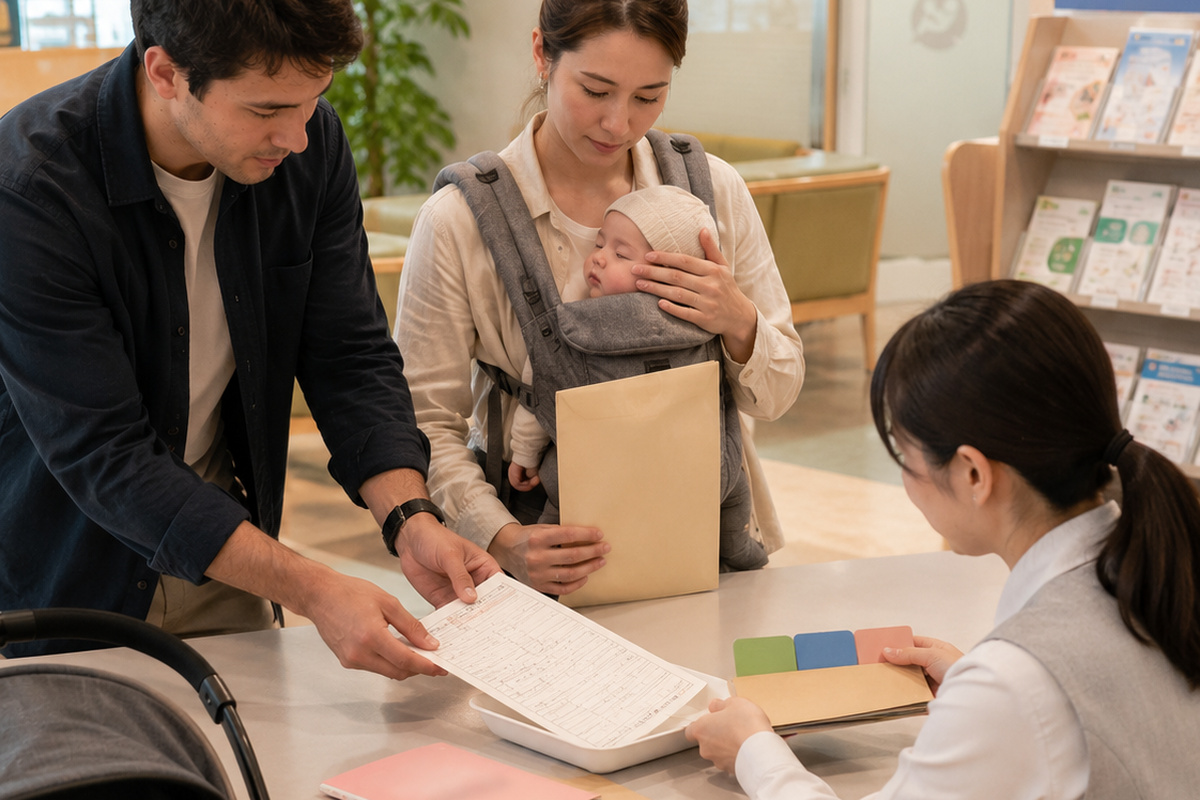
Submit the 出生届 (shusshō todoke, birth notification) within 14 days of the birth, counting the birth date as day one. The filing itself is free, and the hospital or birth facility normally provides the combined notification and medical birth-certificate form. Do not stop there: Child Allowance, health-insurance enrollment, local child medical support, a newborn My Number Card if wanted, embassy/passport steps for a foreign child, and—if a foreign baby will stay in Japan for more than 60 days—an application to acquire a status of residence within 30 days are separate procedures.
Your Post-Birth Deadline Map
The first two weeks after a birth involve several procedures with different clocks. Treat the deadlines separately rather than assuming that one city-hall visit completes everything.
For the birth notification, the day the baby is born is counted as day one. If the 14th day falls on a municipal closure day, local rules may allow filing on the next open day; confirm this with the municipality where you will submit. Other procedures, especially Child Allowance and immigration, use different counting rules.
- Within 14 days of birth: submit the 出生届 (birth notification).
- Within 15 days from the day after birth: apply for Child Allowance at the municipality where the eligible recipient lives, or through the employer if the recipient is a public employee.
- Within 30 days of birth: if a foreign baby will remain in Japan for more than 60 days, apply to acquire an appropriate status of residence.
- As soon as practical: arrange the baby's health-insurance coverage and check the local child medical subsidy or medical-expense support program.
- As applicable: complete the child's embassy/consular registration and passport procedure, and decide whether to apply for a newborn My Number Card together with the birth notification.
Step 1: Confirm the Child’s Nationality and Name
Nationality affects what happens after city-hall registration. Under Japan's Nationality Act, a child is Japanese at birth when the father or mother is Japanese at the time of birth, subject to the legal parent-child relationship and other statutory conditions. A child does not become Japanese merely because the birth took place in Japan.
If both parents are foreign nationals, the baby generally needs procedures with the parents' home-country embassy or consulate as well as Japanese municipal and immigration procedures. Ask the relevant embassy how the child's nationality, name, birth registration, and passport are handled under that country's law.
Since May 26, 2025, Japanese family registers include name furigana. When a newborn is being entered into a Japanese family register after the system began, the furigana is submitted together with the birth notification. If names are written differently across Japanese and foreign documents, decide the intended spelling and order early and ask city hall or the embassy before filing.
- One parent Japanese: check the Nationality Act and the child's legal parent-child relationship.
- Both parents foreign: birth in Japan alone does not grant Japanese nationality.
- New entry in a Japanese family register: submit the child's name furigana with the birth filing.
- Mixed or foreign naming systems: keep spellings consistent across the birth notification, embassy records, passport, residence records, and later insurance applications.
Step 2: Prepare the Birth Notification and Documents
The main document is the 出生届. In ordinary hospital births, the hospital or maternity facility supplies a nationwide-standard form whose lower or adjoining section is the 出生証明書 (birth certificate) completed and signed by the doctor or midwife.
Fill in the parent/declarant section carefully. A simple spelling mismatch can create extra work later when you need a residence certificate, passport, health-insurance enrollment, or immigration documents. Municipalities may ask for additional identification or supporting material depending on nationality and family circumstances, so check the local city's current list before you go.
- Birth notification with the medical birth-certificate section completed by the doctor or midwife.
- Mother and Child Health Handbook (母子健康手帳) if available; some municipalities record proof that the birth filing was completed.
- Parent/declarant identification and any documents the municipality requests for foreign-national parents.
- Information needed for the baby's name, nationality, parents, address, and registered domicile where applicable.
- If you want the newborn My Number Card at the same time, complete the newborn card application section or the separate approved form used by your municipality.
Step 3: File at the Correct Municipality
The birth notification can be submitted to a municipality connected to the birth or the declarant. Statutory filing locations include the municipality of the place of birth, the declarant's location, or the registered domicile where applicable. For many families, filing at the municipality where they live is the most practical because follow-up procedures are handled there.
The person legally responsible for the notification is normally the father or mother. If the parents are not married, the mother is normally the declarant. If a parent has already completed and signed the required declarant section, another person may be able to physically carry the form to the counter; the legal declarant does not change just because someone else delivers it.
- Birth-notification filing fee: free.
- Ask the counter to confirm whether any local newborn procedures can be completed during the same visit.
- If you file away from your home municipality, expect some follow-up items—especially Child Allowance or local medical support—to require a separate application at home.
- Keep copies or photos of the completed filing package for your own records where legally appropriate.
Night, Weekend, and Holiday Filing
Many municipalities accept family-register notifications outside normal office hours, but an after-hours desk may only take custody of the form. A family-register specialist may review the contents on the next business day, and the office can contact you if correction is needed.
Do not assume that Child Allowance, health insurance, medical subsidy, residence-certificate issuance, or other newborn procedures are available at the night or holiday desk. If you must submit the birth notification after hours, plan a second visit during business hours for the remaining procedures.
- After-hours acceptance rules differ by municipality.
- Content may be formally reviewed later rather than at the moment you hand it in.
- Birth-related certification in the Mother and Child Health Handbook may not be available after hours.
- Bring a reachable phone number and confirm the municipality's night/holiday location before going.
What to Request After the Notification Is Accepted
Several later procedures require evidence that the birth notification was accepted. Ask the counter which certificate is appropriate for the next step you need. A 出生届受理証明書 (certificate of acceptance of birth notification) is commonly useful for immigration or foreign administrative procedures, while a residence certificate may be useful after the baby's resident record has been created.
Certificate issuance is separate from the free birth-notification filing and may involve a municipal fee. If you need documents for an embassy, immigration office, employer, insurer, or overseas authority, ask that organization exactly which document, issue date, language, translation, or legalization requirement it accepts before buying multiple copies.
- Certificate of acceptance of birth notification, when requested by immigration or another authority.
- Residence certificate (住民票) after the baby's record is available, when needed.
- Copies or certified documents required by the embassy or consulate.
- Translations only where the receiving authority requires them.

Foreign Babies: Residence Status Within 30 Days
A foreign child born in Japan who did not go through an immigration landing procedure may remain in Japan without a status of residence for up to 60 days from birth. If the child will stay beyond 60 days, an application to acquire a status of residence must be filed within 30 days of birth.
Do not wait for the 60th day. The 30-day application deadline is the practical one. Immigration may require proof of birth, household/residence information, the parents' residence documents, and materials matching the requested status. The appropriate status depends on the parents' own statuses and the child's legal relationship to them.
For residence cards issued on or after June 14, 2026, a photo is generally required from age one. A child who is still under age one when the residence card is issued does not need to submit a photo for that card.
- Birth notification deadline and immigration deadline are separate.
- If staying in Japan more than 60 days: apply for status acquisition within 30 days of birth.
- Complete the city-hall birth filing early because immigration commonly needs proof that the birth was registered.
- Check the Immigration Services Agency's current document list for the specific status you are applying for.
Embassy Registration and the Baby’s Passport
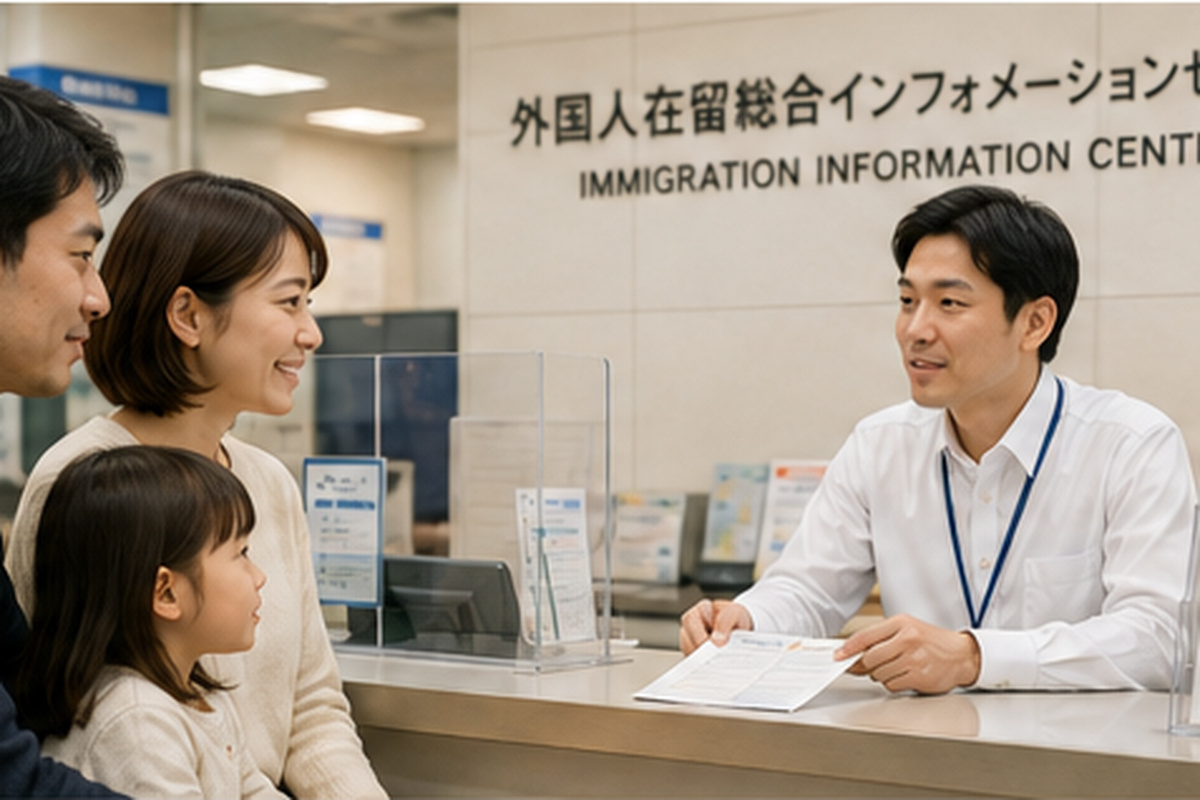
If the baby is a foreign national, contact the relevant embassy or consulate soon after the Japanese birth filing. Each country sets its own rules for recognizing a birth abroad, transmitting nationality, registering the child's name, and issuing a passport.
The embassy may ask for a Japanese certificate showing that the birth notification was accepted, a translation, parents' passports, marriage or relationship documents, and other records. Requirements differ widely, so use the embassy's official instructions rather than a generic checklist.
For foreign parents, the embassy/passport process and the Japanese immigration process should be planned together. A delay in obtaining one document does not automatically extend Japan's 30-day deadline to apply for status acquisition when the child will stay beyond 60 days.
- Ask the embassy which Japanese birth certificate or acceptance certificate it accepts.
- Confirm spelling and name order before the passport is issued.
- Check whether both parents must appear or sign.
- Keep the immigration deadline in view while the passport process is underway.
Health Insurance and Child Medical Subsidy
A newborn does not become covered simply because the birth notification was filed. If a parent is enrolled in employee health insurance, contact the employer or health-insurance administrator promptly about adding the child as a dependent. Japan Pension Service procedures include the Health Insurance Dependent Change Notification, and its 2026 guidance specifically includes a child being added because of birth.
If the household uses National Health Insurance, ask the municipality how to enroll the baby. Separately, many municipalities operate child medical-expense subsidy programs. Eligibility, application documents, effective date, and the way the subsidy is used differ locally, so complete the local application as soon as possible.
- Employee health insurance: contact the employer/insurer about dependent enrollment.
- National Health Insurance: apply through the municipality if the baby belongs in the household's NHI coverage.
- Child medical subsidy: check the municipality's own program and deadlines.
- Do not delay care while waiting for paperwork; ask the insurer or medical provider how later reimbursement is handled if coverage documents are still being processed.
Apply for Child Allowance Within 15 Days
Child Allowance (児童手当) requires a separate application. After a birth, apply within 15 days from the day after birth at the municipality where the eligible recipient lives. If the recipient is a public employee, the application is generally handled through the employer.
This is especially important after a return-home birth or when the birth notification was filed in another municipality. Filing the birth notification somewhere else does not transfer the Child Allowance application to your home municipality. Late applications can result in lost payments for missed months.
- Deadline: within 15 days from the day after birth.
- Apply at the recipient's home municipality unless the recipient is a public employee.
- Birth notification and Child Allowance are separate procedures.
- Ask what bank-account and identity information the municipality requires for the claim.
My Number and the Newborn My Number Card
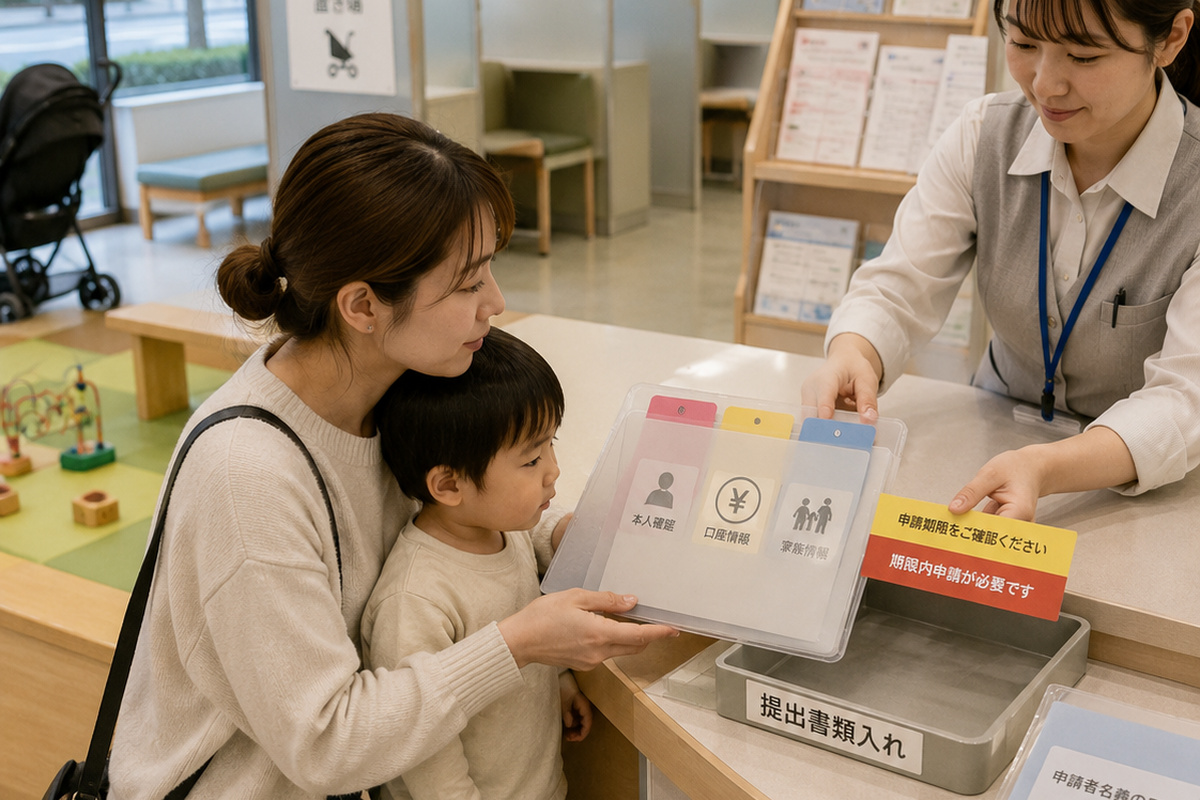
Once a qualifying newborn is registered in the resident record system, a My Number is assigned through the normal resident-registration process. The plastic My Number Card is optional and requires an application.
Since December 2, 2024, parents can apply for a newborn's face-photo-free My Number Card together with the birth notification. The combined application lets the legal representative specify the required PIN information and, when permitted, a delivery address such as a temporary stay location. J-LIS states that the card is delivered in principle about one week after the application is accepted, although it can take longer when the combined application is filed with a municipality other than the child's address municipality.
Using the simultaneous newborn procedure avoids a separate card-application trip in many cases. The newborn does not need to appear at city hall for that simultaneous application.
- My Number assignment and My Number Card application are different things.
- The newborn card can be requested together with the birth notification.
- The newborn version is issued without a facial photograph.
- If you file the combined form outside the address municipality, allow extra processing time.
Special Situations
Some births need extra coordination. Do not force a standard checklist onto a case involving unmarried parents, a home birth, uncertain parentage, unusual naming documents, or a missed deadline. City hall, the Legal Affairs Bureau, the Immigration Services Agency, or the relevant embassy may need to advise based on the exact facts.
For an unmarried Japanese father and foreign mother, nationality can be especially sensitive because the timing and legal effect of recognition matters. The Ministry of Justice explains that prenatal recognition can affect whether Japanese nationality is acquired at birth, while recognition after birth may lead to a different nationality-acquisition procedure if statutory conditions are met.
If the 14-day birth-notification deadline has already passed, contact the municipality immediately rather than waiting. If the child is foreign, separately check the immigration deadline because the 30-day status-acquisition clock is not reset by a late city-hall filing.
- Parents not married: confirm who is the legal declarant and whether recognition/nationality issues apply.
- Home birth: ask what proof of birth is required when there is no standard hospital-issued certificate.
- Names differ across documents: resolve spelling/order before passport and residence documents multiply the mismatch.
- Leaving Japan soon: still confirm birth registration, nationality/passport, and any immigration obligations before departure.
- Missed deadline: contact the competent municipality and, where relevant, immigration immediately.
One-Visit City Hall Checklist
If your municipality offers the relevant services in one building, prepare a single folder before you go. The goal is not to force every procedure into one counter, but to reduce repeat trips and make sure no deadline disappears in the first weeks after birth.
Before leaving city hall, ask which items are complete, which are only received pending review, what certificates you can collect immediately, and which procedures must be done with an employer, immigration office, embassy, or another municipal department.
- 出生届 with the doctor/midwife-completed birth-certificate section.
- Mother and Child Health Handbook if available.
- Parents' identification and residence documents requested by the municipality.
- Newborn My Number Card application section if you want simultaneous issuance.
- Child Allowance documents and recipient bank details if your municipality handles the claim there.
- Health-insurance information and any forms needed for local child medical support.
- A note of the 30-day immigration deadline if the baby is foreign and will remain in Japan beyond 60 days.
- A list of certificates needed for immigration or the embassy so you request the correct document before leaving.
FAQ
Is the 14-day birth-registration deadline counted from the day after birth?
No. For the birth notification, the birth date is counted as day one. File by day 14. If day 14 is a municipal closure day, local rules may move the deadline to the next open day, so confirm with the municipality.
Does the newborn need to go to city hall?
Usually not for the birth notification itself. For the newborn My Number Card application filed together with the birth notification, official guidance also says the newborn does not need to appear. Other procedures can have different rules, so check locally.
Can someone other than a parent submit the birth notification?
The legal declarant is normally the father or mother, and if the parents are unmarried the mother is normally the declarant. After the proper declarant has completed and signed the form, another person may be able to physically carry it to the counter. If a parent cannot be the declarant, statutory alternatives exist; ask city hall for the correct order.
Is there a fee to register a birth in Japan?
Submitting the birth notification is free. Certificates requested afterward, such as a certificate of acceptance or other municipal records, may have separate fees.
Does a baby born in Japan automatically become Japanese?
No. Birth in Japan by itself does not normally grant Japanese nationality. Under the Nationality Act, nationality depends on statutory conditions such as whether a parent is Japanese and the legal parent-child relationship. If both parents are foreign nationals, the child does not become Japanese merely by being born in Japan.
Can I complete every newborn procedure at a night or holiday desk?
Usually not. An after-hours desk may only accept the family-register notification for later review. Child Allowance, health insurance, medical subsidy, certificate issuance, and other procedures often require a normal business-hours counter.
Do foreign parents need a Japanese family register to file the birth notification?
No Japanese family register is created for foreign parents simply because a child is born in Japan. They still need to file the Japanese birth notification and then handle resident-registration, immigration, embassy, passport, insurance, and benefit procedures as applicable.
What should I do if I missed the birth-notification deadline?
Contact the municipality immediately and file as soon as possible. If the child is foreign and will remain in Japan beyond 60 days, also address the separate immigration requirement promptly because the status-acquisition application is due within 30 days of birth.
Official References
- Ministry of Justice — Birth Notification
- Ministry of Justice — Nationality Act
- Ministry of Justice — Nationality Q&A
- Ministry of Justice — Family Register Furigana Process
- Immigration Services Agency — Acquisition of Status of Residence
- Immigration Services Agency — Application to Acquire a Status of Residence
- Immigration Services Agency — Child of Japanese National / Residence Card Photo Rule
- Children and Families Agency — Child Allowance Guide
- My Number Card Official Site — Newborn Application with Birth Notification
- Japan Pension Service — Add a Family Member as a Health Insurance Dependent
- Edogawa City — Birth Notification Procedure
Final Thoughts
The birth notification is the anchor procedure, not the whole newborn checklist. File it within 14 days, then work through the separate deadlines for Child Allowance, health insurance, local medical support, My Number, and—when the baby is foreign—embassy/passport and immigration procedures. Keep the child's name and identity details consistent across every system, and use the municipality, Immigration Services Agency, embassy, employer/insurer, and other official sources for case-specific requirements.